
Logistics real estate
Industry experts discuss
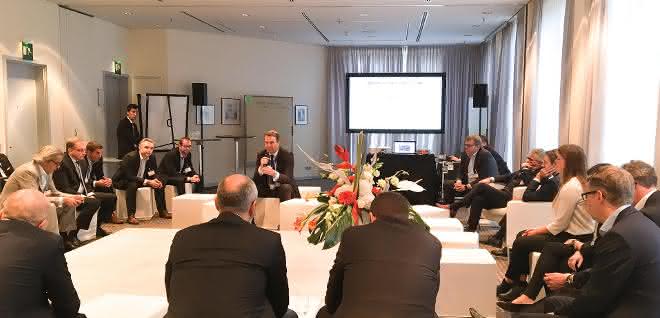
Experts from the logistics real estate sector discussed current challenges in an interactive format as part of the 35th German Logistics Congress of the Bundesvereinigung Logistik e.V. (BVL).
How can space be found for future relocation projects and what challenges will the industry have to face? The round table discussion initiated by the BVL Logistics Real Estate Group followed on from the results of the 3rd study by the Logistics Real Estate Initiative (Logix) on the space and employment potential in the 23 top logistics regions in Germany. The industry is facing challenges in both areas. The study came to the conclusion that there is currently no German logistics region in which there is still a high availability of space and labor at the same time. The study also discussed how the industry's negative image can be improved and settlement processes optimized.
Showing the consequences of alternative locations
The relocation of a logistics company to the surrounding area instead of the conurbation is often called for with the aim of reducing the volume of traffic. The panel came to the conclusion that this is only a superficial alternative. This is because the longer distances for a CEP service provider or warehouse employees commuting to work increase the volume of traffic and emissions. This needs to be communicated openly.
Creating ecological added value
Creating ecological added value could improve acceptance among citizens and local authorities, for example through green roofs or the integration of photovoltaic systems. In addition, logistics properties could be equipped with radio masts to drive broadband expansion, particularly in rural regions.
Automation for increased location independence
The Logix study identified massive problems with the availability of space and the recruitment of workers, particularly in southern Germany. One way of countering the shortage of skilled workers could be the increasing automation of intralogistics. This would enable logistics service providers looking to relocate to the region to make their choice of location less dependent on the previously necessary proximity to conurbations with a strong workforce.


You might also be interested in
Logistics real estate: Logivest brokers in Bielefeld to Qtrado
In Bielefeld, logistics real estate consultant Logivest has brokered around 6,000 square meters of warehouse space for rent to Qtrado. The property belongs to the Fixemer Real Estate Group, an international real estate company.
 read more...
MLP Group plans second city logistics property in Vienna
The MLP Group is further expanding its Austrian portfolio with a second project in the capital city of Vienna. With the acquisition of a site near Vienna Central Station, the developer is pursuing the goal of consolidating its role in an expanding...
read more...11,000 square meters of logistics space for Magnera
In Gaggenau, Baden-Württemberg, the logistics real estate consultant Logivest has brokered a logistics location for Magnera for long-term rental.
read more...Sustainable conversion of 278,000 square meters of brownfield land
Prologis is planning to convert a 278,000 square meter site in Dortmund into an all-electric logistics and business park designed to DGNB Platinum sustainability standards and focused on employee well-being.
read more...CTP builds another business park in the Dresden area
CTP Eigentümer, a developer and portfolio holder of logistics and industrial real estate, has acquired a plot of land in the Cossebaude district of Dresden to begin the development of a modern business park.
read more...CTP develops BTS property for E.ON subsidiary
CTP is developing a build-to-suit logistics property for Westenergie AG, the largest subsidiary of E.ON SE. This is located in the CTPark Mülheim in North Rhine-Westphalia.
read more...Photovoltaics for sustainable logistics
The energy requirements of modern logistics are increasing - at the same time, the pressure to operate more sustainably is growing. Large solar roof systems offer a solution for a climate-friendly energy supply and the achievement of sustainability...
read more...Efficient lighting
Legal requirements such as the ban on the sale of fluorescent tubes and an increased awareness of sustainability are prompting production, logistics and industry to convert and modernize their properties. Companies are focusing on greater...
read more...Yusen Logistics opens new logistics center in Bottrop
On February 6, Yusen Logistics celebrated the opening of its new logistics center in Bottrop with a festive ceremony together with the logistics real estate company Prologis and key stakeholders.
read more...