
Focus on Intralogistics
Material flow makes all the difference
Automation does not have to begin with a complete overhaul of production. Even targeted partial automation and the gradual integration of existing systems can help printing and packaging companies sustainably increase their efficiency, flexibility, and competitiveness.
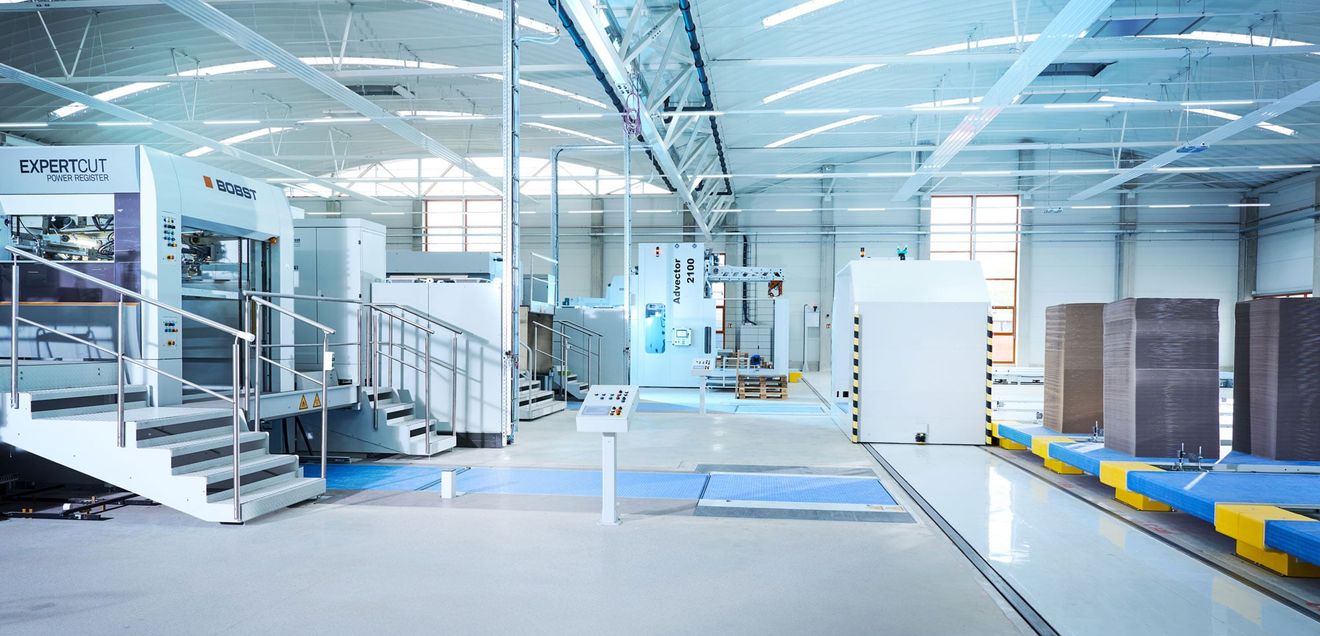
The printing and packaging industry is facing increasing pressure due to rising costs, a shortage of skilled workers, and high demands for quality and delivery speed. To remain competitive, more and more companies are turning to the automation of existing production facilities. The focus here is not on full automation, but rather on the gradual optimization of individual processes.
Material Flow as a Key Factor in Efficiency
In Krifft & Zipsner’s experience, the greatest potential often lies in material flow. Manual transport and a lack of integration slow down production. “Our customers want to automate their production and turn it into a seamless, integrated process. But they are constantly faced with the question of how to implement this in practice: In other words, what is actually economically feasible? At what levels can you start? Where do you begin? And how can you upgrade the existing system while minimizing downtime?” says Valentino Parisi.
Implementing Automation Step by Step
The analysis and optimization of material flows and manufacturing processes are considered the foundation of successful automation. “Redesigning these processes is a task that requires a high degree of experience. And our outside perspective also helps us discover new approaches and possibilities,” reports Florian Nitschke, Head of Product Management at Krifft & Zipsner. “To automate parts of this complex task, we are currently developing a tool that can simulate manufacturing processes and visualize the effects of changes. This also allows us to identify and eliminate bottlenecks.”
Krifft & Zipsner recommends a phased approach—from digitizing individual process steps, through the networking of equipment and the use of automated guided vehicles, to centralized material flow control. This project is divided into various service levels:
- Logistics Components:The first level consists of the hardware for material flow. The company relies on in-house solutions such as pallet turners, conveyor systems, and automated guided vehicles (AGVs), as well as automation solutions from other providers.
- System Integration:The second level involves integrating the material flow and production machinery into a functioning overall system.
- Control:The final step is to install a material flow control system for the entire intralogistics operation. This allows all processes and equipment—regardless of manufacturer—to be monitored, controlled, and integrated with other IT systems in real time through a single platform.
Only the combination of production facilities, conveyor systems, and automated guided vehicles enables an efficient, sustainable material flow.


You might also be interested in
Digital processes shorten delivery times
trans-o-flex makes delivery times easier to plan
trans-o-flex ThermoMed Austria is optimizing its delivery processes with new scheduling software and a digital self-handling module for drivers.
 read more...
Next generation of the supply chain
AI for the logistics of the future
EPG (Ehrhardt Partner Group) is presenting new solutions that integrate artificial intelligence deeply into operational logistics processes and thus create the basis for an intelligently networked supply chain.
read more...Puma uses AI agents from Logistics Reply
Puma is driving forward the digitalization of its logistics and is supplementing the existing warehouse management system LEA Reply with the multi-agent AI system GaliLEA from Logistics Reply.
read more...A Centralized View of Complex Processes
Today, medium-sized logistics companies must manage an increasingly diverse range of operations efficiently and reliably. Different modes of transport, customized customer solutions, and established workflows can hardly be accommodated by...
read more...Robotics Integration for Greater Efficiency in Inbound Goods Processing
Infios is helping Kellner & Kunz, a specialist in tooling and C-parts, expand its automation strategy. The next step in this long-standing partnership is the integration of robotics into inbound logistics.
read more...Flying warehouse robot impresses the jury
The Swiss deep-tech company Verity has been awarded the 2026 IERA Award for its autonomous indoor drone system. The flying robots monitor inventory levels autonomously, operate without GPS, and are already in use in approximately 200 warehouses...
read more...The Right Warehousing Solution for Every Logistics Need
Whether it’s an S/4HANA implementation, the urgently needed replacement of the traditional SAP WM, or the growing demands for digitalization and automation—many companies are faced with the question of which warehouse management system will best...
read more...Route planning and optimization solution
Jumbo backs Greenspan
The Dutch supermarket chain Jumbo has realigned its e-commerce logistics with Greenplan, the intelligent route planning and optimization solution from the Ehrhardt Partner Group.
read more...New version of Röhlig Realtime
Röhlig Logistics presents the enhanced version of "Röhlig Realtime". The company is supplementing its digital service portfolio with a central platform that ensures greater transparency and networking throughout supply chain management.
read more...