
Warehouse Automation
Robotics Integration for Greater Efficiency in Inbound Goods Processing
Infios is helping Kellner & Kunz, a specialist in tooling and C-parts, expand its automation strategy. The next step in this long-standing partnership is the integration of robotics into inbound logistics.
As early as 2019, the implementation of Infio’s Warehouse Management (WM) and Warehouse Control System (WCS) at the company’s logistics center in Wels laid the digital foundation for expanding automation.
Digitized Processes as a Competitive Advantage
Kellner & Kunz is an international trading and service company specializing in C-parts management for industry, skilled trades, and the automotive sector. The integrated process chain—from goods receipt to automated provisioning at customers’ production sites—enabled by Infios WM and WCS is a key differentiator in the dynamic market of tool and C-part logistics.
Today, Kellner & Kunz manages approximately 120,000 SKUs from a wide range of tools, chemical and technical products, and occupational safety items; up to 5,000 shipments are processed fully automatically every day.
As part of a 45-million-euro investment in its Wels facility, Kellner & Kunz has implemented Infios software to orchestrate critical areas of its automation landscape and thereby significantly boost operational performance. The facility features a high-bay warehouse with 15,400 pallet spaces and 200,000 container spaces, supplemented by automated guided vehicles and state-of-the-art conveyor technology. Since the facility went into operation, the focus has been on continuously optimizing individual processes and gradually integrating new technologies.
“The flexible and modular architecture of the Infios platform allows us to introduce new automation technologies as needed and integrate them seamlessly into our existing logistics processes,” said Walter Bostelmann, CEO of Kellner & Kunz.
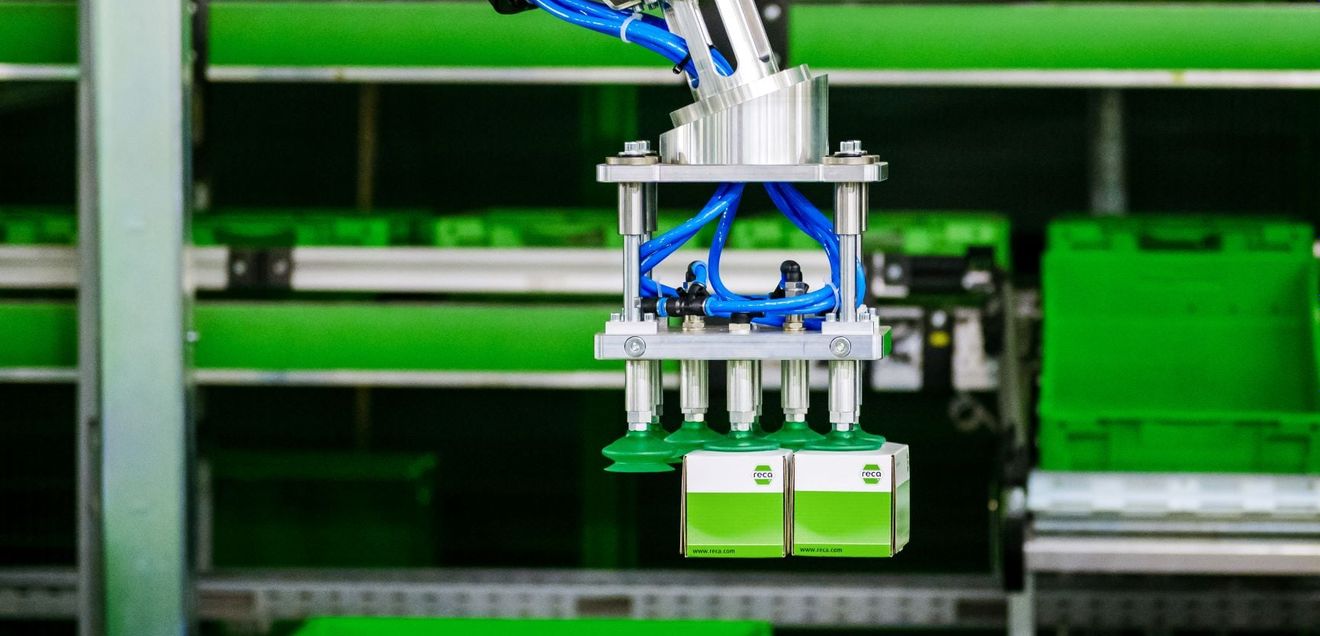
As part of its most recent optimization phase, Infios has implemented the software integration of an articulated-arm robot with a vacuum gripper for depalletizing incoming goods. The solution improves efficiency and ergonomics compared to manual handling. It enables the simultaneous pickup of up to six units weighing up to 25 kilograms and their transfer into containers.
Further automation planned
This implementation marks the starting point for further robot integrations as part of a joint, ongoing optimization program aimed at improving efficiency and scalability. Additional automation initiatives are already planned, including the installation of a second depalletizing station and the integration of robotics to support replenishment processes.


You might also be interested in
What Really Happens on the Road: Data Loggers Reveal Risks
Shipping damage often goes unnoticed and only becomes apparent at the destination. Data loggers provide objective information about vibrations, temperature, and humidity conditions throughout the entire supply chain. In this way, they help companies...
 read more...
A Centralized View of Complex Processes
Today, medium-sized logistics companies must manage an increasingly diverse range of operations efficiently and reliably. Different modes of transport, customized customer solutions, and established workflows can hardly be accommodated by...
read more...The Right Warehousing Solution for Every Logistics Need
Whether it’s an S/4HANA implementation, the urgently needed replacement of the traditional SAP WM, or the growing demands for digitalization and automation—many companies are faced with the question of which warehouse management system will best...
read more...Route planning and optimization solution
Jumbo backs Greenspan
The Dutch supermarket chain Jumbo has realigned its e-commerce logistics with Greenplan, the intelligent route planning and optimization solution from the Ehrhardt Partner Group.
read more...New version of Röhlig Realtime
Röhlig Logistics presents the enhanced version of "Röhlig Realtime". The company is supplementing its digital service portfolio with a central platform that ensures greater transparency and networking throughout supply chain management.
read more...Simulation gains in importance
The use of AGV and AMR systems continues to increase - at the same time, the complexity of planning and operation is growing. Traditional approaches quickly reach their limits.
read more...Gessmann and Wandelbots standardize...
Manufacturer-independent software orchestrates robotics fleets
Gessmann is presenting a new approach to industrial automation together with Wandelbots at Hannover Messe 2026 (Hall 16, Stand B10/1). The focus is on the coordination and integration of different robot systems in existing production and...
read more...LTW Intralogistics at the Logimat 2026
Efficiency and quality in the material flow
LTW Intralogistics is presenting its holistic approach to future-oriented material flow solutions at Logimat. Under the motto "Flow. In every detail", the company will be demonstrating how integrated systems, intelligent software, design and service...
read more...Kion significantly increases order intake
Kion holds its own in a difficult environment in 2025, increases order intake significantly and looks ahead to profitable growth in 2026 with a new segment name and efficiency gains.
read more...