
Digital Classification
Automated Pallet Inspection
In logistics, the quality of pallets is critical to safety, efficiency, and smooth operations. With the breeze-PAVE intelligent classification system from Breeze Innovations, pallet inspection can be performed automatically and objectively. The system detects damage and helps prevent risks such as cargo loss or operational disruptions.
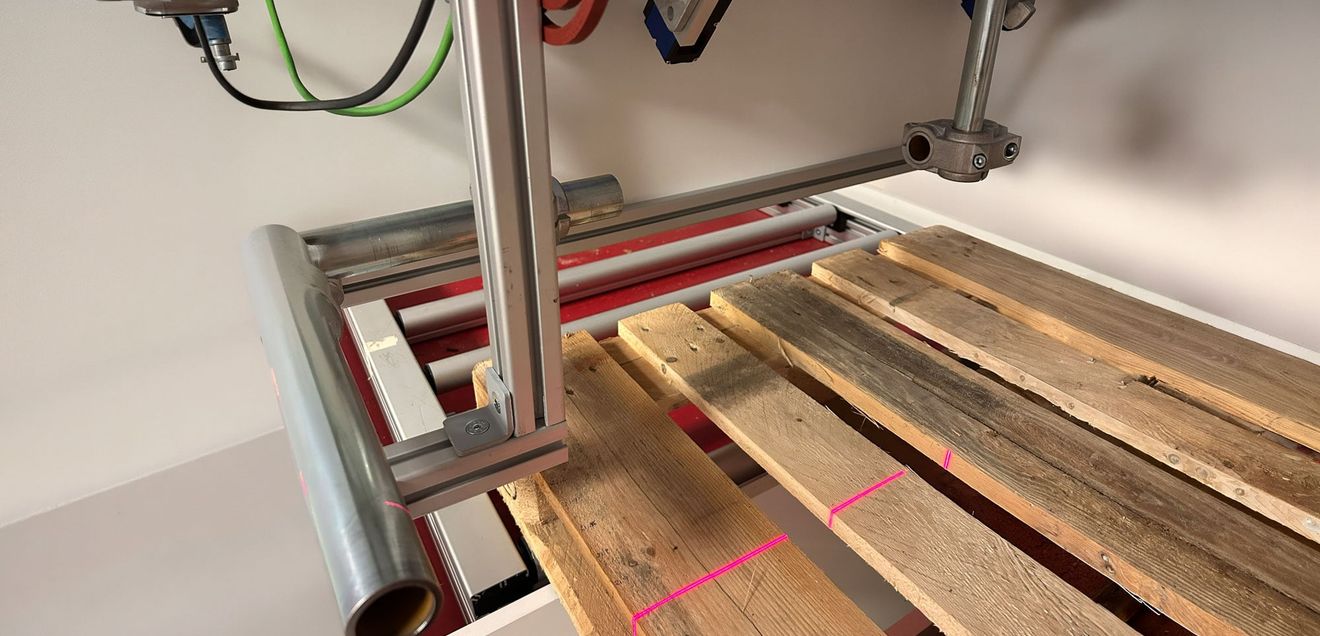
Pallets form the backbone of logistics and enable the transport of goods worldwide across countless processes. Over the course of their lifecycle, they travel hundreds of thousands of kilometers and carry heavy loads—so signs of wear and tear are inevitable. Protruding parts, the potential collapse of loads, or reduced machine compatibility and transport safety due to damaged pallets are risks that can cause massive disruptions to logistics processes, complete operational shutdowns, or damage during transport. Damage to the goods may also lead to customers refusing to accept them, resulting in financial losses.

For this reason, empty pallets are repeatedly inspected during the exchange process—though usually by hand, as Dr. Michael Kleinkes, one of the founders and managing directors of Breeze Innovations, explains. "These inspections are physically demanding and often subjective, which frequently leads to disputes during the handover of inspected and classified empty pallets. Our goal was to develop a classification system that would allow the quality of pallets to be assessed fully automatically, quickly, reliably, reproducibly, and, above all, objectively, with minimal effort,” says Kleinkes.
Using Hybrid Sensing Technology to Create a Digital Twin
The system makes it possible to capture pallet characteristics such as color, brightness, and three-dimensional dimensions. Many pooling companies mark their own pallet allocations with a specific color to make them easier to distinguish from competitors’ rental pallets. Brightness detection is also a key factor in classifying exchange pallets. When checking the geometric dimensions of the individual components—that is, the top boards, side boards, crossboards, and blocks—breeze-PAVE determines whether these elements comply with the specified geometric dimensions and required positions. If this is not the case, the corresponding areas are marked, and the pallet’s quality rating is lowered.
For data collection, Breeze relies on a multi-sensor system. Kleinkes explains: "As the pallets pass through the system, breeze-PAVE scans them from above, below, the sides, the front, and the back using multiple laser sensors, while simultaneously checking for sufficient brightness. This combination allows us to achieve a complete 360-degree digitalization of the physical objects, thereby creating a solid foundation for assessing the condition of the inspected new or used pallets.” The system even detects chemical residues as well as contamination from oil, paint, or adhered cardboard. The captured information is used to create a digital twin, which breeze-PAVE then evaluates in detail using software. In this step, deviations from specified quality criteria are automatically detected, the pallet is classified, and it is unambiguously assigned to quality classes A, B, C, or “defective.” The evaluation profiles can be flexibly adapted to the user’s specifications and cover both common standards for pallets—such as EPAL or India—as well as individual customer-specific requirements.
Over 1,000 pallets per hour
Compared to manual pallet inspection, the system’s most important feature is undoubtedly its objectivity, but precision and speed are also key factors: For each pallet, it captures several million 3D measurement points in a single pass without any cycle delay, evaluates them in less than a second, and detects not only obvious damage but even the smallest deviations. The system currently achieves a throughput of well over 1,000 pallets per hour, which can be inspected during normal operation—that is, as they pass by and without stopping the pallets being inspected. “Based on the evaluation time, we could theoretically inspect as many as 4,000 pallets per hour per system—but this rate is not at all feasible with current conveyor technologies. The precision and speed of breeze-PAVE are absolutely unattainable with the human eye,” says Kleinkes. The system is designed to be integrated into existing conveyor and sorting systems. According to the manufacturer, this requires approximately 1.5 meters of headroom above the conveyor system and a gap of about 25 centimeters in the line.
Digitized Loading Equipment Management
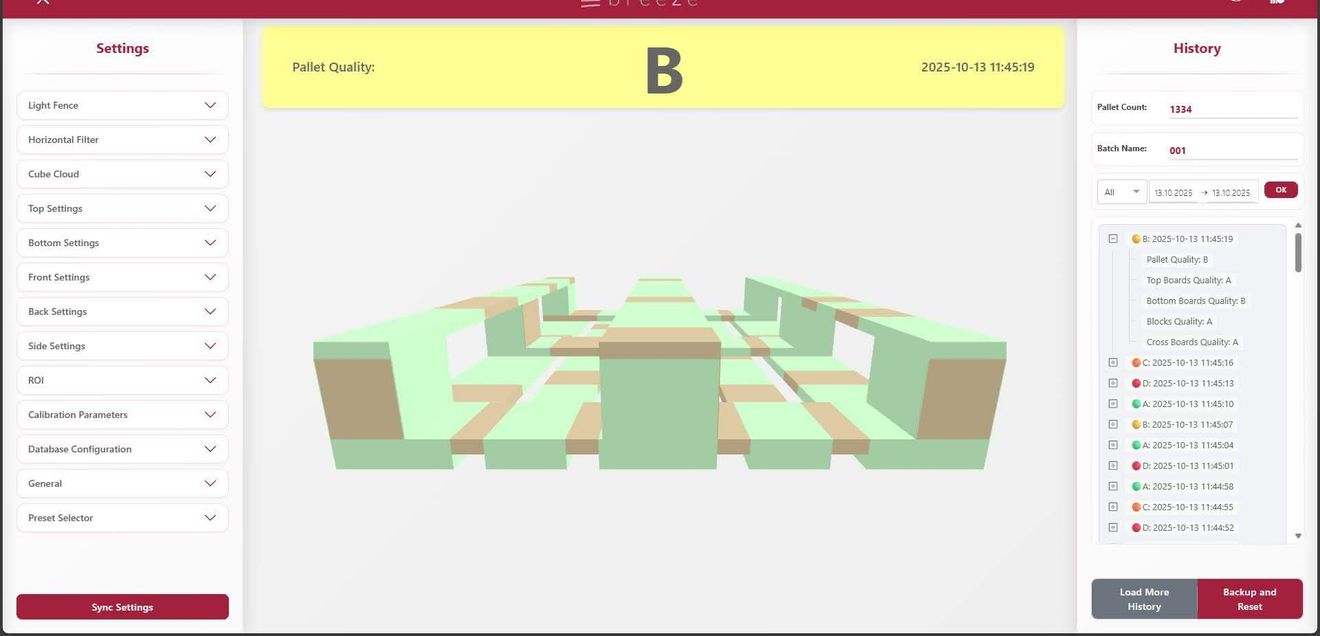
According to Kleinkes, full integration with digital loading equipment management systems represents an important milestone toward the digitization of logistics processes: "For every inspected pallet, breeze-PAVE generates an online report that can be analyzed according to various criteria, such as shipments, quality classes, or locations. Upon request, the recorded data is transferred directly to the cloud and made available to the user in real time. This enables transparent, cross-site monitoring of pallet quality and, for example, long-term tracking of the quality of a specific customer’s pallets over a period of months. For modern logistics processes, this technology is a central component and a decisive step toward digitized load-carrying equipment management.”
Flexible platform for various types of cargo carriers
The breeze-PAVE system is not limited to wooden pallets; it can inspect all types of cargo carriers, such as plastic pallets, mesh boxes, or full containers. “We initially focused on wooden pallets during this development, but based on our many years of experience in automation, we are able to use breeze-PAVE as a flexible platform for customized customer solutions and adapt it to the specific requirements at hand,” said Kleinkes.
According to Kleinkes, the initial cost of the classification system pays for itself within a short period of time: "Savings on labor costs, high availability even during periods of staff shortages, illness, or vacation, fewer misclassifications, fewer returns, and the reliable detection of counterfeit pallets—which are increasingly causing problems in logistics—make breeze-PAVE an economically attractive solution." For employees, daily operations remain virtually unchanged: Pallets are still received, picked, or sent for repair—depending on the classification result—as usual. However, breeze-PAVE fully automates the previously manual inspection of pallet quality and objectively evaluates the data. For each delivery process, a digital quality report is thus available via a web server and can be viewed on any browser-enabled device. This provides warehouse staff and drivers with a transparent overview of the composition of the load and the condition of the pallets. With the objective results from breeze-PAVE presented in the form of transparent reports, discussions about pallet quality at the loading dock are now a thing of the past.


You might also be interested in
Circular load carriers for more sustainable supply chains
With the planned Industrial Accelerator Act, the European Union wants to accelerate the transformation of industry towards low-carbon production processes and resource-efficient supply chains. Logistics and transportation are also increasingly...
 read more...
Integration of a robotics solution
Lyreco modernizes logistics center in France
Lyreco is pressing ahead with the automation of its central site in Villaines-la-Juhel with an investment volume of over 25 million euros.
read more...Dragsbæk halves pallet area
By using automated pallet solutions from Palomat, Dragsbæk has halved the space required for pallets, optimized processes and sustainably improved working conditions.
read more...Pixels instead of paper
With the solutions from Logistikbude, Bekuplast, manufacturer of plastic containers, keeps an eye on its load carriers, saves costs and can work more efficiently with forwarding partners.
read more...Flexibility in saving space
Purus Plastics has developed a new retail range. The company operates a processing plant for plastics; recycling creates new products from secondary raw materials, including pallets.
read more...Solutions for the food industry
At Werit, the focus is on customer-specific solutions, sustainable recycling and pooling systems and products made from recyclate. The stand concept is divided into four areas: Products and innovations in the food sector, customer solutions,...
read more...Pallets with QR code
At the Epal Germany stand, visitors can gain an insight into the reusable system propagated by Epal, the life cycle of an Epal pallet and the newly developed QR pallet.
read more...The path of the Euro pallet into the IoT
With the introduction of the EPAL Euro Pallet QR in 2024, the European Pallet Association (EPAL) aims to set a new standard for the classic Euro pallet, which has been used successfully for over 60 years, and pave the way for ecologically...
read more...Retail range: flexibility to save space
Purus Plastics has developed a new retail range that is designed to attract the interest of retailers in particular. The company operates a modern plastics processing plant in Arzberg, Bavaria; new products are created from secondary raw materials...
read more...