
Port of Rotterdam
Freight throughput up 5.1 % in the first quarter
The port of Rotterdam handled 5.1% more goods in the first quarter of 2019 compared to the previous year.
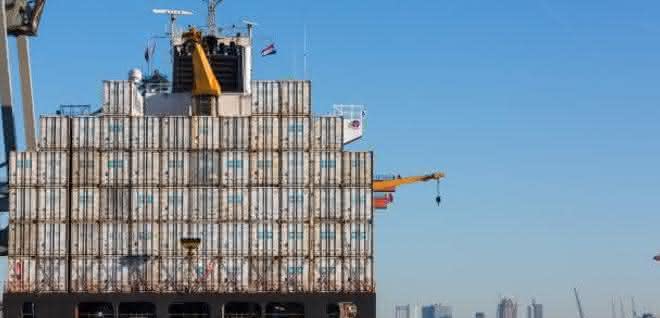
The Port of Rotterdam Authority has published the figures for the first quarter of the year: 123.9 million tons were handled in total, compared to 117.8 million tons in the same period last year. The increase related to container throughput and fuels, while the throughput of mineral oil products, iron ore and scrap declined. Allard Castelein, CEO of the Port of Rotterdam Authority: "2019 got off to an excellent start with record throughput volumes in the first quarter. The quarterly figures also confirm that Rotterdam has once again strengthened its position as a hub for the storage and onward transportation of containers and LNG (liquefied natural gas). For the year as a whole, we are sticking to our forecast of a slight increase in throughput volumes for 2019."
Handling of liquid bulk increased by 4.6% overall to 58.5 million tons. The increase in crude oil (10.4%) was particularly significant, due to larger deliveries of oil from the USA. However, the decline in heating oil trade between Russia and Asia led to a 7.4% drop in the handling of mineral oil products. LNG throughput increased by 143% year-on-year to 1.8 million tons. In dry bulk, iron ore, scrap and coal are the most important types of cargo handled in the port of Rotterdam. A 17.9% drop in the handling of iron ore and scrap to 5.9 million tons due to a 5% drop in steel production in Germany was offset by a 15.7% increase in the handling of coal to 7.5 million tons. Container throughput by weight rose by 5.9% to 38.0 million tons, continuing the previous year's increase.


You might also be interested in
Further growth in container throughput in Rotterdam in the first quarter
Rotterdam, 23 April 2018 - The port of Rotterdam handled 1.2% less cargo in the first quarter of 2018 than in the same period last year. A total of 117.8 million tons were handled, compared to 119.3 million tons in the first quarter of 2017.
 read more...
Throughput in the port of Rotterdam increases by 3.9
Rotterdam, 27 July 2017 - With a 3.9% increase in throughput, the port of Rotterdam can look back on a good first half of 2017. Eight of the ten market segments recorded an increase. The overall growth in throughput was mainly...
read more...Sustainable across the Rhine
The "GAS 95", another innovative ship design from the HGK Shipping Design Center, has been sailing on the Rhine since 8 February: low-emission thanks to diesel-electric propulsion, future-oriented thanks to its "future-fuel-ready" design and...
read more...Germany's first center for remote-controlled ships opened
Seafar, a Belgian technology and service provider for remote-controlled and crew-reduced inland navigation, has set up the first so-called Remote Operations Center in Germany together with its project partners HGK Shipping and Reederei Deymann.
read more...Ole Trumpfheller new Head of Northern Europe at Maersk
Effective May 1, 2024, Ole Trumpfheller will assume the role of Vice President and Managing Director of Maersk's North Europe Continent (NEC) Area, based in Hamburg.
read more...NWL and DBR Hamburg cooperate in container handling
Norddeutsche Wasserweg Logistik (NWL) and Deutsche Binnenreederei (DBR) Hamburg declare their official merger in the container business.
read more...LHG holds its own in a difficult environment
Total throughput decreases moderately by 4.8 percent
read more...Maersk and Hapag-Lloyd agree on joint operational cooperation
Hapag-Lloyd and Maersk have signed an agreement for a new, long-term operational cooperation called "Gemini Cooperation", which will start in February 2025. The aim is to create a flexible and interconnected service network in maritime...
read more...Port of Hamburg: Zapp becomes EMP
The Zapp IT platform - the comprehensive and mandatory IT system for the customs export process in the Port of Hamburg - is being relaunched and renamed.
read more...