
Sustainability
Green logistics in the warehouse
Sustainable management and green process optimization are also on the rise in intralogistics. With ProlagWorld, CIM aims to make its customers' warehouses not only more sustainable, but also more cost-efficient.
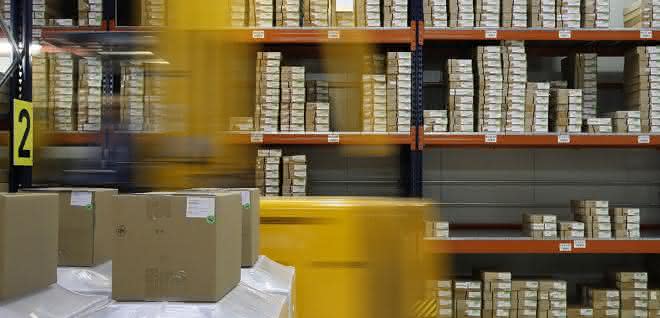
The warehouse management system ensures lower carbon dioxide emissions by reducing energy requirements as well as the careful use of resources and a reduction in waste through optimized material management. The switch from paper-based work to digital process management alone, as is the case with the introduction of ProlagWorld, results in a significant reduction in the use of materials. Even almost self-evident functions such as route optimization or two-stage picking ensure a reduction in energy requirements in the warehouse. The software also offers the user further levers for sustainable logistics processes in the warehouse.
In the automated warehouse of a large Austrian textile manufacturer, the introduction of ProlagWorld has reduced energy consumption by around 50 percent. ProlagWorld controls the storage and retrieval machines in the warehouse at different speeds depending on the degree of utilization and the length of the route. In addition, the system automatically switches off resources that are not required in order to systematically reduce carbon dioxide emissions. A practical side effect: the "economy cycle" of the storage and retrieval machines protects the material, reduces wear and tear and extends the service life of the components.
Order consolidation reduces packaging material and transport distances, as it bundles delivery orders in such a way that they are always delivered to the customer together using one means of transport wherever possible.
The ProlagWorld functions de-kitting and remnant management, which are used by CIM customers in production, ensure the sustainable use of materials and the reduction of waste. With de-kitting, finished parts or returns can be easily dismantled with software support. For example, individual defective components can be replaced without having to dispose of the entire finished part. Remnant management ensures optimum use of materials and costs, as remnants are returned to the warehouse and are therefore available for new production orders. This process is optimized in such a way that hardly any offcuts need to be disposed of.


You might also be interested in
PepsiCo Polska relies on Mecalux
PepsiCo Polska is working with Mecalux to drive forward the automation of its logistics and is planning an intelligent warehouse.
 read more...
System Logistics implements new high-bay warehouse at Asahi Poznań
With the construction of a modern, automated high-bay warehouse at Asahi Poznań, System Logistics wants to set an example for the future of intralogistics. The project, which is being implemented in close cooperation with a total of twelve...
read more...Metzger Autoteile cooperates with Kardex Mlog
Metzger Autoteile has commissioned Kardex Mlog as general contractor to build an automated five-aisle high-bay warehouse with around 6,000 pallet spaces and an AutoStore system with around 80,000 boxes.
read more...TGW Logistics expands headquarters in Marchtrenk
The ground-breaking ceremony for the expansion of the TGW headquarters in Marchtrenk took place on September 25. TGW Logistics will invest in a 25,000 m² production building and a highly automated warehouse system by summer 2026.
read more...Storage media leverage savings potential
Save energy in AKL with supercaps
More and more operators are equipping their storage and retrieval machines (SRMs) in automated small parts warehouses with energy-saving capacitors as a storage medium. For SRMs in refrigerated warehouses, capacitor storage pays for itself quickly,...
read more...New Quooker logistics center realized with Swisslog
The ground-breaking ceremony for a new, automated Swisslog logistics center for Quooker in Nieuw Reijerwaard, the Netherlands, has been held and was celebrated appropriately.
read more...MS Motorservice International relies on Kardex Mlog
MS Motorservice International, the sales organization for Rheinmetall's global aftermarket activities, has commissioned Kardex Mlog as general contractor to build a four-aisle high-bay warehouse at its Neuenstadt site. The high-bay warehouse will be...
read more...Dematic with doubled trade fair presence and AMR showcase
For the first time, Dematic will be exhibiting at two stands at Logimat. The automation technology provider wants to show how users can master the challenges of intralogistics with its material flow solutions.
read more...Single-mast storage and retrieval unit
Automation even for small warehouses
Westfalia Technologies will be exhibiting its latest bestseller for the first time at Logimat - a compact single-mast storage and retrieval machine.
read more...