
Sustainability
Port of Antwerp wants to reduce carbon dioxide emissions
Antwerp is taking a further step towards a lower-emission port: eight players in the port area, including the port itself, Air Liquide, BASF, Borealis, INEOS, ExxonMobil, Fluxys and Total, have signed a cooperation agreement to investigate the possible development of a Carbon Capture, Utilization & Storage (CCUS) infrastructure.
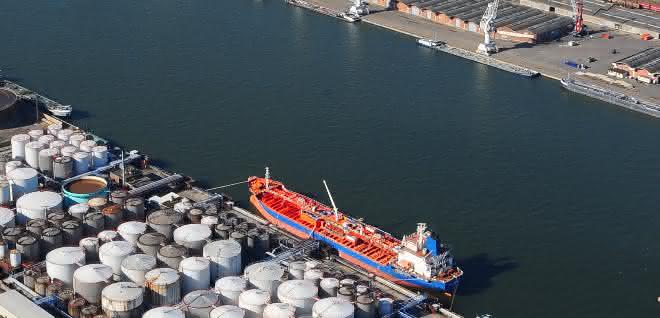
The consortium will conduct a joint study on the economic and technical feasibility of such systems. CCUS applications could make an important contribution to achieving climate targets.
As the largest energy and chemical cluster in Europe, the port of Antwerp is a suitable location to promote cooperation between companies and solutions for carbon dioxide reduction. In order to put this into practice, a feasibility study for carbon capture, utilization and storage (CCUS) facilities in the port will be carried out as part of the cooperation agreement. These facilities are to follow the principle of "open access" and would therefore be available to the entire industry in the port. Carbon capture and storage (CCS) and the use of carbon dioxide as a raw material for various industrial applications (carbon capture and utilization, CCU) are seen as important instruments for the transition to a lower-emission port. If the proposals prove to be technically and economically feasible, the development of such facilities can lead to a reduction in carbon dioxide emissions by 2030.


You might also be interested in
Neste expands logistics for recycled raw materials
Neste is expanding its logistics infrastructure for liquefied recycled raw materials at its refinery in Porvoo, Finland, including materials such as liquefied plastic waste and liquefied rubber tires.
 read more...
Successful 2023 - subdued prospects for 2024 in Bremen
As part of the 11th Project Logistics Forum, BHV-Bremische Hafen- und Logistikvertretung presented the initial results of its survey for the current "BHV Project Logistics Monitor".
read more...Port of Hamburg: Zapp becomes EMP
The Zapp IT platform - the comprehensive and mandatory IT system for the customs export process in the Port of Hamburg - is being relaunched and renamed.
read more...Annette Walter becomes Chief Financial Officer of HHLA
Annette Walter takes over as Chief Financial Officer (CFO) of the European logistics group. Angela Titzrath, whose contract will be extended, will remain Chairwoman of the Management Board.
read more...New rail transshipment facility in Bremen
Rhenus Weserport Bremen is building a fully automated new rail transshipment facility for loading aluminum hydroxide and aluminum oxide at Terminal 4 of Bremen's industrial port.
read more...Vahle and Swedish start-up Elonroad cooperate
Paul Vahle is cooperating with the Swedish e-mobility start-up Elonroad. Both companies have signed a memorandum of understanding to announce their partnership.
read more...22 companies under one roof
The interest of Bremen companies in participating in Transport Logistic is once again very high. Numerous companies from the logistics sector have registered for the joint stand of the ports of Bremen organized by Bremenports.
read more...With the electric locomotive to JadeWeserPort
Free ride
The work to electrify the rail-side infrastructure of Germany's only deep-water container port, JadeWeserPort Wilhelmshaven, has now been completed on schedule and just in time for Deutsche Bahn's timetable change.
read more...Green shore power system for workboats
The Port of Rotterdam Authority and Eneco will install shore power systems in the Waalhaven so that Boskalis' moored workboats can run on green electricity instead of fossil fuels. There are two busy berths on the quay at this location.
read more...