
Kemapack offers sustainable packaging solutions
"Only safely transported goods increase the eco-balance of the supply chain"
Packaging protects goods and facilitates their transportation. So far, so good. But apart from that, they are hardly noticed. Kemapack Managing Director Reinhard Scheuermann proves in an interview that a second look at packaging technology is definitely worthwhile.
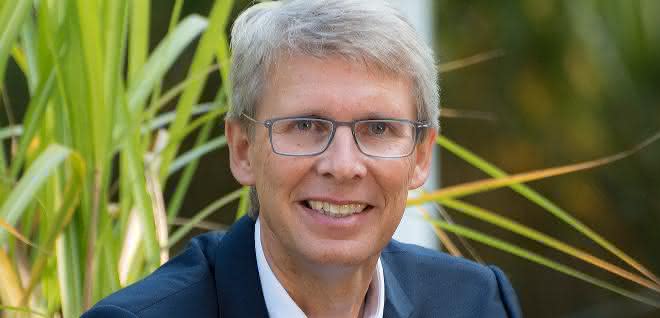
Mr Scheuermann, your company specializes in strapping, stretching and edge protectors. To be honest, these are areas that don't sound very exciting at first glance. Is this impression deceptive?
Scheuermann (smiling): You are in fact completely wrong with this view. On the contrary. We operate in a very innovative environment and at Kemapack we have been working intensively on the topics of efficiency, sustainability, ergonomics, costs and digitalization for a very long time. It is not for nothing that we have just been recognized for the second time by an independent jury of experts as a TOP 100 Innovator 2022. This is an award that is only given to companies with positive innovation management and corresponding innovation successes. This award is immensely important to us. After all, it is confirmation from a competent authority that we are on the right track with our optimization processes. The entire Kemapack team works on these future-oriented solutions every day with the aim of offering our customers even better service and an enhanced shopping and service experience.
That sounds very promising. You have provided some very topical and also very important keywords with your answer. Let's stay with sustainability for now. What options do you offer your customers who want to make their transportation more sustainable?
Scheuermann: You see, the primary aim of packaging - or, in technical terms, load unit securing - is to protect goods during storage or on their way to the recipient. We have to offer suitable packaging systems for this purpose. After all, if the goods are damaged or destroyed during transportation, they not only have to be disposed of, but usually also sent again. This results in unnecessary transportation routes. As a result, and conversely, this means that Really good packaging also always makes a valuable contribution to improving the eco-balance. But I would like to go even further in my answer. Take the transportation of chemical or pharmaceutical goods, for example. If something goes wrong during transportation and the packaging fails, this not only results in very high costs but also poses a risk to the environment. Leaking chemicals can become a major environmental problem and the consequences are correspondingly costly.
That makes sense. What remains, however, is the widespread view that the packaging itself is detrimental to climate protection. After all, the packaging material, which is usually made of plastic, has to be disposed of somehow after transportation. Do you have any solutions for this?
Scheuermann: Yes, I can think of a few examples right off the bat. But let's take the stretching sector as an example. In this sector, we have machines in our range that provide a higher tensile force. These machines can pull very high-quality films much tighter around the goods to be packaged. On the one hand, this saves around 30 percent material, i.e. plastic in the form of stretch film. In my opinion, this is a considerable value that significantly improves the ecological balance and the economic efficiency of this type of packaging. At the same time, the stability of the packed load carriers is also significantly increased by the tighter wrapping. This increases the certainty that the goods will reach the recipient without damage. And this brings us back to my first answer: packaging is particularly ecological if it protects the goods so well that they arrive undamaged at the recipient.
30 percent savings potential for plastics sounds very good. That brings me to a new topic: what about substituting plastics with other materials?
Scheuermann: I am very ambivalent about this question. Of course, it makes sense at first glance if we were to do without plastics, for example in the filling and padding material, and replace them with more ecological materials such as paper. We would very much like to do this. I would like to give you an example of why this does not always make sense: If we take paper as a filling and insulating material, then the maximum it can successfully cushion is the first fall of a heavy electric motor. After that, the material - in contrast to the plastic air cushion bag - is flat and no longer absorbs any further shocks. If this usually very valuable motor is bumped several times during transportation, it will most likely reach its recipient in a defective condition. Now the circle closes again. A defective device must be replaced and usually delivered new. From this point of view, air cushion film therefore has a much betterCO2 balance than paper cushioning. What's more, the plastic material can be used several times without any problems.
We have now learned a lot about the options you offer your customers who want to act ecologically. What about climate protection in your own company?
Scheuermann: In fact, we have been ecologically oriented for many years - long before the topic was discussed so intensively in public. It goes without saying that we collect rainwater for our process water, drive electrically powered service vehicles, have switched to presence-based LED lighting and obtain large parts of our electricity requirements from our photovoltaic system. We also service many of the machines we sell remotely. This means that our technicians try to diagnose faults from our headquarters in Landsberg. This not only gives us a head start in terms of time in the event of a fault, but also saves a great deal ofCO2 as there is no need to travel.
Mr. Scheuermann, thank you for this interview.
About Kemapack: Kemapack GmbH, with headquarters in Landsberg am Lech and sales offices in Bamberg and Appenzell (eastern Switzerland), is a company in the packaging industry specializing in strapping, stretch-wrapping and edge protectors.


You might also be interested in
Steel strapping tools with battery operation
With the OR-TR19 and OR-TR32, packaging specialist Kemapack is launching the world's first battery-powered steel strapping tools.
 read more...
The wrapper on the move in the warehouse
The PWR-S77 self-propelled stretch robot from Kemapack is in use at a specialist for solar energy systems. Compared to manual film packaging, it saves time and material.
read more...Robot-Controlled Packaging of Rolls
Koch Robotersysteme, a company specializing in the integration of robotic systems, has developed a complete, automated packaging line for packaging rolls based on Tentoma's RoRo StretchPack packaging machine.
read more...The packaging world looks to Düsseldorf
Hot topics at Interpack 2026
Interpack has been bringing together the global processing and packaging industry in Düsseldorf since May 7, 2026. The focus will be on AI, automation, sustainable materials and new skills requirements.
read more...Save Food Initiative at the Interpack 2026
Clever approaches against food waste
At Interpack 2026, the Save Food Initiative and its international partners will be showing how packaging systems can become more sustainable and reduce food waste. Expert talks, awards and practical examples will provide concrete inspiration.
read more...End-of-line solutions for global logistics
Mosca's leitmotif for Interpack is networked efficiency. The company is presenting innovations in the field of load securing. Integrated solutions that combine sustainability and Industry 4.0 are at the heart of the trade fair presentation.
read more...Antares Vision Group at the Interpack 2026
Ecosystem for quality and traceability
At Interpack 2026 in Düsseldorf, the Antares Vision Group will be presenting solutions for greater transparency, security and compliance along global supply chains.
read more...PPWR spurs market expansion of Orbis Europe
The manufacturer of reusable plastic packaging Orbis is expanding its market presence, investing in new products and seeing increasing demand for durable packaging solutions as a result of the PPWR.
read more...End-of-line systems for industry and logistics
MSK, a specialist in intralogistics solutions for all aspects of pallet handling, will be showcasing innovative end-of-line systems at Logimat 2026 that have been developed to meet the requirements of manufacturers and distribution/logistics centers.
read more...