
Commercial vehicle business
SAF-Holland Group Sustainability Report 2019 published
The Sustainability Report for 2019 shows how SAF-Holland is contributing to a more sustainable transportation industry and which activities are already proving successful. For the first time, the report includes all global production sites in the reporting.
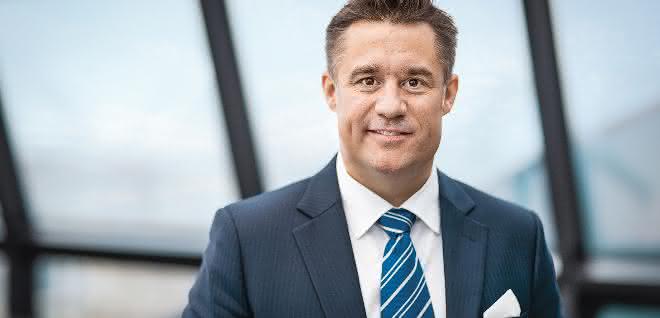
For the first time, the sustainability report covers all 24 production sites of the commercial vehicle supplier in the four regions EMEA, Americas, APAC and China. "This underlines the global orientation of our management approach to the sustainability of our business activities," says Alexander Geis, CEO of SAF-Holland (pictured). By recording and analyzing environmental impacts at all locations, it is now possible to provide complete information across the Group, for example on the energy consumption of the individual plants. On this basis, SAF-Holland will be able to identify hotspots at various stages of the product life cycle and take targeted countermeasures, for example to reduce greenhouse gas emissions. The medium-term goal is a climate strategy that systematically reflects the requirements of climate change in operational risk management and also utilizes them as new business opportunities.
Life cycle analysis as the basis for product innovations
In order to investigate and improve all environmental impacts - for example of a complete axle assembly - SAF-Holland has drawn up a comprehensive life cycle assessment for a trio axle assembly and examined various usage scenarios. The largest part of the life cycle is the product use phase in driving operation. The decisive parameter here is fuel consumption. "With product innovations that reduce weight or bearing friction, we can save fuel and thus effectively reduce greenhouse gas emissions. We have been working hard on this for years and it will continue to be a focus of our developments in the future," explains the SAF-Holland CEO.
Strengthening sustainability in the supply chain
Responsibility does not stop at the factory gate: In 2019, SAF-Holland took a close look at the topic of "Sustainability in the supply chain". The company sees compliance with these standards as an important value creation factor. At the same time, permanently monitoring business processes enables risks to be identified, evaluated and ultimately minimized in the long term. For example, SAF-Holland takes into account potential risks from climate change, such as extreme weather events like prolonged periods of heat or flooding, in its warehousing and delivery routes. This applies equally to the supply chains and the company's own production facilities.
Updated Code of Conduct
In order to qualify as a supplier for SAF-Holland, all suppliers undergo a review process. Among other things, this includes a questionnaire for self-disclosure, for example on the topics of the environment or human rights. Recent audits - carried out in 2019 for 56 suppliers of production materials across the Group - have shown that all trading partners checked met the required standards. SAF-Holland has expanded its self-disclosure to include sustainability criteria and communicates its updated Code of Conduct to all suppliers in order to further sensitize auditors and purchasers and identify relevant topics in individual regions. The guideline for value-oriented and legally compliant action, which was first published in 2013, was extensively revised and adapted in 2019.


You might also be interested in
The packaging world looks to Düsseldorf
Hot topics at Interpack 2026
Interpack has been bringing together the global processing and packaging industry in Düsseldorf since May 7, 2026. The focus will be on AI, automation, sustainable materials and new skills requirements.
 read more...
Sustainability needs decisions
To mark Earth Day, Nagarro is calling for a rethink: sustainability should no longer be documented, but actively managed - with artificial intelligence as a central lever. Because AI brings light into the darkness of global supply chains.
read more..."Green logistics is a decisive factor in achieving climate targets"
What trends and developments are there in the industry when it comes to green logistics? Experts provide insights: Stefan Borggreve is CDO and board member at Hellmann Worldwide Logistics.
read more...Route planning for electric, hydrogen and...
"DRivE" project partners complete successful test phase
The "Production Engineering of E-Mobility Components" (PEM) chair at RWTH Aachen University has successfully completed the pilot phase of the "DRivE" research project together with partners. In a two-month field trial, software was tested that is...
read more...On trend: green logistics
What trends and developments are there in the industry when it comes to green logistics? Experts provide insights: Markus Müllerschön is Vice President Sales at Viastore Software.
read more...On the way to green logistics
The topic of green logistics is becoming increasingly popular in the industry. Companies want to reduce the environmental impact of transporting and delivering goods without sacrificing the efficiency of their logistics chain.
read more...Noerpel Group tests hydrogen trucks
On July 25, Noerpel started the test phase with a hydrogen truck at the Heidenheim site. After two weeks, the Noerpel Group draws a positive interim conclusion about the 18-ton truck in terms of performance and driving characteristics, but remains...
read more...Sustainable logistics centers in times of crisis
With its Multicube concept, which the Pfenning Group has been pursuing for over twelve years, the company aims to set standards in terms of sustainable construction methods for logistics properties.
read more...Special land management and special foundation
A logistics park on a former landfill site
CTP, developer, owner and manager of industrial and logistics real estate, has won this year's Brownfield 24 Award in the Best Brownfield Project (Logistics) category with its first German new-build project.
read more...