
Logistics real estate
New processes require innovative logistics solutions
A dream of the future until recently, but already a reality today: engineers from the USA have developed a small car that is manufactured almost entirely by a 3D printer using special software. This printed car is not a pilot project. It is set to go into series production in the near future. A guest article by Andreas Fleischer, Business Unit Director Northern Europe at Segro.
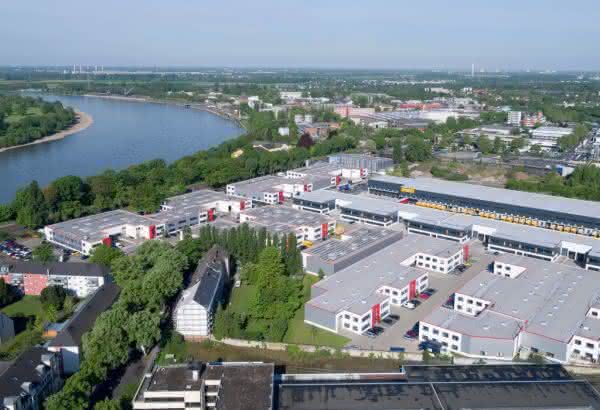
3D printing is just one of countless examples of the far-reaching restructuring of production processes as a result of digitalization. However, the new processes also require a rethink in the area of logistics. Thanks to new technologies, it will be possible to produce goods on demand for the first time. In future, items will no longer be pre-produced and stored as before, but ordered on demand at short notice and customized. This leads to changes in space requirements, as storage space is often no longer required to the same extent as before. At the same time, however, the space must be moved closer to the production site and become much more flexible.
Different trends, similarly high requirements
Logistics centers must be able to keep pace with these developments. This applies to both the technical and structural requirements of the buildings. Unlike in the past, industrial companies are dependent on being able to adapt logistics space to their needs at any time. The greater interlinking of individual areas is also becoming more important due to new production processes - this must already be taken into account when building the halls. The same applies to the equipment of the individual rooms so that new technologies can be accommodated. One example: computer and sensor-controlled machine-to-machine communication. Here it makes sense to work together with the suppliers of such systems as early as the development stage.
However, the increasing automation of processes is also leading to opposing trends: urban manufacturing concepts combine traditional trades such as tailoring, saddlery and shoemaking with modern sales concepts. A central idea is the individualization of high-quality products to which the customer develops an emotional connection. Examples include the handmade reading chair or shoes that cannot be found a second time. As much as these business and production models differ from 3D printing, the logistical requirements with modern, small-scale storage units are similarly high.
Keeping an eye on the ability to re-let

In addition to the restructuring of operational processes for a tenant, it must also be possible to guarantee the re-letting of the logistics space. The guiding principle here is multi-user compatibility. To ensure that the property does not stand empty as soon as a tenant moves out, additional incentives must be created alongside the convertibility of the space. Among other things, it is important to use component optimization and energy-saving concepts to cap the ancillary costs for tenants. For example, a monitoring tool that informs users in real time about their energy consumption and automatically generates a message in the event of excessive consumption values. However, it is not only the space that needs to be adaptable, but also the contracts - although a long-term tenant naturally offers the best conditions for cooperation, companies should be offered flexible term models in order to optimally meet their respective needs.
Another important development is taking place in the vehicle fleets of courier, express and parcel service providers (CEP) as well as in manufacturers' own vehicle fleets: More and more companies are converting to electric vehicles. Logistics developers should therefore also consider integrating the electrical connections into their new-build properties in such a way that sufficient charging points can be installed in the event of a subsequent lease. Despite all space optimization, a logistics property is ultimately only suitable for different users if it is also compatible with their delivery concepts.
The solution: modern city logistics concepts
In addition to space configuration, however, the question of location is also becoming increasingly important. Just as production is changing, delivery times are becoming shorter. But it would be too short-sighted to think only of the individual customer who orders their weekly shopping or birthday presents online with same-day delivery options. B2B e-commerce is also rapidly gaining in importance. Keyword spot business. Everything that applies to the B2C sector in terms of logistics also applies to wholesalers. Apart from the fact that the delivery quantities are incomparably larger and therefore also the logistical effort. Modern city logistics concepts are needed to meet these requirements.
The two factors of time and distance ensure that production and logistics complexes will increasingly be built in inner-city locations in future. However, due to the lack of space in conurbations and the increasing congestion of inner-city transport hubs, new concepts are needed: modern, finely structured and decentralized city parks with flexible options for space utilization and alternative delivery methods such as e-bikes or pull aids will soon shape logistics just as much as multi-level solutions - if it is not possible to expand in width, logistics centers will have to take the step upwards, as is already being successfully practiced in Asia. Anyone who wants to get an idea of the new construction method here in Germany can do so in Munich-Daglfing: Germany's first multi-storey logistics property with a separately accessible external ramp was recently handed over to an online retailer there.
Andreas Fleischer


You might also be interested in
Winner material flow PRODUCTS OF THE YEAR 2023
Conductix-Wampfler: ChargeLine 0865
Two-pole conductor rail segments for efficient opportunity charging of shuttles, suitable for thousands of cycles per day.
 read more...
Hermann Grewer celebrates his 80th birthday
Hermann Grewer, Honorary Chairman of the North Rhine-Westphalia Transport and Logistics Association (VVWL) and Honorary President of the German Road Haulage, Logistics and Disposal Association (BGL), celebrated his 80th birthday on June 6.
read more...Well chilled for sure
V-Zug Kühltechnik AG, developer and manufacturer of refrigeration appliances and part of the successful V-Zug Group, has set up a new production facility for refrigerators of all heights and dimensions at its Swiss site in Sulgen.
read more...Advantageous automation of small parts warehouses
The RSX1 shuttle system will be at the center of Rocketsolution's presence at this year's Logimat trade fair.
read more...Reduced energy requirements in the high-bay warehouse
One of Germany's leading premium car manufacturers is already focusing on energy efficiency in the production of its new SUV model with electric drive. The storage and retrieval machines in a high-bay warehouse at the production site have been...
read more...Low lift pallet truck for light duty applications
Clark has launched a new low lift pallet truck with the model designation LWio15 for light transport tasks. The truck has a load capacity of 1500 kg and is suitable for short distances in goods distribution, production or warehousing.
read more...Internationalization as an opportunity
E-commerce is in a state of flux. Changes in purchasing behavior and procurement problems are keeping e-commerce retailers busy. Logistics plays a decisive role in the overall online shopping experience.
read more...Fulfillment Center for Frisco.pl
Polish eGrocery specialist and TGW deepen partnership
TGW is building a highly automated fulfillment center for Frisco.pl in the Polish capital Warsaw. This is the second project in a row that the two companies have implemented together.
read more...Which world will it be in 2023?
Michael Schreckenberg teaches at the University of Duisburg-Essen as Professor of Physics of Transport and Traffic. Once a year, he addresses the readers of materialfluss, formerly LT-manager, with a critical and humorous expert article on transport...
read more...