
Logistics real estate
Logistics at the pulse of metropolitan areas
The coronavirus pandemic has brought challenges for the logistics sector - both in the supply chain and in the demand for logistics properties. But what are the short-term trends and which developments will shape the segment in the long term? Jim Hartley, Business Unit Director Northern Europe at real estate developer Segro, provides answers.
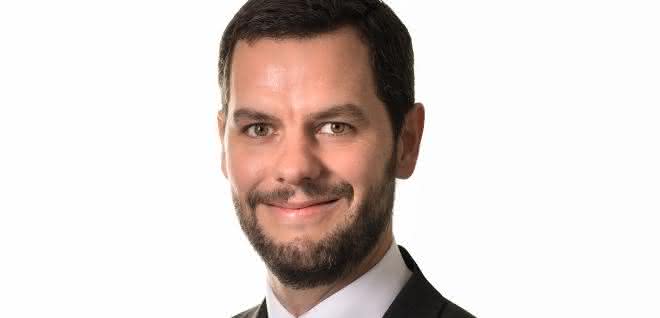
LT-manager : Mr. Hartley, we were all surprised by the coronavirus pandemic a few months ago. What were the specific consequences for the logistics real estate market?
Jim Hartley: It's true that the virus has changed and in many cases increased demand for logistics space - especially in metropolitan regions. On the one hand, employers naturally want to protect their teams from infection as much as possible. The switch from single-shift to multi-shift operation was not uncommon, meaning that in some cases duplicate infrastructures had to be created or entire hall areas had to be rented so that workers on different shifts did not come into contact with each other. For some companies, however, it was also very specifically about being able to cope with the increasing order situation. This applies above all to players in the e-commerce sector. According to the research company eMarketer, turnover in this sector rose by more than 16% in the first half of 2020 compared to the same period of the previous year and the overall share of retail sales exceeded 10% for the first time. This strong order situation is naturally associated with higher space requirements, for which we as developers and owners had to find a solution.
LTM : As a real estate developer, how did you have to respond to this in concrete terms?
Hartley: For us, the top priority was to remain flexible and enable this growth in space, not least for our existing customers. However, like many other aspects, the key factor of flexibility is not new. We at Segro have been active in Germany for over 50 years and have long been developing our business parks and logistics properties in such a way that different types of space can be flexibly combined with each other and individual halls can be divided or retrofitted according to tenant requirements, for example with a mezzanine level for offices. Finally, there are many other factors that require a high degree of flexibility - the space requirements of manufacturers and logistics companies have been changing continuously for years.
LTM : So the current situation is reinforcing existing trends?
Hartley: Absolutely. Even before corona, no one could predict exactly how the logistics property of the future would develop - we only know that new challenges are constantly being added for our tenants, which we have to reflect in terms of space. Some of these trends are sector- or technology-related. For example, the advance of 3D printing enables spare parts to be manufactured on site instead of having to be stored temporarily as was previously the case. This requires different properties in the light industrial sector: the properties must ensure close integration of logistics and production areas and, above all, be as close as possible to the end customer. In addition, office and service areas must be available to handle customer appointments and showcase the company's own products on site. A similar challenge in terms of space requirements is presented by the ever-increasing range of goods in e-commerce with ever-shorter delivery times. Customer proximity is also one of the most important factors here. Nevertheless, we must not ignore the social megatrends - above all re-urbanization. It ensures that cities continue to grow and that more and more people need to be supplied with goods that are available to them in both analog and digital form.
LTM : So cities are becoming more and more populated. How do you deal with the problem of limited space?
Hartley: For over a decade now, we have been focusing particularly on brownfield redevelopments. This means that we reposition brownfield or derelict but developed land on the market as modern commercial real estate. This also reduces land sealing in metropolitan regions, as no new building land needs to be designated. In the meantime, we have successfully realized such projects in numerous metropolitan areas - in a wide variety of dimensions. For example, we have realized modern CityParks in Cologne, Düsseldorf and Frankfurt, i.e. small-scale business parks with areas for urban logistics, light production, service and, in some cases, cultural and leisure facilities. We always have a broad mix of tenants from different sectors in mind. In addition to the aforementioned flexibility of space, these parks are also characterized by the fact that they are only a few kilometers as the crow flies from city centers and important neuralgic points such as the respective airport. We also develop large-scale big box properties in this way. The best example is our project near Dortmund, where we are revitalizing a decommissioned coal-fired power plant into a modern logistics and commercial site for companies of all sizes and from a wide range of industries.
LTM: What is the initial situation on the properties before you develop them?
Hartley: That varies greatly. For our CityPark Cologne, for example, we acquired and redeveloped an old paint factory only around 4 kilometers from Cologne Cathedral and in the direct vicinity of the trendy Cologne-Ehrenfeld district. The problem here was that the soil was contaminated with paint residue and we had to carry out soil revitalization. But the initial situation was also extremely complex at other locations: in Frankfurt am Main, Segro took over an old US Army military site and, among other things, carried out extensive renaturation of the adjacent riverbed. Our first fully developed CityPark in Düsseldorf was previously the site of a steel construction company, and part of the property is a listed building. It has since become the commercial home of logistics companies such as DHL, as well as other companies such as electrical wholesaler Sonepar and creative agency McCann Erickson. The innovation center of 3D printing specialist EOS is also located there. As a result, the park has become home to a wide variety of companies - while retaining its historical flair. Finally, we flexibly integrated the listed facades of the former steelworks into our project, creating a unique ensemble of old and new. Incidentally, we liked the result so much that we moved in ourselves with our German headquarters. There is also a bouldering hall from the company Superblock for the Düsseldorf area.
LTM : Which regions are you currently focusing on in particular?
Hartley: In addition to the Rhine-Main region and the metropolitan regions of Stuttgart and Berlin, we are currently concentrating primarily on the Rhine-Ruhr region with the Ruhr area as Germany's largest conurbation. This is where major challenges meet equally great potential in the logistics and production sector. On the one hand, millions of inhabitants in the Rhine-Ruhr region have to be supplied and shipments of goods have to be coordinated all over the world. In addition, land is very limited, especially in the classic Ruhr Valley cities, which is why there is often no way around brownfield redevelopment. On the other hand, the cities of Düsseldorf, Cologne and Bonn in particular offer excellent economic fundamentals, and the former industrial cities are also gradually transforming into modern logistics and service locations. There are also unique infrastructural opportunities for logistics companies: Cologne-Bonn Airport, for example, is one of the most efficient air freight hubs in the whole of Europe, while Duisburg is home to the largest inland port in the world - which is also one of the end points for the mammoth "One Belt, One Road" project, also known as the new Silk Road. In addition, not only the land and rail routes, but also the waterways in the geographical center of Europe are well developed. The DUSS terminal Cologne-Eifeltor is one of the most important multimodal transhipment points between road and rail in the whole of Germany. For all these reasons, we have a particularly large number of projects in the region, which we are developing in phases and thus continuing to expand. In addition to the aforementioned properties in Cologne and Dortmund, we are currently revitalizing a former thyssenkrupp site to create the Segro Logistics Park Oberhausen, for which we recently received planning permission for a further 48,000 square metres of usable space. We have another logistics park in Krefeld - with more than 200,000 square meters of rental space, this is our largest property in the whole of Germany.
LTM : New logistics properties also mean more individual traffic. How are you responding to this?
Hartley: Our aim is to relieve the pressure on central inner-city traffic hubs in particular. This can be achieved with a fine-grained network of urban logistics areas and short distances to the end customer. We are also working intensively on enabling alternative delivery methods and, for example, are increasingly installing e-charging stations to enable e-cargo vehicles, e-bikes and similar last-mile delivery strategies. We have also built a logistics center near Paris that enables us to connect the city center by ship. This guarantees faster deliveries and also protects the environment.
LTM : A recent survey by KPMG shows that the environmental protection factor is taking a back seat for German companies in the face of coronavirus. Does this have consequences for the way logistics real estate is developed?
Hartley: I don't think so. In the meantime, the logistics industry has come to realize that ecology and profitability go hand in hand. After all, the possibility of energy-saving operation significantly reduces ancillary operating costs. At the same time, the trend towards consistent monitoring of consumption is gaining ground within the industry in order to detect and optimize inefficient behaviour as quickly as possible. The same applies to the installation of photovoltaic panels and similar options for producing the energy required on site. All these measures also make sense from a purely economic point of view. For example, Segro's approach includes using renewable building materials such as wooden trusses instead of traditional steel girders, recycling as much construction waste as possible in our brownfield redevelopments and strengthening local biodiversity with targeted measures - including in the form of insect hotels or bird nesting boxes, as well as herds of sheep and buffalo that produce local products such as wool or milk for mozzarella and automatically take care of the lawn maintenance. In other words: We will continue to focus on sustainable approaches. I am also sure that the environmental aspect will become increasingly important in terms of employer positioning - after all, a young generation is entering the job market that is committed to environmental and climate issues and for whom a sustainable but also appealing working atmosphere is important.
LTM : That almost sounds as if the New Work trend is also finding its way into logistics real estate?
Hartley: Definitely. I am sure that we also have to make sure that employees feel comfortable in logistics and light industrial properties. This starts with public transport connections that make it easy to get to work, but also includes the aforementioned environmental issues and structural aspects that make working more pleasant - including natural daylight and good indoor air quality. After all, the ability of logistics companies to expand depends, among other things, on their ability to attract new staff. So I see no reason why we shouldn't adopt the ideas of New Work for industrial real estate as well. Both a high-quality furnished lounge with a mossy side wall, which serves as a place for social interaction, and outdoor areas with leisure facilities such as a climbing wall or a small basketball court can significantly enhance the quality of work and help employees to identify more quickly with their employer. In addition, deficits in the local infrastructure can be compensated for in a targeted manner: If there are no good restaurants in the area, for example, cooperation with local food trucks is a good way of providing employees with an attractive range of meals at lunchtime. So what may sound like an unimportant gimmick at first can soon become an important factor in strengthening or expanding your own market presence.
LTM : Finally, a slightly different topic: Segro's 100th anniversary coincided with the coronavirus year 2020. Did you still have the opportunity to celebrate a little?
Hartley: Of course, we weren't able to celebrate as we had planned. But I am personally all the more pleased that we were able to realize an important project: Our Segro Centenary Fund, a fund with which we will donate a total of over ten million euros to aid organizations across Europe over the next ten years. This year, we are focusing primarily on projects that help to provide emergency aid in times of coronavirus and mitigate the direct economic consequences of the pandemic. In Germany, the donations will benefit the Munich food bank and Diakonie Düsseldorf, among others. Otherwise, I see the anniversary more as motivation: our first hall in Slough near London is still in use after one hundred years. We are also pursuing this ambitious goal with our current projects - because without knowing how logistics will work in ten, fifty or one hundred years, we want to develop properties that move with the times and can be converted again and again.
LTM: Thank you very much for the interview.


You might also be interested in
e2open bonded warehouse solution for several European countries
e2open, a provider of networked supply chain platforms, has expanded its customs warehouse management in Europe. Companies that import goods to Europe now have the option of using various customs warehouse programs.
 read more...
New start-up aims to facilitate access to robotics
Pssbl.Robotics, a start-up founded jointly by Schubert and Weiss, aims to simplify the introduction of robotics in mechanical and plant engineering.
read more...Test shipment with RoRo Car Carrier via Bremerhaven
Last August, the RoRo Car Carrier MV Cosco Shengshi moored in the northern port of Bremerhaven and started its first test shipment in order to expand the service to Europe.
read more...Rhenus grows at sea and on the road
At the northern tip of Lower Saxony, the logistics service provider is preparing for the growing import of cars via Cuxhaven; in Nuremberg, Rhenus is building a new logistics center next to the existing high-bay warehouse; in Dietzenbach, Hesse, the...
read more...Hermann Grewer celebrates his 80th birthday
Hermann Grewer, Honorary Chairman of the North Rhine-Westphalia Transport and Logistics Association (VVWL) and Honorary President of the German Road Haulage, Logistics and Disposal Association (BGL), celebrated his 80th birthday on June 6.
read more...Group7 expands corporate headquarters
The logistics service provider is planning 60,000 square meters of service and logistics center and an administration building with 5,000 square meters of floor space near Munich Airport.
read more...Cross-channel logistics: overcoming hurdles after Brexit
Hardly any other event has presented European road freight transport with such enormous challenges as Brexit. But there are solutions.
read more...Transport Logistic 2023
After a four-year break with a virtual interlude in 2021, Transport Logistic will return to the Munich exhibition grounds from May 9 to 12, 2023.
read more...Focus on internationalization
L.I.T. will be represented twice at Transport Logistic. The Brake-based logistics service provider's service portfolio ranges from warehousing and transportation using various modes of transport to contract logistics and comprehensive value-added...
read more...