
Logistics real estate
Great potential meets great thirst for energy
The automation of processes is also one of the major topics of the future in the logistics sector. It is therefore not surprising that new automated systems for coordinating the flow of goods are constantly being designed and existing ones further developed in the field of intralogistics. A guest article by Andreas Fleischer, Business Unit Director Northern Europe at Segro.
These innovation boosts in hardware and software can be found in automated high-bay warehouses as well as in innovative, scalable picking systems that are being used in ever-increasing quantities. For example, the online giant Amazon now operates more than 100,000 of its self-driving robots worldwide through its subsidiary Amazon Robotics (formerly: Kiva). By comparison, there were only 30,000 units at the beginning of 2016. And this is by no means the only system: SwissLog, for example, offers a similar product with its "CarryPick". In contrast to Amazon's in-house system, the latter is available on the open market and is now also being used in Germany.
Compared to its human counterpart, a picking robot can operate much more efficiently. While an experienced worker can manage around 200 to 250 picks per hour, the theoretical value that can be achieved by using CarryPick & Co. is well into the four-digit range. Converting to digital picking technologies enables enormous increases in efficiency. This also applies to space utilization. With a ceiling height of just three meters required for this system, more usable space can be created while maintaining the same hall height.
Increasing degree of automation in logistics properties
At the same time, automation is increasing the space requirements of these properties enormously. This is particularly the case because the current trend is towards a combination of different systems. For example, fully automated high-bay warehouses with a total height of 30 or 40 meters must be able to be used together with a multi-storey hall for a scalable system such as CarryPick. With a higher degree of automation, additional processes such as scanning operations are also interposed.
The degree of automation in real estate is gradually increasing. At present, a combination of automated systems and human employees is often the preferred utilization concept. There are impressive examples of semi-automated properties in Asia. What is important here is how well the systems interact with the human workforce. As automation increases, employees are required to cover less distance and do less physical work. Instead, they take over process monitoring and optimization and react to malfunctions. A worker must be able to move around the property and make individual picks manually in such a way that the remaining automated processes are not hindered.
Automation keeps politicians busy
The impact of the degree of automation on the job situation is also a political issue - while local authorities tend to fear a decline in employment figures, robotization is an answer to the labour shortage for logistics companies. At present, everything indicates that automation will continue to increase. The digitalization of intralogistics is having a major impact on building configuration, also against the backdrop of growing e-commerce. The corresponding properties are being tailored more and more specifically.
The use of automated high-bay warehouses and self-propelled picking robots suggest the move to vertical storage. Taller buildings and the increased floor space resulting from multi-storey buildings also make sense from the point of view of the increasing shortage of space. However, this requires an intensive examination of building law details. The basic prerequisite for the functionality of such a new type of property is the intelligent configuration of the building structure. After all, the investment measures for automated intralogistics systems are usually significantly greater than the cost of the property itself. The system components need to be integrated in such a way that short distances are covered and disruptive factors are eliminated.
Other fundamental aspects are the internet infrastructure with a broadband connection and fiber optic connections - as well as the question of the building's power supply and connected load. The conveyor technology and the charging processes of the self-propelled robots require high power capacities and increase energy consumption. Measures such as the installation of a reactive current compensation system help to optimize power consumption. The question of peak loads is also important. In addition to automation, this also involves converting numerous vehicle fleets. After all, all e-vehicles have to be charged at the same time after operating hours.
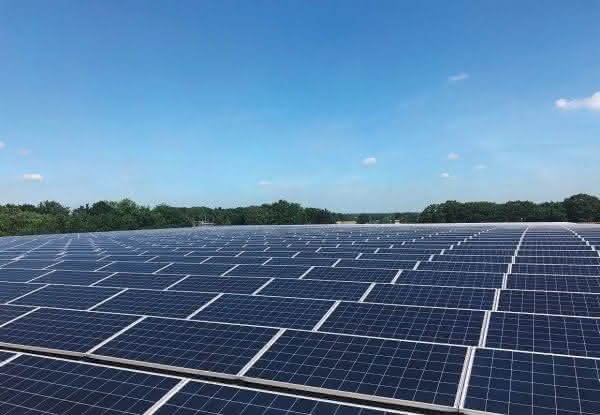
To quench the "thirst" of the picking systems, the property itself should produce energy. It is essential for this to integrate sufficient photovoltaic panels. The modules become more efficient and the electricity generation costs are lower. There are currently technical limits to battery technology and the issue of electricity storage, but research is being carried out.
Conclusion: The automation of intralogistics is progressing at a seven-mile pace and innovation cycles are becoming shorter. Real estate developers must therefore develop ideas on how properties can remain flexible and marketable as soon as a system is dismantled and replaced by a new one.


You might also be interested in
Winner material flow PRODUCTS OF THE YEAR 2023
Conductix-Wampfler: ChargeLine 0865
Two-pole conductor rail segments for efficient opportunity charging of shuttles, suitable for thousands of cycles per day.
 read more...
Hermann Grewer celebrates his 80th birthday
Hermann Grewer, Honorary Chairman of the North Rhine-Westphalia Transport and Logistics Association (VVWL) and Honorary President of the German Road Haulage, Logistics and Disposal Association (BGL), celebrated his 80th birthday on June 6.
read more...Well chilled for sure
V-Zug Kühltechnik AG, developer and manufacturer of refrigeration appliances and part of the successful V-Zug Group, has set up a new production facility for refrigerators of all heights and dimensions at its Swiss site in Sulgen.
read more...Advantageous automation of small parts warehouses
The RSX1 shuttle system will be at the center of Rocketsolution's presence at this year's Logimat trade fair.
read more...Reduced energy requirements in the high-bay warehouse
One of Germany's leading premium car manufacturers is already focusing on energy efficiency in the production of its new SUV model with electric drive. The storage and retrieval machines in a high-bay warehouse at the production site have been...
read more...Low lift pallet truck for light duty applications
Clark has launched a new low lift pallet truck with the model designation LWio15 for light transport tasks. The truck has a load capacity of 1500 kg and is suitable for short distances in goods distribution, production or warehousing.
read more...Internationalization as an opportunity
E-commerce is in a state of flux. Changes in purchasing behavior and procurement problems are keeping e-commerce retailers busy. Logistics plays a decisive role in the overall online shopping experience.
read more...Fulfillment Center for Frisco.pl
Polish eGrocery specialist and TGW deepen partnership
TGW is building a highly automated fulfillment center for Frisco.pl in the Polish capital Warsaw. This is the second project in a row that the two companies have implemented together.
read more...Which world will it be in 2023?
Michael Schreckenberg teaches at the University of Duisburg-Essen as Professor of Physics of Transport and Traffic. Once a year, he addresses the readers of materialfluss, formerly LT-manager, with a critical and humorous expert article on transport...
read more...