
Covid-19
Unitechnik cargo system in UN aid mission
High coronavirus case numbers in Africa and a simultaneous slump in passenger business: the state-owned airline Ethiopian Airlines (EAL) is facing major challenges due to the pandemic. With the modern equipment of the new cargo facility built by Unitechnik, the company has adapted at least part of its business model to the new situation in the short term: The air cargo facility in Addis Ababa serves as a hub for the humanitarian flights of the United Nations World Food Program (WFP).
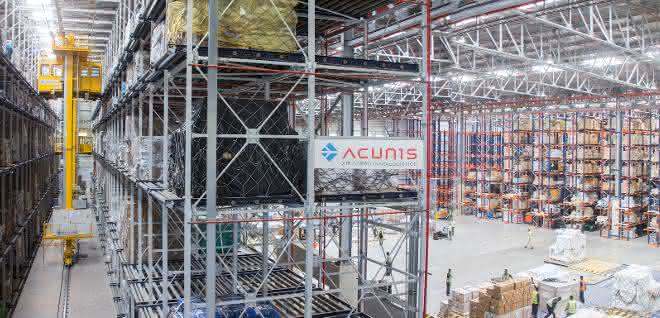
There are currently many indications that the pandemic is gradually spreading to the African continent - as of August 17, the 54 African countries recorded 1,128,061 confirmed infections across the continent. In order to support African countries in the fight against Covid-19, the UN set up a central logistics center for the transport of relief supplies back in spring. The air freight terminal recently built by Unitechnik Systems GmbH in the Ethiopian capital Addis Ababa was chosen. At 38,000 m², the state-of-the-art automated warehouse is the size of five soccer pitches and is divided into a refrigerated and a dry area. The facility can handle 600,000 tons of air freight per year.
Refrigerated area protects medicines
In the month of March alone, Ethiopia transported a total of over 45,848 tons of cargo to different parts of the world with its cargo planes and passenger fleet. The shipments include pharmaceuticals, medical supplies and healthcare products that were handled by 86 charter flights in response to the Covid-19 pandemic. EAL's freighter fleet consists of 12 modern cargo aircraft, mainly of the Boeing 777F type - each with a capacity of 103 tons. Africa's largest airline has even converted some of its 110 passenger aircraft at short notice to enable more aid deliveries.
Transport and storage at constant temperatures is an important requirement, especially for medicines. With its large refrigerated area, EAL has created sufficient capacity in Addis Ababa for the handling of temperature-sensitive goods. Normally, the airline primarily exports cut flowers and meat from here. The future-proof facility is designed in accordance with international standards and ensures an uninterrupted cold chain for perishable goods, so that medical equipment can also be stored and handled in accordance with European standards.
UniWare handles warehouse processes for relief supplies
A WFP team of 25 aviation and logistics staff are on standby in Addis Ababa to manage 24-hour operations. It manages warehouses for relief supplies, including temperature-controlled cargo, and manages their handling. The warehouse management system (WMS) integrated into the automated warehouse forms the basis for the professional tracking of relief supplies. The control system, which is based on the UniWare software platform, the warehouse management system developed by Unitechnik, manages all storage bin assignments and coordinates automatic and manual movements. This allows the helpers to keep track of incoming and outgoing relief supplies and medicines at all times.


You might also be interested in
Unitechnik modernizes Hela logistics
Retrofit and new build closely linked
Hela Gewürzwerk Hermann Laue has laid the foundations for further growth at its Ahrensburg site by comprehensively modernizing its logistics. Together with Unitechnik Systems, a logistics center was created that combines new and existing structures.
 read more...
Fully automated intralogistics enables further growth
Together with Unitechnik, Wildeboer has developed an automated storage system at its headquarters in Weener that creates the basis for further growth.
read more...Retrofit: Gebhardt Boosts Plant Performance at Zschimmer & Schwarz
The Gebhardt Intralogistics Group is modernizing the existing pallet conveyor system in Zschimmer & Schwarz’s high-bay warehouse at its headquarters in Lahnstein.
read more...Visual Guidance for More Efficient Picking
Kardex announces the launch of the Intuitive Picking Assistant for the Kardex Shuttle. The new solution supports operators with intuitive visual guidance and is designed to make order picking even easier. The solution was unveiled for the first time...
read more...Efficiently Modernizing Loading Stations
Redesigning loading stations is a challenging task. Variations in pit dimensions and conditions make it difficult to replace loading bridges.
read more...Shelving Systems for Dynamic Environments
In modern production and logistics environments, modular shelving systems do much more than simply serve as storage solutions. They improve material flow, reduce travel times, and support processes in line with lean management principles....
read more...Robot-Controlled Packaging of Rolls
Koch Robotersysteme, a company specializing in the integration of robotic systems, has developed a complete, automated packaging line for packaging rolls based on Tentoma's RoRo StretchPack packaging machine.
read more...Weightlifters for all industries
In modern logistics processes, pallets are far more than just transport aids. Especially in automated logistics systems or industries with high hygiene requirements, it is worth making a precise comparison.
read more...Containers for safe processes and smart picking
With the special solution from Bekuplast, Rossmann is increasing process reliability and efficiency in its central warehouse in Landsberg and its e-commerce warehouse in Burgwedel.
read more...