
Plastic pallets
Weightlifters for all industries
In modern logistics processes, pallets are far more than just transport aids. Especially in automated logistics systems or industries with high hygiene requirements, it is worth making a precise comparison. A look at the product range of Bavarian manufacturer Auer Packaging shows just how wide the range of applications for plastic pallets is and where the differences lie in detail.
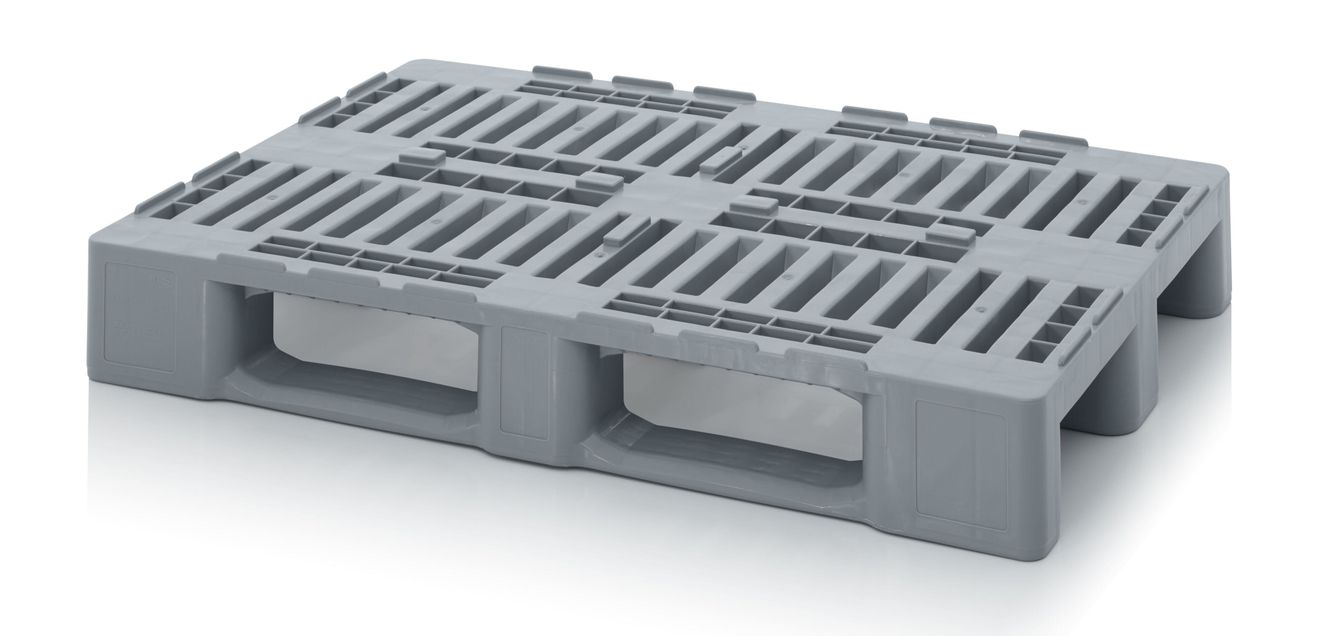
The decision for a pallet begins with a sober analysis: What goods are to be transported, under what conditions and with what storage and handling requirements? Plastic pallets generally score points with their low tare weight. They are significantly lighter than their wooden counterparts and still offer maximum load capacity. This not only reduces the effort required for handling, but also has an impact on transportation costs, especially in international supply chains. Dimensionally stable, they can be precisely integrated into standardized processes. In comparison, wooden pallets are subject to greater fluctuations, for example due to mechanical wear. Plastic pallets have an advantage here due to their design.
Another plus: the material's high resistance to external influences. Plastic does not absorb moisture, does not warp and is insensitive to mold or pest infestation even when stored outdoors. Wooden pallets, on the other hand, often have to be treated extensively to meet the requirements, especially for export. The plastic pallet is also ahead in terms of occupational safety: splinters, protruding nails or damaged boards are typical weak points of wooden pallets. Plastic solutions avoid these risks thanks to their closed design and robust material.
"Alles Paletti": solutions for different requirements
A look at Auer Packaging's portfolio illustrates the extent to which plastic pallets have become differentiated. Instead of a one-size-fits-all solution, various types are available, each of which has been optimized for specific applications.
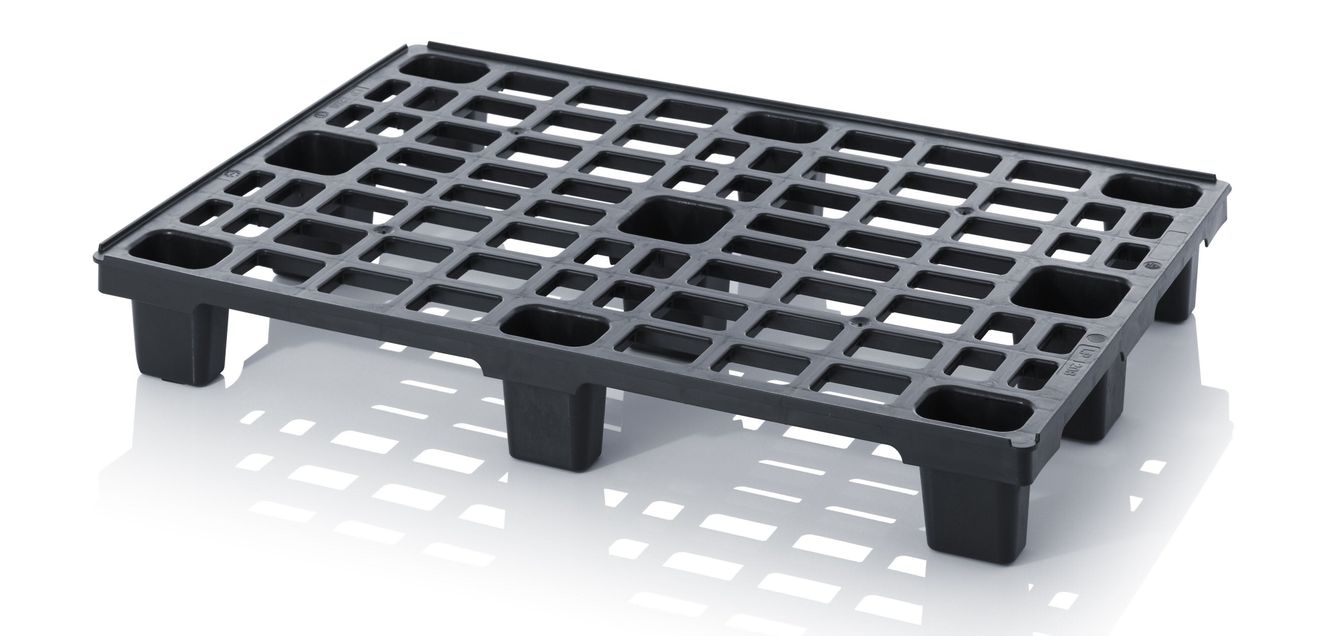
Lightweight pallets are ideally suited for worldwide use as they are standardized to ISO and Euro formats. Their low weight reduces freight costs, while the robust lightweights remain sufficiently stable for many standard applications. Skids ensure optimum stability, especially when transporting large loads or hazardous materials. Thanks to their design, they can often be stacked inside each other, which minimizes the space required for empty transport. Medium pallets have a medium load range and are considered classic all-rounders. They are used in a wide range of industries and can also be used in automated storage systems, depending on the design. The medium pallets made of scratch-resistant, high-quality plastic and with tubular steel reinforcement are also ideal for use in high-bay warehouses.
For particularly sensitive areas, Auer has hygiene pallets with a smooth, closed contact surface in its range. They are made from virgin material and are easy to clean. Resistant to moisture, these pallets meet high hygiene requirements, such as those required in food processing. Thanks to their resistance to cold and heat, hygiene pallets are in demand in a wide range of industries. Cleanroom pallets go one step further. Their design enables intensive cleaning, which makes them ideal for controlled environments. At Auer, cleanroom pallets can also be manufactured with a safety edge on request.
Economy in circulation
In addition to functional aspects, cost-effectiveness plays a decisive role. Plastic pallets are usually more expensive to purchase than wooden versions, but this is put into perspective during operation. Thanks to their long service life, plastic pallets achieve significantly more cycles before they need to be replaced. At the same time, maintenance and repair costs are reduced as damage occurs less frequently. In closed logistics systems, the investment can therefore quickly pay for itself. While wooden pallets lose quality over time, the performance of plastic pallets remains constant over a long period of time. This facilitates integration into automated processes and reduces operational disruptions.
Those who know their processes inside out can not only save costs by choosing the right pallet, but also sustainably improve the efficiency of the entire logistics chain.


You might also be interested in
Cooperation agreed for the logistics circular economy
Booxit aims to make logistics processes more efficient and sustainable with intelligently networked reusable boxes. The start-up is receiving support from plastics specialists Haidlmair and Polytec.
 read more...
Boxes for logistics solutions
Con-Pearl is a manufacturer of environmentally friendly lightweight PP boards. The company has been using this material for years to produce logistics and transport packaging in pallet and half-pallet format, among other things. Con-Pearl now also...
read more...Sustainable and solid transportation
Efficient use of space during transportation and the reusability of packaging are crucial not only for economic but also for ecological reasons. They also protect products from damage during transportation and storage and thus make a significant...
read more...Containers for the future of intralogistics
Solo or in a shelving system
With a focus on sustainability and the circular economy of packaging, Bito-Lagertechnik is coming to Fachpack to present various models and types of returnable load carriers, boxes and transport packaging in different designs for sustainable...
read more...Fachpack: Folding containers made from bioplastics and marine plastics
Söhner Kunststofftechnik is focusing on sustainability and efficiency at Fachpack: the company is presenting sustainable packaging solutions such as large load carriers made of bioplastics and marine plastics and foldable stacking boxes made of...
read more...Unique boxes for unique products
The Walther Faltbox Group is taking a step towards sustainability: instead of recycling folding boxes with individual color gradients as usual, the company is now offering them as unique boxes in the Boxline store.
read more...Nestable reusable pallet made from recycled plastic
The transport and storage technology specialist Kiga from South Westphalia is presenting the Kiganesto plastic pallet at Logimat.
read more...Alternative to the mesh box: Craemer presents Kubo - the plastic box for heavy-duty applications
At this year's Logimat, the internationally active Craemer Group with its headquarters in Herzebrock-Clarholz, East Westphalia, will be exhibiting the new Kubo as well as the hygienic HB3, the extremely robust SB3, the CB1, CB3 and the large-volume...
read more...Containers and much more
As a full-service provider of customized storage and intralogistics solutions, Bito-Lagertechnik Bittmann is a partner for users in all industries and of all sizes, as well as for major international system integrators.
read more...