
Software
SSI Schäfer: WMS in combination with modern automation technology
Software in general has experienced a huge increase in importance in recent years. Today, neither a hotel booking nor a vehicle inspection can be carried out without software. In intralogistics, too, processes are almost always carried out with software support. One of the most important software solutions for this is undoubtedly the Warehouse Management System (WMS).
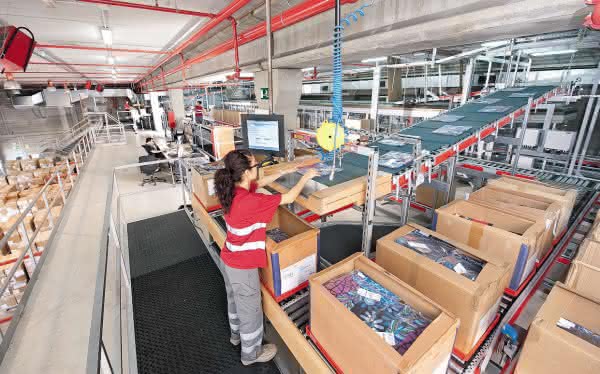
In conjunction with the desire for automation, driven by rising land prices and high labour costs as well as the Industry 4.0 initiative, this results in an increased need for intralogistics to optimize operational processes.
Very often, it also turns out that many production and service processes in Western countries can only be managed in an economically sensible way - as required - with an increased level of automation. In this context, internal logistics now plays a leading role in almost all industries. Especially when logistics is one of the core processes in a company. In the context of system leadership, the question arises as to what should be considered when introducing a WMS if logistics is also entering the world of automation.
Requirements for WMS for process optimization
In addition to the constant availability of systems, the time factor and reliability, standardization also plays an important role here. At first glance, developments tailored specifically to a customer may appear interesting and correct, but on closer inspection these solutions also harbor economic risks and are often not competitive in the future.
A standardized WMS solution should therefore have a modular structure so that it can be used both in manually managed warehouse areas as well as in partially or fully automated areas. And this despite the fact that the requirements are different. If a WMS solution can now cover manually managed and automated areas and does not require any interfaces, it can be referred to as an integrated system.
Theoretically, there are the following WMS providers:
- Warehouse technology providers: Here, the WMS is usually seen as a supplement to the existing product portfolio; warehouse management usually only covers the automated area ("the warehouse machine"). The systems of these providers are often referred to as Warehouse Control Systems (WCS). It is often discussed whether inventory management can be handled in the customer's ERP system or whether it should be handled by the WCS itself. Manually managed warehouse areas are often left to the customer's ERP system.
- Suite providers: Suite providers offer the WMS as a supplement or as a module of a suite. As there is no high affinity to automation, the direct connection of automated trades to WMS modules from suite providers is usually correspondingly difficult.
- Pure WMS providers: Pure WMS providers usually have somewhat more in-depth knowledge of the processes in a warehouse operation or distribution center, but the solutions offered must also be evaluated here.
- Providers of production planning systems: Providers of production planning systems usually have a rudimentary form of warehouse management, but an adequate level of inventory management. For the complex planning of production processes and their optimization, it is essential to have the inventory of all raw materials and semi-finished products available. Experience has shown that the integration of WMS and ERP systems in this constellation is a real challenge.
However, the question is always the same: Can the automation technology not only be controlled and managed with the solution offered, but can the usually already existing manually managed work processes be integrated in a standardized WMS in addition to the automation technology?
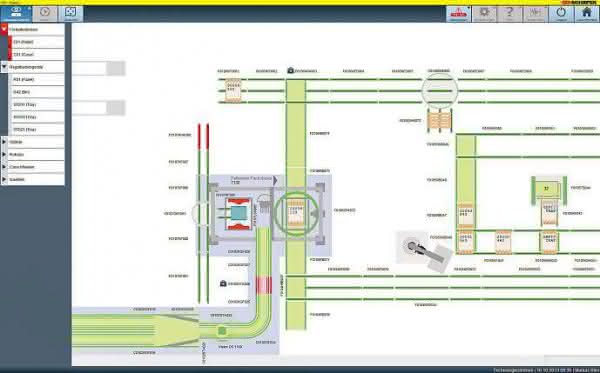
Only an integrated solution creates the prerequisites for adequately meeting the requirements of our time. These include the ever-growing B2C business in e-commerce and the associated completely different order structures compared to traditional retail. The challenges of this multichannel logistics must also be reflected in the standards of WMS providers.
If new requirements are added, the necessary processes do not have to be re-implemented in two systems. Examples of new requirements may sound simple (such as packing and shipping small orders, communicating with CEP service providers as is common in B2C business or handling returns management), but they are a major challenge for the logistics provider.
In an integrated solution, goods receipt can take place centrally. Load units that are transferred to an automated area are received automatically. In addition, the consolidation of orders from automated and manually managed areas functions smoothly without interfaces and posting runs during a time-critical process.
In addition, training can be carried out on one system and user management and role concepts only need to be designed once. Furthermore, there is no need for conventions across system boundaries. The discussion as to whether the material flow computer manages stocks - i.e. whether we are talking about a black box scenario - or whether only the transportation of the load units is handled by the material flow computer is obsolete. In general, preference should be given to standardized systems because public institutions (Fraunhofer Institutes, VDI guidelines) also deal with the performance of a WMS. This means that comparable industrial standards are becoming established. The simple networkability of the systems is also becoming increasingly important. Wherever a concentration of providers can be expected, more and more niches are becoming established. These are being filled with increasingly specialized software, including combinable apps, which will play a greater role in industrial IT structures in the future.
Conclusion: In automated solutions, the warehouse management system should function in an integrated manner, but also be characterized by a high degree of standardization.
Roland König Manager IT Consultancy, SSI Schäfer, Friesach near Graz (A)
Contact:
SSI Schäfer 8114 Friesach near Graz, Austria Tel.: 00 43 / 31 27 / 2 00-4 33 E-Mail:


You might also be interested in
Compact motorized castor for pallets and heavy loads
Rulmeca has launched a new motorized roller onto the market. The EPS-AS1 roller motorizes roller conveyors for heavy loads of up to 1,500 kilograms.
 read more...
Torwegge presents new Eco transport trolley
Torwegge has added a new eco transport trolley to its product portfolio. The trolley was developed to facilitate the transportation of heavy loads of up to 250 kilograms in various sectors such as the food industry, retail, catering, healthcare and...
read more...New transport trolley at Logimat
Fetra is also coming to Logimat. The manufacturer of transport equipment for efficient intralogistics processes will be presenting new products and program highlights. Wuppi" will also be there: The aluminum compact trolley is a powerful helper on...
read more...AR Racking equips new Lekkerland logistics centers
The German company, which specializes in consumer goods to go, recently opened two new warehouses in Germany, one in Kerpen and one in Wedemark, which have a storage capacity for 57,459 pallets.
read more...Paper manufacturer with innovative production logistics
Paper manufacturer Franz Veit has made its intralogistics operations much more efficient with the help of Linde Material Handling and Ernst Müller Fördertechnik.
read more...AR Racking equips new Lekkerland logistics centers
Lekkerland is reorganizing its logistics in Germany by 2030 to make it fit for the opportunities and challenges in out-of-home consumption today and tomorrow. As part of this, the storage solutions specialist has supported AR Racking in the opening...
read more...Automated intralogistics system
AMI Förder- und Lagertechnik exhibited an automated intralogistics system at Logimat that covers the entire packaging process right through to shipping.
read more...High-performance electric floor track
Transport system for small load carriers and pallets
Where efficiency and high availability are important, electrically driven floor conveyors are often an alternative to continuous conveyors.
read more...Satellite warehouse turns 40
Westfalia Logistics Solutions celebrated the 40th anniversary of the Satellit load handling device at Logimat. The system is designed for storage on pallets, other loading aids or without pallets.
read more...