
Descartes' solution
Smart optimized routes
E-commerce has experienced significant growth worldwide during the pandemic. Fleet operators need to mitigate the impact of the driver shortage by improving the productivity and retention of existing drivers. Route optimization, as offered by Descartes Systems and others, plays a critical role in increasing the effective capacity of existing drivers and retaining drivers.
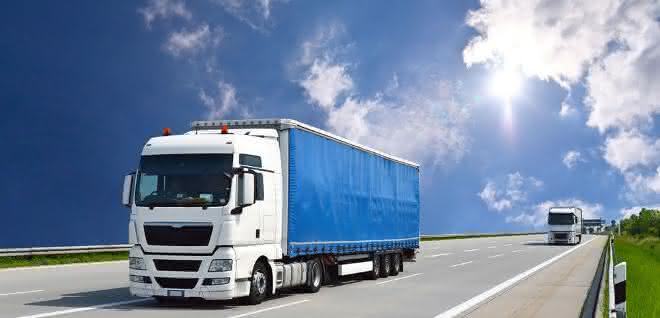
Driver productivity should be the first point at which fleet operators want to increase their capacity. Making delivery routes more efficient increases driver productivity. At one level, route optimization can take excess miles out of the delivery process by evaluating more delivery options to find the right combination of routes and stops. Fleets that still create their routes manually or use outdated planning tools may see an increase in driver productivity of more than 15 percent by reducing miles per stop after implementing modern optimization technology and automating the route planning process. For larger companies, this could be the equivalent of hiring several dozen additional drivers.
Flexibility counts
More can be done to increase route productivity: By using dynamic delivery scheduling during the customer booking process, delivery density and driver productivity can be improved. Customers can be offered delivery dates that are closer to already scheduled deliveries, reducing the gaps between deliveries. This may seem counterintuitive, but customers are happy to accept these types of delivery options. With the increasing focus on the environment and the impact of transporting goods, the concept of an 'eco-friendly' delivery option, where the customer chooses a delivery date that uses less carbon dioxide and miles, is a win-win for customers and fleet operators. Customers are happy to help the environment and the fleet is more productive. Companies that offer complementary services for delivery appointments, such as "carbon neutral delivery", reduce the distance from stop to stop by up to 20 percent compared to traditional approaches.
Driving loyalty through new technologies
Driver retention is also critical, as turnover can be as high as 100 percent depending on the transportation market and company. Commercial driving can be very stressful and poor route plans mean that drivers struggle to fulfill their delivery orders within their legal driving hours. This increases stress levels and may cause drivers to look for work elsewhere. Route optimization software solutions allow companies to create routes that better reflect the road network, driving conditions and stop times, grouping deliveries closely together and thus reducing driver stress. As a result, drivers are more confident that they can complete the day's work within the allowed driving time and don't have to make route adjustments along the way because the original plan wasn't fully feasible. Reducing driver churn can help fleet operators increase their driver pool, as the drivers they hire work hard to complement the team rather than replace someone.
New technologies such as machine learning can help improve driver retention by identifying driver-related factors that create individualized driver routes based on driver productivity. For example, an experienced driver may be 10 percent more productive than a new driver. Scheduling based on experience can make the difference between retaining employees or having them leave the company quickly. Machine learning can also identify which drivers can complete their work in less time than planned and therefore take on more deliveries, increasing driver productivity.
One thing is certain: there is no quick fix to the driver shortage problem. While fleet operators should continue to find ways to attract new drivers, they should also place more emphasis on making existing drivers more productive and keeping them with the company. Route optimization is an important strategy to increase the effective capacity of existing and increasingly scarce driver resources.
The article appeared in materialfluss 10/21.


You might also be interested in
Economy and ecology in harmony
More and more people prefer online shopping to local retail. Studies on sustainability in e-commerce by the Descartes Systems Group in collaboration with Sapio Research show what sustainable practices customers expect and what measures online...
 read more...
Not satisfied in all respects
A Descartes study shows that 62% of consumers are dissatisfied with retailers' sustainability efforts when it comes to delivery. According to the study, customers would prefer to shop with retailers with particularly sustainable delivery practices...
read more...A Centralized View of Complex Processes
Today, medium-sized logistics companies must manage an increasingly diverse range of operations efficiently and reliably. Different modes of transport, customized customer solutions, and established workflows can hardly be accommodated by...
read more...Robotics Integration for Greater Efficiency in Inbound Goods Processing
Infios is helping Kellner & Kunz, a specialist in tooling and C-parts, expand its automation strategy. The next step in this long-standing partnership is the integration of robotics into inbound logistics.
read more...Flying warehouse robot impresses the jury
The Swiss deep-tech company Verity has been awarded the 2026 IERA Award for its autonomous indoor drone system. The flying robots monitor inventory levels autonomously, operate without GPS, and are already in use in approximately 200 warehouses...
read more...The Right Warehousing Solution for Every Logistics Need
Whether it’s an S/4HANA implementation, the urgently needed replacement of the traditional SAP WM, or the growing demands for digitalization and automation—many companies are faced with the question of which warehouse management system will best...
read more...Digital processes shorten delivery times
trans-o-flex makes delivery times easier to plan
trans-o-flex ThermoMed Austria is optimizing its delivery processes with new scheduling software and a digital self-handling module for drivers.
read more...Route planning and optimization solution
Jumbo backs Greenspan
The Dutch supermarket chain Jumbo has realigned its e-commerce logistics with Greenplan, the intelligent route planning and optimization solution from the Ehrhardt Partner Group.
read more...New version of Röhlig Realtime
Röhlig Logistics presents the enhanced version of "Röhlig Realtime". The company is supplementing its digital service portfolio with a central platform that ensures greater transparency and networking throughout supply chain management.
read more...