
Logistics real estate
The call for innovation rings out
Demand for space in the logistics real estate sector has been increasing for years, driven by factors such as e-commerce, the coronavirus pandemic and the expansion of regional stockpiling structures. At the same time, the challenges for project developers are increasing due to a shortage of space and municipal resistance to logistics projects.
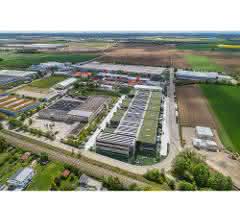
By focusing on revitalization projects and strengthening municipal cooperation, the developer Panattoni shows how sustainable relocation projects can succeed. The logistics real estate market has been stable for years, and even the overall economic slump caused by the coronavirus pandemic has not dampened the positive market momentum. In summer 2021, real estate service provider CBRE reported that a new record take-up of 3.5 million square meters of developed logistics space was achieved in the first half of the year, with growth of 9.1% compared to the same period last year.
Increasing demand for space
The positive market trend is not expected to reverse in the near future. On the contrary, several factors are ensuring that logistics real estate is becoming increasingly important. Firstly, e-commerce is booming. According to the German E-Commerce and Distance Selling Trade Association (bevh), online shoppers in Germany spent a total of 45.2 billion euros in the first half of 2021. This means that e-commerce sales increased by 23.2% to 45.2 billion euros in the first six months of the year and could exceed the 100 billion euro mark for the first time by the end of the year. Such growth can only be achieved with the creation of new logistics space: According to CBRE, online retail in Germany will require over 4 million square meters of additional logistics space by 2025.
At the same time, the coronavirus pandemic is increasing concerns about the security of supply for trade, production and the population. Economic development is already being held back by a lack of raw materials such as wood, and the automotive industry was forced to temporarily halt production due to the chip shortage, which resulted in high losses. In many places, companies are expanding regional stockpiling and manufacturing structures, which are already being vigorously pursued in semiconductor production.
However, the challenges for project developers are increasing, particularly due to the highly dynamic market. Both the nationwide shortage of space and municipal resistance to logistics settlement projects demand innovative approaches and solutions from developers.
Success factors for logistics settlements
With complex revitalization projects and a focus on municipal cooperation, Panattoni, the leading project developer for industrial and logistics properties in Europe, shows how sustainable relocation projects can succeed. With the realization of Panattoni Park Mannheim Ost in Ladenburg, Baden-Württemberg, the developer carried out what is currently the largest revitalization project of a former industrial site in the Rhine-Necker region. The approximately 120,000
square meter site is located on the Neckar Canal and in the immediate vicinity of one of Europe's largest inland ports. Until 2016, it was used by a manufacturer of cleaning products and household goods; Panattoni has now reused the space in collaboration with the local authority. Three halls with a total logistics area of around 54,000 square meters were created. Parts of the existing industrial and chemical facilities were incorporated into the new utilization concept and reused. An important success was achieved with the full letting to the Duisburg shipping and forwarding company Neska before the property was completed.
Panattoni also relied on working with local partners for the construction of the logistics center in Rangsdorf near Berlin with a total usable area of 50,000 square meters and, among other things, supported the entire process of obtaining building permits. In the process, the developer not only encountered various challenges such as archaeological excavations, but also carried out extensive infrastructure, traffic, environmental and species protection measures. This began with the renaturation of parks and the redesign of a 3,000 square meter estate park close to the local elementary school and continued with the resettlement of a local species of oath lark and the creation of lark windows. The developer also supported the expansion of the local industrial area, which enabled the municipality to attract further small businesses and commercial enterprises from the region. "With the construction of two of our most recent projects in Rangsdorf and Ladenburg, we have shown that we also create added value for the community by developing new areas. We were able to achieve this through a variety of measures, such as the revitalization of brownfield sites, but also by focusing on the ecological sustainability of the projects," says Fred-Markus Bohne, Managing Partner at Panattoni.
Setting urban development accents with city logistics properties
The developer is also continuing its cooperation with the municipality in the area of city logistics properties. After all, the demand for urban logistics and commercial space is increasing with the growth in online retail. With the "City Dock" concept, Panattoni has designed a real estate solution for creating small-scale urban commercial spaces with direct connections to road networks and public transport. Due to their flexible usage options, the innovative business parks are also attractive for logistics companies, particularly from the CEP sector (courier, express, parcel).
In Kirchheim near Munich, Panattoni is setting a new urban development accent with the construction of the business park together with the city and the business development agency and is revitalizing a conversion site that was formerly used by a rail construction company. Among other things, the company is launching a pilot project with the start-up Green City Solutions, whose innovative "CityTree" air filtration system is helping to reduce particulate matter and thus improve the air quality in cities. The combination of innovation and sustainability benefits not only the property's employees, but also the local community and citizens.
The article appeared in materialfluss 8-9/21.


You might also be interested in
HGK Shipping and Salzgitter cooperate
The companies want to jointly promote and expand sustainable logistics concepts on the waterway in future. Two Salzgitter subsidiaries and HGK Shipping signed a memorandum of understanding to this end on August 10.
 read more...
Settlement projects - done right
How do logistics managers find the right location for a logistics property and how should its sustainability be assessed? Fred-Markus Bohne from Panattoni in conversation with Martin Schrüfer.
read more...Port Representative Office: Karin Lengenfelder replaces Jürgen Behrens
After almost 48 years, Jürgen Behrens, Head of the Port of Hamburg Representative Office South, is retiring from logistics.
read more...5G test field planned in the port of Duisburg
With the joint project "5G.Logport Duisburg", duisport, the City of Duisburg and the University of Duisburg-Essen are applying for funding from the state of North Rhine-Westphalia to set up a 5G test field in the Port of Duisburg.
read more...AI supports ports with car handling
With 2.1 million vehicles in 2019, AutoTerminal Bremerhaven is one of the largest car ports in the world. With Isabella 2.0, the partners BIBA - Bremen Institute for Production and Logistics at the University of Bremen, BLG Logistics and...
read more...Testing at JadeWeserPort Wilhelmshaven
Fully automatic shunting locomotives are coming
Recently, the JadeWeserPort companies' application for funding for a research project to test the fully automated shunting process in the screening group in the freight village (GVZ) of Germany's only deep-water container port, JadeWeserPort...
read more...3D crane simulator in the Port of Duisburg
The duisport Group has unveiled its own crane simulator in Duisburg's free port: This is not only intended to set new standards in the field of technical development in the logistics industry, but the inland port is also investing in the training...
read more...Interview with port manager Andreas Bullwinkel
JadeWeserPort: Long out of the starting blocks
Andreas Bullwinkel has been Managing Director of Container Terminal Wilhelmshaven JadeWeserPort-Marketing GmbH & Co. KG for five years. In the interview, Bullwinkel also addressed the topics of federalism and transport policy.
read more...NRW Minister President Laschet visits the port of Rotterdam
Rotterdam, 04.10.2017 - Armin Laschet, who was elected Minister President of North Rhine-Westphalia at the end of June this year, visited the port of Rotterdam on his first trip abroad. The CDU politician went on a tour of the...
read more...