
Software
Transparency against supply bottlenecks
For companies, the disruption of supply chains is ultimately a matter of their economic existence. Endangering lives? This aspect hardly plays a role in public perception. Yet supply chain management in critical infrastructure works in a similar way to that in companies. Transparency is therefore essential in order to plan precisely and monitor supply chains in real time. Software solutions for supply chain management provide valuable support here.
Just-in-time production, digitalization and global trade agreements ensure reduced storage costs and smooth processes. However, the past few years have painfully demonstrated this: Maximum efficiency comes at a price, and supply networks are becoming more susceptible to disruptions: The war in Ukraine, the collapse of a bridge in Baltimore harbor or the newly introduced tariffs by the US government have had and continue to have a massive impact on global supply networks and the availability of goods, exposing the fragility of international supply chains. The Russian war of aggression, for example, has significantly impacted grain exports, resulting in shortages and rising prices. The effects of all such disruptions are particularly serious in the supply networks of critical infrastructure.
Counteracting drug shortages through transparency
Instead of efficiency, transparency is therefore crucial here, especially in times of crisis. "If there is transparency within the complex supply networks, precise demand planning, real-time monitoring of supply chains and the diversification of suppliers and transport routes are possible and crucial," explains Markus Schnüpke, one of the managing directors of BISS. The company has developed cloud-based software for supply chain management in global supply chains. Schnüpke and his team are therefore aware of the challenges that arise in supply networks and how companies can meet them. Schnüpke sees a particular need to catch up in supply chain management in critical infrastructure
Schnüpke sees a particular need to catch up - because this sector has a special responsibility for the population.
How serious the effects of supply bottlenecks in critical infrastructure can be has already been demonstrated many times in the past. The winter of 2022/2023 is probably still a bad memory for many parents, as they drove from pharmacy to pharmacy to get the prescribed antibiotic juice for their sick children. The situation was similar the following winter, and there were also shortages during the last cold season. Generics are massively affected: according to Pro Generika e.V., four out of five prescribed medicines are generic, i.e. a copycat product. Manufacturers source the majority of active ingredients for generics from Asia for cost reasons and have made themselves dependent on this market for decades. "Stricter regulatory requirements for Asian producers have led to the closure of several production facilities and ultimately to shortages of essential medicines, for example statins to lower cholesterol and painkillers," says Dr. Jan Mazac, also Managing Director of BISS.
Recognize potential faults at an early stage
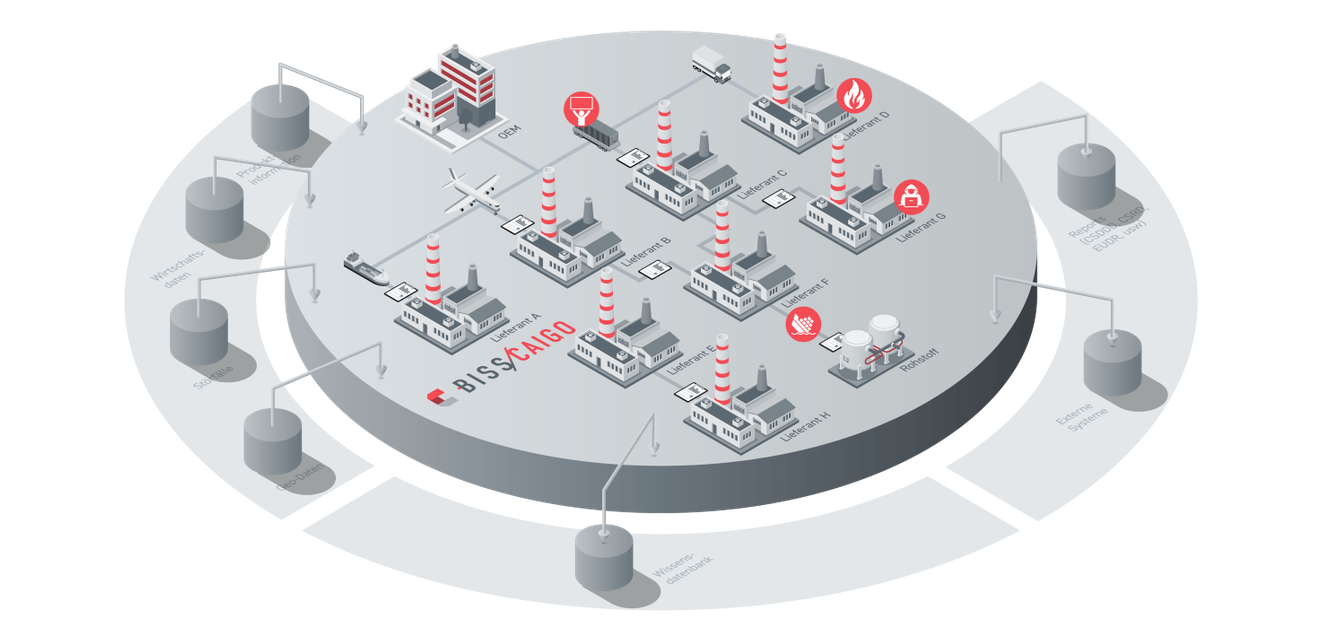
In order to counteract such bottlenecks and potential health risks for affected people, the use of modern technologies is crucial. "Modern solutions enable early detection of potential disruptions and a rapid response," explains Mazac. By using predictive analytics, for example, potential bottlenecks can be predicted and alternative procurement strategies developed at an early stage. The decisive factor here is the analysis of all data in real time in order to identify and avert risks with sufficient advance notice. The Biss/Caigo solution, for example, offers an integrated platform for real-time data analysis and data visualization. "This allows decision-makers to continuously monitor the status of the supply chain and develop alternative solutions in the event of potential bottlenecks," says Schnüpke. The continuous monitoring of IT systems also plays an important role here. The software used should have integrated security functions to protect the company from cyber attacks.
Playing through what-if scenarios
To ensure supply and cyber security in critical infrastructure, companies should therefore rely on the support of supply chain management software that has modules for transportation coordination, inventory monitoring, security monitoring modules, dynamic demand forecasting and predictive analytics. With integrated modules for transport coordination, the software can suggest alternative routes if necessary to ensure supply. Simulation functions allow what-if scenarios to be run through. Monitoring stock levels is important for a continuous overview of available resources and - in conjunction with demand forecasting - also helps to prioritize deliveries. Security monitoring detects suspicious activities such as unauthorized access from outside in real time and thus protects the integrity of the supply chains.
The dynamic demand forecasts should be based on current data from as many sources as possible in order to paint a valid picture. The integration of various data sources is also crucial for the application of predictive analytics, for example in order to identify political instability or potential cyber attacks at an early stage and initiate appropriate countermeasures. "Important data sources include internal company data, external market information, weather data, political analyses, real-time transportation data and threat databases in order to obtain a comprehensive picture of the situation," says Schnüpke. The software used should be able to seamlessly integrate all of these sources and, if required, information sources from external data providers. "For critical infrastructure in particular, it is also important that the software can be connected to the existing systems of authorities and utility service providers via standardized interfaces in order to promote cooperation, especially in crisis situations," emphasizes Mazac.
The benefits of such solutions are measurable: Biss/Caigo, for example, has already been used to securely manage critical infrastructure supply chains in order to ensure uninterrupted supply chains in crisis situations. "The central components were real-time data analysis and predictive risk detection," explains Mazac. In addition, security functions were implemented that address both physical and digital risks. This showed that response times were reduced by 30 percent, losses due to expiring products were reduced by 25 percent and supply reliability was increased by 20 percent.
Traditional efficiency strategies in supply chain management - such as just-in-time production - are increasingly reaching their limits in the face of global crises and are causing weaknesses in supply security. Particularly in critical infrastructure such as healthcare, disruptions in supply chains can have serious consequences that go beyond economic damage and endanger human lives. To counteract this, a paradigm shift is essential: Instead of maximum efficiency, the focus must now be on transparency. Modern, data-based software solutions make it possible to identify risks at an early stage, plan requirements precisely and maintain supplies even in times of crisis. The use of intelligent technologies - from predictive analytics to advanced security functions - not only makes supply chains more robust, but also future-proof.


You might also be interested in
A Centralized View of Complex Processes
Today, medium-sized logistics companies must manage an increasingly diverse range of operations efficiently and reliably. Different modes of transport, customized customer solutions, and established workflows can hardly be accommodated by...
 read more...
Robotics Integration for Greater Efficiency in Inbound Goods Processing
Infios is helping Kellner & Kunz, a specialist in tooling and C-parts, expand its automation strategy. The next step in this long-standing partnership is the integration of robotics into inbound logistics.
read more...The Right Warehousing Solution for Every Logistics Need
Whether it’s an S/4HANA implementation, the urgently needed replacement of the traditional SAP WM, or the growing demands for digitalization and automation—many companies are faced with the question of which warehouse management system will best...
read more...Route planning and optimization solution
Jumbo backs Greenspan
The Dutch supermarket chain Jumbo has realigned its e-commerce logistics with Greenplan, the intelligent route planning and optimization solution from the Ehrhardt Partner Group.
read more...New version of Röhlig Realtime
Röhlig Logistics presents the enhanced version of "Röhlig Realtime". The company is supplementing its digital service portfolio with a central platform that ensures greater transparency and networking throughout supply chain management.
read more...Simulation gains in importance
The use of AGV and AMR systems continues to increase - at the same time, the complexity of planning and operation is growing. Traditional approaches quickly reach their limits.
read more...Gessmann and Wandelbots standardize...
Manufacturer-independent software orchestrates robotics fleets
Gessmann is presenting a new approach to industrial automation together with Wandelbots at Hannover Messe 2026 (Hall 16, Stand B10/1). The focus is on the coordination and integration of different robot systems in existing production and...
read more...LTW Intralogistics at the Logimat 2026
Efficiency and quality in the material flow
LTW Intralogistics is presenting its holistic approach to future-oriented material flow solutions at Logimat. Under the motto "Flow. In every detail", the company will be demonstrating how integrated systems, intelligent software, design and service...
read more...Kion significantly increases order intake
Kion holds its own in a difficult environment in 2025, increases order intake significantly and looks ahead to profitable growth in 2026 with a new segment name and efficiency gains.
read more...