Process analysis in intralogistics
Operating data matching provides depth of key figures
The company MotionMiners has successfully introduced its new "Production Data Matching" function into regular operation. The first user is the Zufall Logistics Group, which can now break down its unit load handling processes down to relationship, packaging and customer level for the first time.
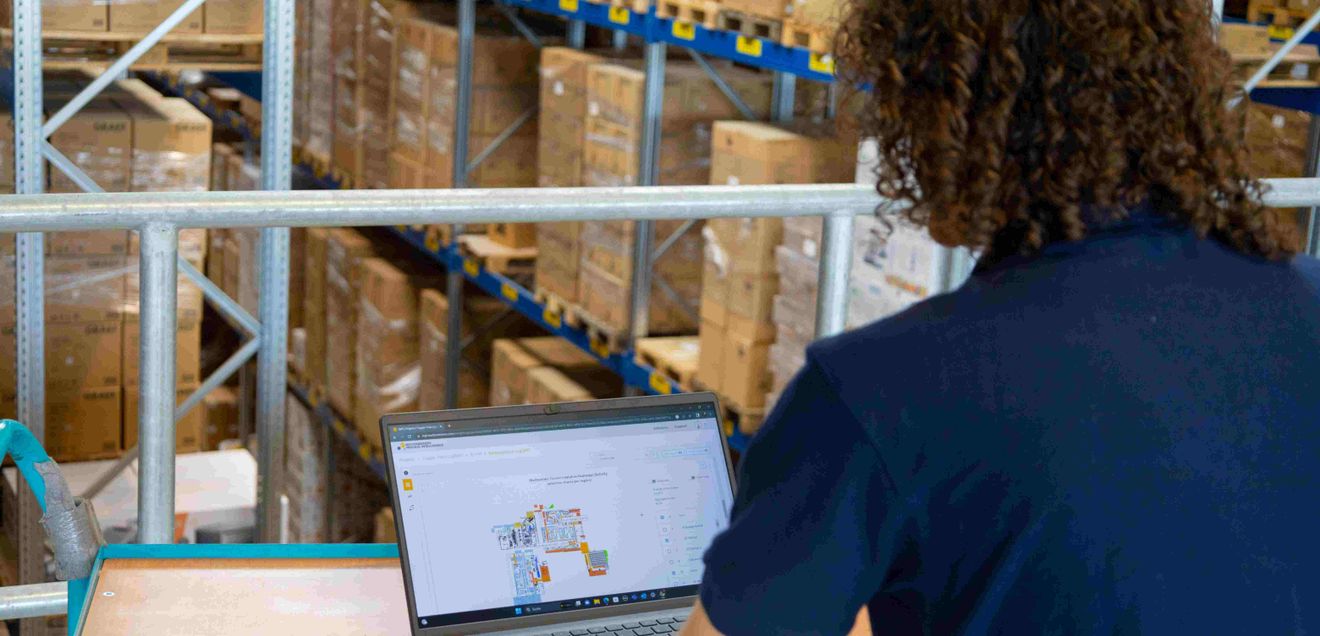
This is made possible by the combination of anonymized motion data (collected with MotionMining technology) and the user's own TMS data in the analysis platform, MotionMiners Process Intelligence. The basis for the operational data matching is formed by the anonymized motion data of employees or vehicles, which the user records with the measurement sets of the motion mining sensors. "In our 11,000 square meter general cargo hall in Göttingen, we collected a total of 600 hours of data over three weeks in this way in the area of international general cargo transport," outlines Daniel Kaiser, Senior Expert Business Process Optimization at Zufall Logistics and clarifies, "this is data that was previously unavailable and now brings transparency to the handling processes during pre-sorting, on the ramp and during loading."
Analyses through combination with TMS, WMS, ERP or machine data
With operating data matching, process engineers gain another dimension. Users are enabled to correlate the analysis results from MotionMiners with their own operating data from their existing system (TMS, WMS, ERP, machine data) on the MotionMiners platform. This takes process analysis in the field of intralogistics to a new level. This is confirmed by user Kaiser: "The operating data matching helps us to carry out detailed evaluations and identify potential process bottlenecks or deviations in an even more targeted manner."
The data generation and determination of process key figures is carried out using the MotionMiners Process Intelligence analysis dashboard "We use machine learning to identify inefficiencies and uncover optimization potential," explains Sascha Kaczmarek, co-founder of MotionMiners, "thanks to the integrated operating data matching, companies receive key figures in a new depth and granularity within a very short time. For example, it is now possible to determine costs per order, customer or even article in order to uncover optimization potential in an even more targeted manner. The range of applications is versatile: the matching tool supports benchmarking, creates transparency and is used to audit existing process models."
No interface to existing systems required
Operational data can be imported to the platform in CSV format, which ensures fast and flexible processing and does not require an IT interface to the existing systems. Kaiser uses an example to illustrate the gain in information for general cargo handling: "The MotionMiners measurements showed an average general cargo loading movement of 1:45 minutes for our 30 to 40 international routes. Thanks to the operational data matching, we know that the country-specific times deviate from this average by up to 30 percent." Order data such as routes, packaging types and consignee/shipper were included in the analysis.
The clear allocation of the movement data to the order data makes the correlations clear and provides a reliable basis for evaluating decisions. Kaiser derives the adaptation of traffic control and the flexibilization of personnel planning as possible measures at Spedition Zufall. Comprehensive collection of process data pays off. The process analysis with motion mining also pays off economically for the freight forwarder. "Thanks to the sensor technology used, we receive transparent data on all shipments over a period of two to three weeks. With manual data collection, we could only focus on three to four shipments with significantly fewer measurements," Kaiser compares.
The goal: process key figures on a daily basis
In the next step, the logistics specialist wants to develop operational data matching from a project-related application into a continuous process. The aim is to have the relevant key process figures available on a daily basis. Logistics specialist Zufall has been using the hardware and software to collect and evaluate process data since 2022. Various projects were carried out in the transshipment warehouses in Göttingen, Haiger, Nohra and Fulda as well as in the Kandel logistics center, each with various series of measurements.


You might also be interested in
A Centralized View of Complex Processes
Today, medium-sized logistics companies must manage an increasingly diverse range of operations efficiently and reliably. Different modes of transport, customized customer solutions, and established workflows can hardly be accommodated by...
 read more...
Robotics Integration for Greater Efficiency in Inbound Goods Processing
Infios is helping Kellner & Kunz, a specialist in tooling and C-parts, expand its automation strategy. The next step in this long-standing partnership is the integration of robotics into inbound logistics.
read more...Flying warehouse robot impresses the jury
The Swiss deep-tech company Verity has been awarded the 2026 IERA Award for its autonomous indoor drone system. The flying robots monitor inventory levels autonomously, operate without GPS, and are already in use in approximately 200 warehouses...
read more...The Right Warehousing Solution for Every Logistics Need
Whether it’s an S/4HANA implementation, the urgently needed replacement of the traditional SAP WM, or the growing demands for digitalization and automation—many companies are faced with the question of which warehouse management system will best...
read more...Digital processes shorten delivery times
trans-o-flex makes delivery times easier to plan
trans-o-flex ThermoMed Austria is optimizing its delivery processes with new scheduling software and a digital self-handling module for drivers.
read more...Route planning and optimization solution
Jumbo backs Greenspan
The Dutch supermarket chain Jumbo has realigned its e-commerce logistics with Greenplan, the intelligent route planning and optimization solution from the Ehrhardt Partner Group.
read more...New version of Röhlig Realtime
Röhlig Logistics presents the enhanced version of "Röhlig Realtime". The company is supplementing its digital service portfolio with a central platform that ensures greater transparency and networking throughout supply chain management.
read more...Strategic route planning reorganized
Strategic route planning is one of the key success factors for retail companies. It structures routes and areas, reduces costs, ensures optimal use of resources and increases customer satisfaction.
read more...German Innovation Award for IGZ
Autonomous AI control station for logistics centers wins award
The autonomous AI control center "Smart Logistics Cockpit" from IGZ was awarded the German Innovation Award 2026 in gold. The solution automates central control station activities in logistics centers and is designed to significantly increase...
read more...