
Polluter pays principle
How to distribute congestion costs
Presented: The congestion surcharge system from Traveco Transporte and Wanko Informationslogistik is intended to ensure a fairer distribution of congestion costs.
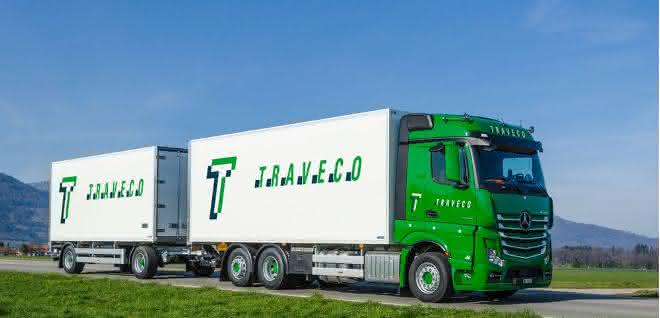
Let's take a look at Germany and Switzerland: the coronavirus crisis has also had a massive impact on truck traffic. The number of traffic jams in Germany has fallen by around 30 percent, while the time drivers spend in traffic jams has dropped by 52 percent.
The approaching storm front should already be recognized, especially in freight transport. What will actually happen when everything is back to "normal"? One thing is certain: Demand, consumption and traffic will increase exponentially again. And so will the moody customers who wait a long time because there is a traffic jam again. A quick reminder: in Germany alone, road users spent more than 520,000 (!) hours in traffic jams in 2019, with the approx. 1.4 million kilometers of traffic jams corresponding to around 35 circumnavigations of the earth.
The facts are almost proportional in Switzerland. For the financially and fairness-minded Swiss, a fair distribution of congestion costs is therefore also an issue. Swiss hauliers were quick to recognize the high risk factor behind all the figures: the longer a truck is stuck in congestion in urban areas, the lower its productivity. This can quickly turn into a cost trap for freight forwarders, because despite a high number of orders, the number of deliveries and therefore the capacity utilization of trucks can become problematic. And the fixed costs for the fleet remain unchanged.
There are challenges in Zurich
The starting point for Traveco Transporte's considerations was the traffic hotspot around Zurich. Blessed with enormous traffic jams and long waiting times. Nevertheless, Swiss customers also demand a high degree of adherence to delivery dates. A myriad of fixed delivery dates are a particular challenge in "just-in-time" times. Costs have risen in line with inflation, while the "delivery" product price has remained constant.
In a first step, Swiss transport companies levied a flat-rate surcharge. This subsequently caused resentment among many customers, as the individual delivery situation was not taken into account. Destinations that were easy and quick to reach were hit in the same way as destinations with a high "stop-and-go factor". The customers felt, understandably, that they were being treated unfairly.
How about the polluter pays principle?
The management of Traveco Transporte took a different approach from the outset and opted for a congestion surcharge based on the polluter-pays principle. Traveco approached its long-standing software partner, Wanko Informationslogistik from Bavaria, with this idea. Together, they formed a project team that analyzed, weighted and finally specified the technical requirements of the parties involved.
The national roads in Switzerland were defined in sections and in turn assigned various parameters, such as the level of congestion. The definition of the sections was based on historical data and the practical assessment of drivers and dispatchers. It was precisely because decades of experience were also taken into account that transparent and practical modeling was achieved.
For each consignment, the proportion of impact-proven road sections is continuously determined in the context of the tour. As the road conditions on individual parts of the route can also change (for example when a roadworks site is closed again), a dynamic procedure is used that also takes these factors into account.
Monitoring for transparency
For the final invoice at the end of the month, all customer shipments now have fair, comprehensible and transparent costs. To ensure appropriate controlling, the defined congestion zones are constantly monitored and evaluated in cooperation with Viasuisse (Swiss competence center for traffic information). Here too, Traveco is one step ahead and is the first mover in Switzerland. All data maintenance is carried out in a newly developed area of the Wanko software suite, making it easy for the scheduling department to record changes and process them without interfaces.
The article also appeared in materialfluss 8-9/21.


You might also be interested in
Structured and informed digitalization
Transgourmet Germany has fundamentally modernized its IT landscape. The route planning and telematics software from Wanko is part of the innovations - it supports optimized route planning, reduces distances and simplifies returns.
 read more...
Wanko suite with web-based control center
At the trade fair, Wanko Informationslogistik GmbH will be presenting the control center, one of the first platform-independent online extensions for the software suite.
read more...A Centralized View of Complex Processes
Today, medium-sized logistics companies must manage an increasingly diverse range of operations efficiently and reliably. Different modes of transport, customized customer solutions, and established workflows can hardly be accommodated by...
read more...Robotics Integration for Greater Efficiency in Inbound Goods Processing
Infios is helping Kellner & Kunz, a specialist in tooling and C-parts, expand its automation strategy. The next step in this long-standing partnership is the integration of robotics into inbound logistics.
read more...Flying warehouse robot impresses the jury
The Swiss deep-tech company Verity has been awarded the 2026 IERA Award for its autonomous indoor drone system. The flying robots monitor inventory levels autonomously, operate without GPS, and are already in use in approximately 200 warehouses...
read more...The Right Warehousing Solution for Every Logistics Need
Whether it’s an S/4HANA implementation, the urgently needed replacement of the traditional SAP WM, or the growing demands for digitalization and automation—many companies are faced with the question of which warehouse management system will best...
read more...Digital processes shorten delivery times
trans-o-flex makes delivery times easier to plan
trans-o-flex ThermoMed Austria is optimizing its delivery processes with new scheduling software and a digital self-handling module for drivers.
read more...Route planning and optimization solution
Jumbo backs Greenspan
The Dutch supermarket chain Jumbo has realigned its e-commerce logistics with Greenplan, the intelligent route planning and optimization solution from the Ehrhardt Partner Group.
read more...New version of Röhlig Realtime
Röhlig Logistics presents the enhanced version of "Röhlig Realtime". The company is supplementing its digital service portfolio with a central platform that ensures greater transparency and networking throughout supply chain management.
read more...