
Intermodal transport
Rising demand for nearshoring
The trend towards nearshoring is continuing even after the coronavirus pandemic, according to Munich-based international freight forwarder Robert Kukla. The intermodal service provider is seeing continued growth in transport from Turkey and the Maghreb states, particularly for the textile, automotive, chemicals and furniture product groups.
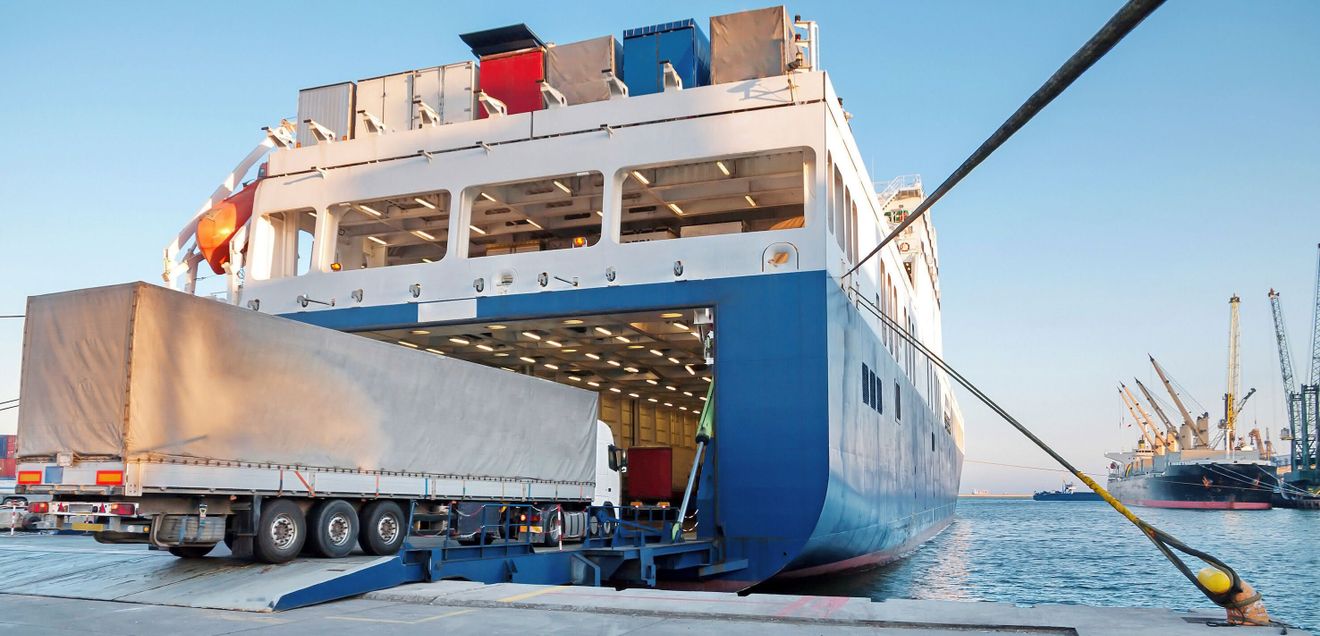
Intermodal concepts involving RoRo connections via the Mediterranean are particularly in demand. "As a result of recent experiences with volatile supply chains, we are seeing a shift in shippers' thinking towards alternative and sustainable logistics concepts from closer procurement markets. Corona has caused a boom in nearshoring," says Daniel Comi, authorized signatory and Head of Third Country Transport at Robert Kukla. Existing contracts are being expanded to include larger volumes and new orders are being added. Comi explains: "Between 2020 and 2022, our volume with Turkey increased by 23% to 5,300 trailers, and in North Africa traffic by 12% to 3,100 trailers. We expect this trend to continue this year."
High proportion of intermodal solutions
Overall, nearshoring accounts for around 12% of the total transport volume. While traditional truck transport dominates in the nearshoring regions of Turkey and the Maghreb states, Robert Kukla covers a large part of the transport volume in these regions using intermodal solutions. Comi senses that awareness is changing among potential clients: "Alternative concepts involving waterways are also attracting increasing interest in nearshoring relations. Factors such as capacity bottlenecks, sustainability and driver shortages are encouraging this development." For North Africa and Turkey, Robert Kukla relies on RoRo and ConRo connections via the Mediterranean to the Italian southern ports for his intermodal concepts, in addition to the classic short sea solutions for containers. Comi cites two advantages for the latter option: "With trucks as the dominant means of transport in these regions, trailer transport by ship can be easily implemented without reloading and the transit time via the Mediterranean is considerably shorter compared to the short sea connections to Rotterdam, Antwerp, Bremerhaven or Hamburg."
The port of Trieste has established itself as a reliable logistics hub for Turkey and the Ligurian ports for the Maghreb states. Robert Kukla's main target markets from the nearshoring countries include the DACH region, Poland, the Benelux countries, France, Spain and Portugal. In comparison to the existing intermodal concepts in Europe, Comi's experience shows that combined transport from North Africa and Turkey requires more complex planning and the scheduling and linking of the individual legs is also more demanding. Another component is essential for the experienced department head: "In my opinion, efficient and well-connected partners or local branches are indispensable. This is because the market for sustainable and alternative transport solutions in the nearshoring segment is still young and developing in some cases."
This article appeared in issue 8-9/23


You might also be interested in
Port of Hamburg handles 58.2 million tons
Both the tense economic situation in Europe, and in Germany in particular, and the geopolitical conditions continue to have an impact on handling in the Port of Hamburg.
 read more...
Digital tools for shipping
Sensor specialist Sick and the CPO container shipping company are cooperating. Since 2020, both companies have been working on digital solutions for the maritime industry, which have now also been technically assessed by the classification society...
read more...Sustainable across the Rhine
The "GAS 95", another innovative ship design from the HGK Shipping Design Center, has been sailing on the Rhine since 8 February: low-emission thanks to diesel-electric propulsion, future-oriented thanks to its "future-fuel-ready" design and...
read more...Germany's first center for remote-controlled ships opened
Seafar, a Belgian technology and service provider for remote-controlled and crew-reduced inland navigation, has set up the first so-called Remote Operations Center in Germany together with its project partners HGK Shipping and Reederei Deymann.
read more...Ole Trumpfheller new Head of Northern Europe at Maersk
Effective May 1, 2024, Ole Trumpfheller will assume the role of Vice President and Managing Director of Maersk's North Europe Continent (NEC) Area, based in Hamburg.
read more...NWL and DBR Hamburg cooperate in container handling
Norddeutsche Wasserweg Logistik (NWL) and Deutsche Binnenreederei (DBR) Hamburg declare their official merger in the container business.
read more...LHG holds its own in a difficult environment
Total throughput decreases moderately by 4.8 percent
read more...Maersk and Hapag-Lloyd agree on joint operational cooperation
Hapag-Lloyd and Maersk have signed an agreement for a new, long-term operational cooperation called "Gemini Cooperation", which will start in February 2025. The aim is to create a flexible and interconnected service network in maritime...
read more...Port of Hamburg: Zapp becomes EMP
The Zapp IT platform - the comprehensive and mandatory IT system for the customs export process in the Port of Hamburg - is being relaunched and renamed.
read more...