
Turnover 3.81 billion euros
Jungheinrich successfully asserts itself in 2020
Despite the coronavirus-related economic slump, Jungheinrich closed the 2020 financial year better than initially expected at the beginning of the COVID-19 pandemic. All key figures are in the upper half of the forecast raised in October 2020, and in some cases the targets were exceeded.
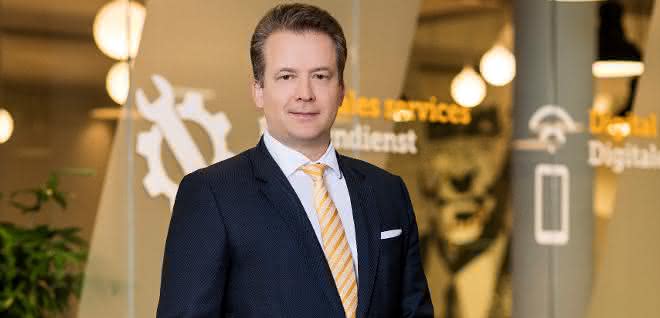
"Against the backdrop of the difficult framework and market conditions caused by the COVID-19 pandemic, we are satisfied with the course of business this year. Thanks to measures introduced at an early stage to reduce costs and increase efficiency, as well as our determined efforts to secure liquidity, we were able to successfully limit the negative impact of the pandemic on our business. It is thanks to the outstanding commitment of our employees that we were able to achieve such a result together in the year of the biggest medical and economic crisis since the Second World War," explains Jungheinrich CEO Dr. Lars Brzoska (pictured).
In a market environment largely determined by the outbreak of the COVID-19 pandemic, sales reached € 3.81 billion in the 2020 financial year (previous year: € 4.07 billion). The value of incoming orders, which comprises the new business, rental and used equipment and customer service business areas, reached € 3.78 billion in 2020 due to a strong final quarter (previous year: € 3.92 billion). Both figures were therefore slightly above the forecast corridor, which was raised in October 2020. At € 218 million (previous year: € 263 million), EBIT reached the upper half of the forecast corridor, resulting in an EBIT margin of 5.7% (previous year: 6.4%). Earnings after taxes amounted to € 151 million (previous year: € 177 million). Cash flow from operating activities significantly exceeded the previous year at € 551 million (previous year: € 345 million). As at December 31, 2020, a net cash balance of € 194 million was also achieved; at the same time in the previous year, the Group reported net debt of € 172 million. This corresponds to an improvement of € 366 million. This positive development was driven by lower investments, the reduction in the rental fleet and the release of working capital.
"Especially in difficult economic times, a strong balance sheet and solid liquidity are of great importance in order to be able to implement the necessary strategic measures at all times and ensure the Group's financial independence," explains CFO Dr. Volker Hues.
The Board of Management of Jungheinrich AG proposes to distribute a dividend of €0.41 (prior year: €0.46) per ordinary share and €0.43 (prior year: €0.48) per preferred share. The dividend proposal results in a total distribution of € 43 million (previous year: € 48 million). The payout ratio of 28% (previous year: 27%) is in line with the company's target of distributing between 25% and 30% of earnings after tax to shareholders. "We are pleased that we can continue our policy of continuous dividend payments even after this challenging year. A reliable participation of shareholders in the company's success is essential for us," says Dr. Hues.
Successful corona crisis management
Right at the beginning of the coronavirus crisis, Jungheinrich immediately formed a central crisis team and also set up local crisis teams in the organizational units and plants in order to identify emerging risks at an early stage and minimize their impact on the company through timely, appropriate and coordinated measures. The top priority was to protect the workforce, customers and business partners. To this end, Jungheinrich procured more than 215,000 masks and over 20,000 liters of disinfectant in 2020 alone. At the same time, extensive precautions were taken to minimize the impact of the pandemic on supply chains and production. The local units around the world are in close contact with the respective authorities and are continuously implementing appropriate measures to ensure delivery capability. As a result, Jungheinrich has been able to reliably serve its customers throughout the crisis. In 2020, short-time work was only implemented at a few locations and to a limited extent.
"Thanks to the outstanding commitment of our employees, our customers, especially those from system-relevant areas of logistics, retail and the food and pharmaceutical industries, have always been able to rely on Jungheinrich. Our colleagues have thus become our 'Yellow Heroes'. Jungheinrich can be proud of this team, with which we will also master all upcoming challenges and achieve a great deal in the future," explains Dr. Brzoska.
New corporate strategy 2025+
In November 2020, Jungheinrich presented its new corporate strategy2025+ to the public. In the coming years, Jungheinrich will focus on increasing profitability, efficiency and sustainability. Having already achieved its strategic growth target for 2020 a year earlier than planned, Jungheinrich has set itself the goal of creating sustainable value for all its stakeholders - customers, employees, shareholders, business partners and society as a whole. The Group is focusing in particular on expanding its presence in the European, Chinese and North American markets. All activities are based on a holistic understanding of sustainability that takes economic, ecological and social aspects into equal consideration.
"We want to be the first choice for our customers in the long term and offer them added value through pioneering solutions and technologies. At the same time, we want to help shape economic, ecological and social developments as a Group. To this end, we are making Jungheinrich more profitable, more efficient and more sustainable," explains Dr. Lars Brzoska.
Forecast and outlook for 2021
In view of the positive market development in recent months and the IMF's growth expectations of 5.5 per cent for the global economy in the current year, Jungheinrich expects the global material handling equipment market to grow in the mid to high single-digit percentage range in 2021, while the market volume in the core European market is expected to increase in the mid single-digit percentage range.
Taking this economic and industry outlook into account, Jungheinrich expects consolidated net sales for 2021 to be within a target range of €3.9 billion to €4.1 billion. Incoming orders are also forecast to be in a corridor of €3.9 billion to €4.1 billion. EBIT should be between € 260 million and € 310 million in the current financial year. The EBIT margin is expected to be in the range of 6.7% to 7.6%. With regard to the development of material costs, Jungheinrich expects prices to rise noticeably in line with the broad economic recovery. According to current estimates, EBT should reach €240 million to €290 million and the EBT margin is expected to range from 6.2 per cent to 7.1 per cent. This is based on the assumption that the current financial market environment will remain relatively stable. Jungheinrich will continue to maintain a high liquidity position in order to safeguard its financial independence and maintain adequate financial leeway. At the end of 2021, the Group is aiming for a net cash position of well over €200 million. ROCE for the 2021 financial year is expected to be between 14 per cent and 18 per cent due to the significantly higher EBIT forecast compared to the previous year.
"The crisis year 2020 was an extraordinary test for all of us, both professionally and personally. Thanks to our strong positioning, we were able to pass it successfully. We have proven how resilient and crisis-proof Jungheinrich is. Even though the current year still harbors uncertainties due to the coronavirus, we are optimistic about it due to the expected positive market development. We are concentrating on our profitable growth, increasing efficiency and successfully implementing our strategy," says Dr. Brzoska.


You might also be interested in
KUKA Automates Material Handling at a TV Manufacturer
At TPV Displays Polska, 22 autonomous mobile robots from KUKA handle internal material transport. The solution is designed to stabilize production, reduce the workload on employees, and make the material flow more efficient.
 read more...
Standardized in design, flexible in use
Automated guided vehicles are increasingly in demand in production and logistics as they automate processes efficiently - but in addition to the vehicle, the right peripherals are also crucial for safe operation. A new solution consisting of a...
read more...Toyota MH introduces SSAB Zero steel for LHM230 hand pallet trucks
Toyota Material Handling Europe has reduced the CO₂ emissions of its Toyota LHM230 hand pallet truck "from the cradle to the factory gate" by 18 percent. This was made possible by using SSAB Zero steel for the forks and frame.
read more...Kion significantly increases order intake
Kion holds its own in a difficult environment in 2025, increases order intake significantly and looks ahead to profitable growth in 2026 with a new segment name and efficiency gains.
read more...Shelving technology - these are the trends
The most frequently mentioned trends in intralogistics at the moment are artificial intelligence, robots and automation. However, every efficient warehouse solution is still based on the right racking technology. Giovanni Cataldi from heavy-duty...
read more...Industrial trucks for luxury cars
Optimized logistics for super sports cars
Automobili Lamborghini manufactures exclusive luxury and super sports cars. Founded in 1963 by Ferruccio Lamborghini, the company is still based at its traditional headquarters in Sant'Agata Bolognese.
read more...TwinFleet shows what industrial trucks really do
What are industrial trucks doing on the factory floor all day? Leadec TwinFleet answers this question: the solution creates transparency and shows starting points for optimizing the fleet and warehouse.
read more...Scalable automation in practice
Autonomous mobile robots (AMRs) can be flexibly integrated into existing warehouse structures, increase productivity and shorten throughput times - with a fast return on investment.
read more...Swisslog introduces new IntraMove series
Swisslog is expanding its portfolio with the IntraMove series: three autonomous mobile robots (AMR). These were developed for flexible horizontal transportation in dynamic warehouse environments. The AMRs can handle loads of up to 3,000 kilograms...
read more...