
IIoT gateways
So that it runs optimally
Conveyor technology is an essential part of many industrial processes. It enables the transportation of materials and products within production facilities. With the increasing digitalization and networking of industrial systems, IIoT gateways play a central role in monitoring and optimizing these processes.
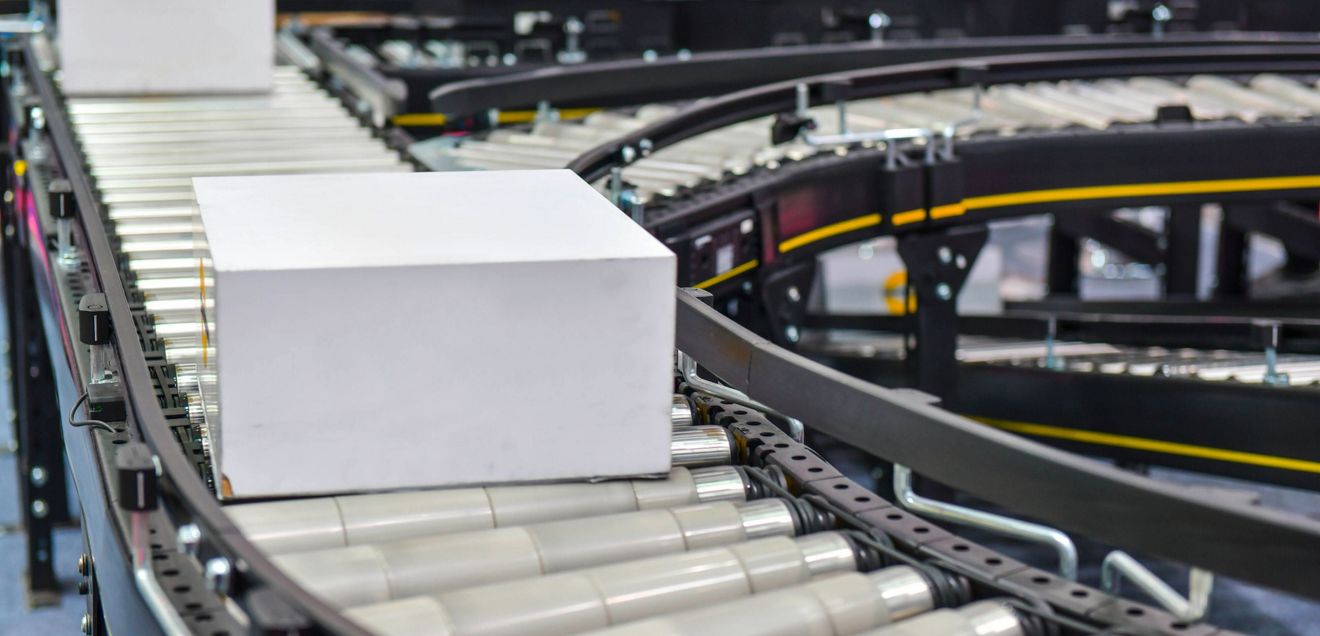
IIoT gateways are used in numerous applications in conveyor technology. Among other things, conveyor belts are controlled and monitored, maintenance measures are improved and energy and other resources are managed. Conveyor and transport belts prove to be an important element of many logistics processes. The continuous monitoring and control of these systems contribute to smooth operations. With IIoT gateways, the relevant data can be recorded and forwarded in real time to ensure accurate monitoring and a rapid response to faults or failures. Sensors installed along the conveyor belts record various operating parameters, such as speed, temperature, vibration and load. This data is collected by IIoT gateways and transmitted to central systems or cloud platforms. Real-time monitoring makes it possible to detect anomalies at an early stage and take appropriate action before major failures occur. This significantly increases the availability and reliability of the conveyor systems.
Developing forward-looking service strategies
In conveyor technology, IIoT gateways are also ideal for optimizing maintenance and servicing. In the past, conveyor systems were often serviced reactively or at fixed intervals, resulting in unplanned downtime and inefficient use of resources. By using IIoT gateways, companies can develop predictive service strategies based on continuous monitoring and analysis of operational data, such as operating hours, load and wear. Algorithms and machine learning are used to detect patterns and trends that indicate an imminent need for maintenance. In this way, timely and targeted maintenance can be carried out, reducing unplanned downtime to a minimum and extending the service life of the systems. The use of maintenance resources is also more efficient. This in turn saves costs.
Optimization of energy consumption
In modern industry, energy and resource management is a key factor for high competitiveness and sustainability. IIoT gateways play an important role in checking and improving energy consumption in conveyor technology. By recording and evaluating energy data, inefficient processes can be identified and optimized. To this end, IIoT gateways permanently monitor the energy consumption of conveyor belts and other systems. The analysis of the collected data provides information on which measures can be taken to reduce energy consumption. This includes, for example, adjusting inefficient operating modes.
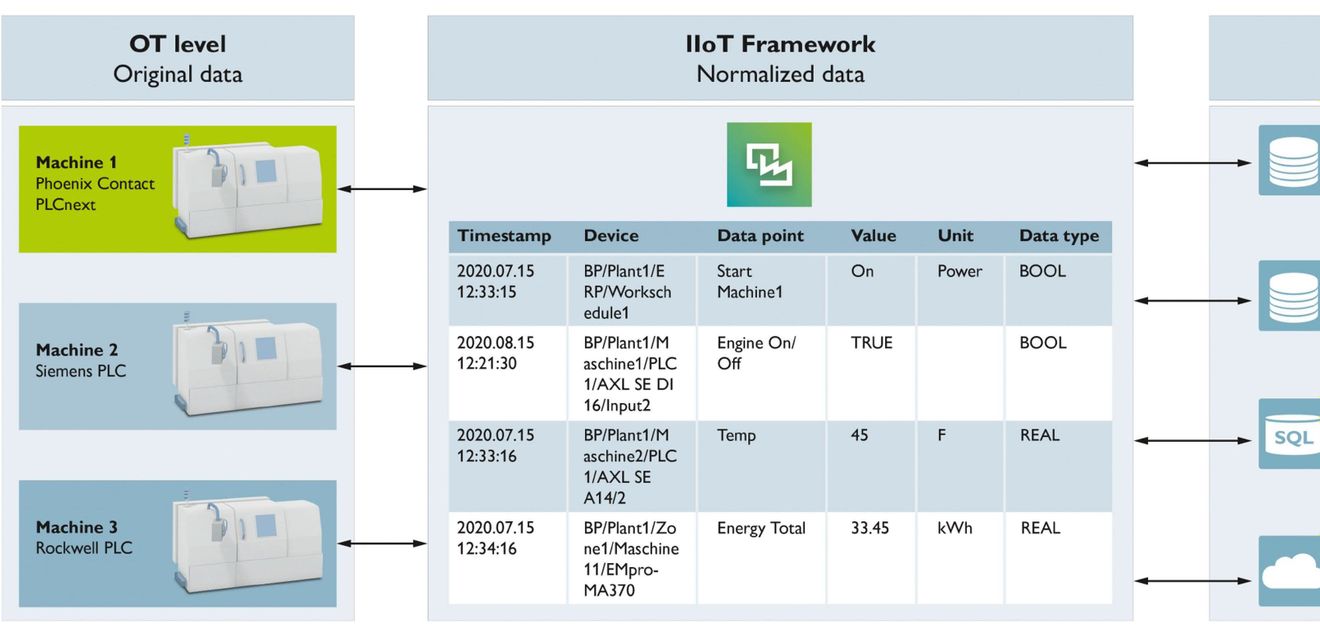
Furthermore, peak loads can be controlled and avoided, which leads to a further reduction in energy costs. In addition to energy consumption, IIoT gateways can also monitor other resources, such as lubricants and spare parts. By closely monitoring resource consumption, companies are able to avoid it and prevent waste. This not only helps to reduce costs, but also optimizes the sustainability and environmental compatibility of production processes.
Interface between IT and OT
Phoenix Contact has developed an open, scalable and flexible software solution for the applications described. The IIoT framework is based on PLCnext Technology and is compatible with all controllers in the PLCnext Control product family. It acts as an interface between Operational Technology (OT) and Information Technology (IT) and allows seamless integration and communication between the levels. To this end, the IIoT framework provides both input and output connectors.
Different process data can be read in with the input connectors. Phoenix Contact offers a broad portfolio of I/O modules for recording this data. They can be used to record various sensor values such as speed, temperature or vibration as well as different transmission protocols - for example HART or Modbus/RTU. It is also possible to collect data from network components, such as energy meters, or controllers from other manufacturers. This allows operating data to be recorded and processed precisely. The output connectors of the IIoT framework send the collected data via various protocols such as MQTT, REST-API, GRPC or CSV to different destinations, such as servers, databases or cloud platforms.
Thanks to the high-performance forwarding of data, anomalies are detected at an early stage and appropriate measures are taken before major failures occur. This significantly increases the availability and reliability of the conveyor systems.
Development of own connectors
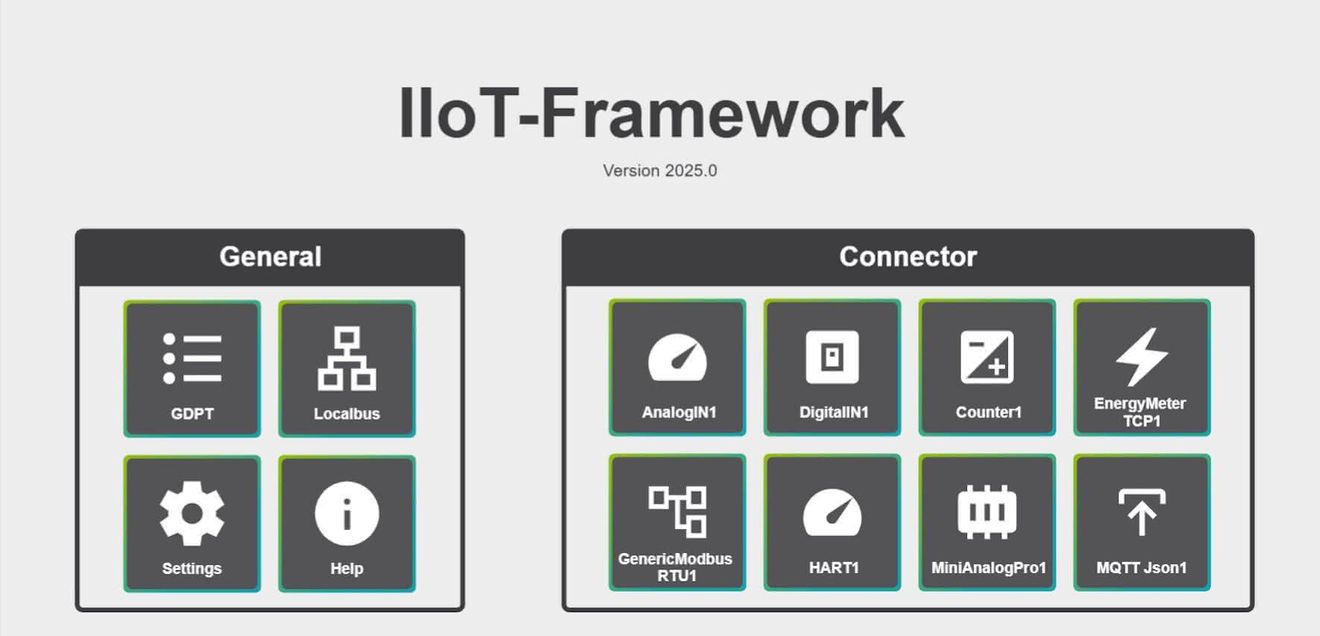
Within the IIoT framework, the data, which can be recorded deterministically and in real time, is normalized and pre-filtered. It also contains meta information such as the data source, a timestamp or the unit. This helpful contextual information significantly increases the added value of the data for subsequent evaluations and presentations. The integrated web interface of the IIoT framework enables intuitive configuration of the connectors without the need for employees to have any programming knowledge. This simplifies the implementation and use of the framework and makes it a suitable solution for companies that want to digitize and improve their conveyor technology. Thanks to ready-made system functions, the framework also makes it easy to develop your own individual connectors based on the PLCnext Engineer engineering environment. The customized adaptation of the connectors to specific requirements expands the application options of the IIoT framework from Phoenix Contact in the field of conveyor technology. The use of IIoT gateways opens up a range of benefits for the user. These contribute to optimizing the production process and increasing efficiency.
Continuous monitoring and control of the conveyor belts, improved maintenance and efficient energy and resource management enable companies to reduce their operating costs, increase plant availability and achieve their defined sustainability goals. The IIoT framework and the connectors implemented as standard are available free of charge on the PLCnext Store digital marketplace.
Thiemo Ludmann, Solution Engineer in Vertical Market Management Factory Automation, Phoenix Contact


You might also be interested in
PepsiCo Polska relies on Mecalux
PepsiCo Polska is working with Mecalux to drive forward the automation of its logistics and is planning an intelligent warehouse.
 read more...
Commitment to greater sustainability
Contargo strengthens e-truck fleet with 33 tractor units
Contargo puts 33 new battery-electric DAF XD Electric trucks into operation and reaches a milestone in the decarbonization of its fleet with now 90 e-trucks.
read more...AI-supported energy management in the deep-freeze warehouse
AI-supported energy management in deep-freeze warehouses: Ecocool uses IT solution from fleXality to reduce electricity consumption, costs and carbon dioxide emissions
read more...Automation solutions and energy systems
Smart and efficient materials handling technology
Differentiated developments in the dynamic automation segment are the focus of Hamburg-based intralogistics specialist Still's presence at this year's Logimat. Another focus will be on energy systems for sustainable intralogistics.
read more...Holistic energy management
The Linde Energy Manager software from Linde Material Handling (MH) creates transparency about the entire energy supply situation in the company and enables forecasts for the future with the help of AI.
read more...Conveyor and lifting technology
Momentum Technologies: Achieves energy efficiency at IE5 level
The start-up company Momentum Technologies, a partner company of Rollex, is presenting its new MTS synchronous drum motor. It can be used for all types of conveyor and modular belts as well as in roller conveyors and is energy-efficient. This...
read more...Ensuring the efficient flow of materials
One of Prismat's largest EWM projects has been in live operation at Phoenix Contact since the end of last year. Since then, the company has benefited from a highly efficient material flow in its distribution center thanks to the standards-based...
read more...Efficient material flow at Phoenix Contact
Modules as required
One of Prismat's largest EWM projects has been in live operation at Phoenix Contact since the end of 2023. Since then, the company has benefited from a highly efficient material flow in its distribution center thanks to the standards-compliant...
read more...Next-Generation Cold Storage Facility
Lineage Relying on Automation from TGW Logistics in Texas
Lineage is relying on TGW Logistics’ automation expertise to build one of the world’s largest temperature-controlled distribution centers in Texas. The highly automated cold storage and frozen food warehouse is scheduled to begin operations in late...
read more...