
Logistics planning
Warehouse planning: five stumbling blocks you should know about
Automated warehouses offer numerous advantages, but the right choice of such systems poses many challenges. System integrator Klinkhammer Intralogistics presents five important stumbling blocks when planning automated systems and outlines strategies for avoiding them.
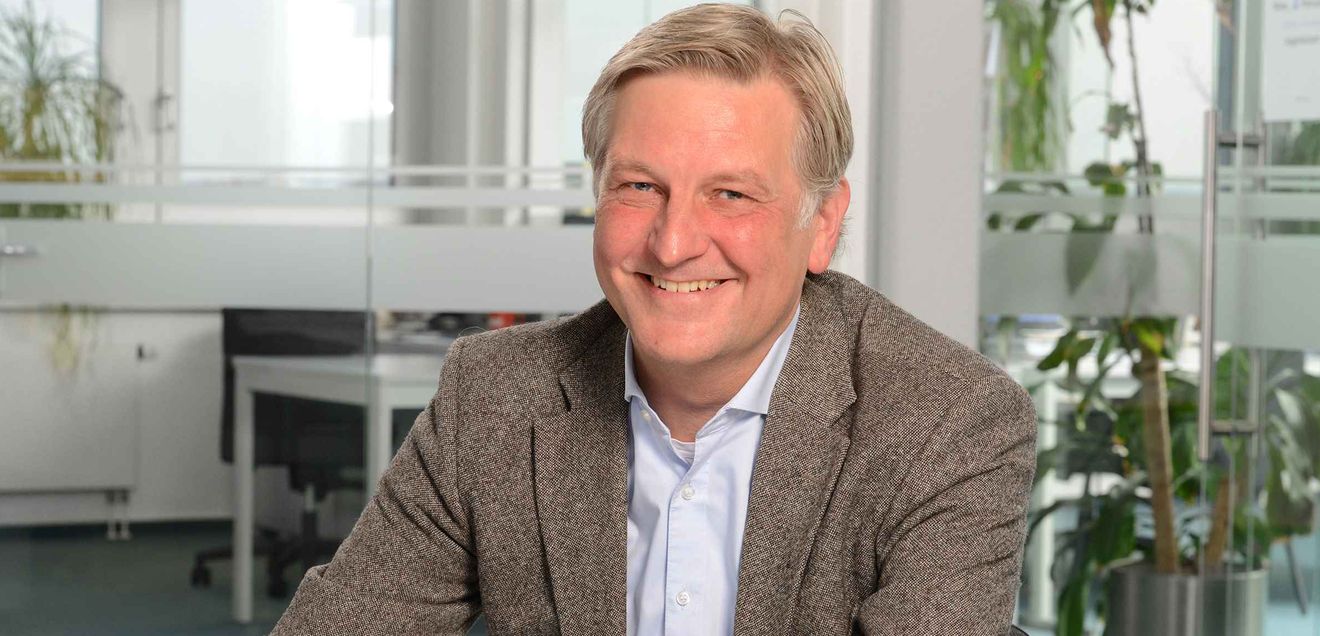
"Planning intralogistics systems and automated warehouses is a complex task that requires careful and comprehensive logistics planning. It is crucial to consider all possible solutions and include technical, economic and human factors at an early stage," explains Dr. Dirk Liekenbrock, Head of Logistics Planning at Klinkhammer Intralogistics. By avoiding certain stumbling blocks and implementing suitable measures, it is possible to ensure that the system not only works efficiently and reliably, but is also future-proof and adaptable.
Precisely analyze data and requirements
One of the most common causes of failure when implementing automated warehouse systems is insufficient data and requirements analysis. Often, important factors such as future growth forecasts, seasonal fluctuations, specific requirements of the products to be stored and particular order structures and material flows are not sufficiently taken into account. This can lead to errors when selecting the system and to oversizing or undersizing it.
Detailed data on current and future requirements should be collected and systematically analyzed. By using the database-driven, self-programmed business intelligence tool, the system integrator Klinkhammer Intralogistics can automatically evaluate extensive ad-hoc evaluations of 33 million transaction data, master data or inventory information, for example, and present and interpret results transparently and clearly. The time horizon of the data is usually one to two years in order to be able to analyze seasonal effects, for example. Everything is included, from ABC/Pareto analysis of the product range to top 10 overviews, time series of movements in the warehouse, heat maps and bottleneck analysis. This allows bottlenecks to be quickly identified and eliminated. Not only historical data is analyzed, but also future forecasts in order to make well-founded strategic decisions.
Storage system: select open technology
When selecting an automated warehouse system, it is crucial not to narrow your focus too much. There are a variety of systems, such as classic high-bay warehouses with storage and retrieval machines, shuttle systems, autonomous mobile robots, driverless transport systems or robot picking. But which is the right one? Each of these systems has specific advantages and disadvantages, and a system that is not optimally selected can lead to inefficient processes, increased operating costs and insufficient storage capacity.
A thorough evaluation of the various storage systems and their accuracy of fit is crucial. All possible solutions should be considered without focusing on one system in advance. Klinkhammer draws on system components from numerous established manufacturers on the market and therefore has access to an extremely broad portfolio of solutions. A professional comparison of variants guarantees a manufacturer-independent view of the technologically and economically most sensible solution for internal logistics tasks. It is always important to keep an eye on the investment and its ROI. Partial automation or manual systems can also be economical and should be examined as possible solutions.
Integrate IT systems seamlessly
Automated warehouse systems require seamless integration of various IT systems such as WMS, ERP, route planning, production planning systems and other existing software. Projects often fail due to a lack of compatibility and integration of these systems, which can lead to data inconsistencies and inefficient processes.
Careful selection and integration of IT systems are crucial. At Klinkhammer, attention was paid to flexible interfaces and a modular architecture for the Klinkware warehouse management software in order to ensure simple integration and future expandability. Existing IT systems, such as the Pick-by-Voice and Pick-by-Light picking systems, or existing infrastructure such as scanners or scales can be flexibly integrated into the software. In many cases, existing logistics systems are already in place alongside the new systems, which should continue to be used and whose processes should be coordinated in the software. Regular tests and employee training are necessary to ensure that the systems work together smoothly.
Consider peripheral processes and infrastructure
A common problem is the lack of analysis of special processes and the existing and future infrastructure. 90% of processes can usually be solved with standardized procedures and are the focus of all project participants. But how are special processes, which are still very important, integrated into the material flow? All processes should be included in the requirements analysis and classified according to importance in order to examine both automated and manual solutions. For example, special packaging for sensitive goods, sea freight, finishing or customer-specific processes should be given special attention. The environmental conditions in the warehouse should also be taken into account from the outset. Are the goods particularly sensitive to increased humidity? What hygiene requirements exist? Is part of the product range classified as a hazardous substance? Is it necessary to consolidate orders with goods from other areas, should sufficient buffer zones be planned, especially if automated processes encounter manual pre-processes? Infrastructural aspects such as existing buildings, fire protection, air conditioning, official requirements, floor loads and general building specifications can also have a significant influence on the selection of an intralogistics system. Therefore, a close exchange with the specialist planners of these trades is essential in the early planning phases.
Involve employees, demonstrate benefits
The human factor is often underestimated when integrating new warehouse systems. Even the most modern intralogistics system cannot be operated successfully without sufficient employee training and involvement. Resistance to change and a lack of understanding of the new processes can impair efficiency.
The early and comprehensive involvement of the workforce in the planning and implementation process is crucial. Training programs should not only teach technical skills, but also highlight the benefits and objectives of the new system. On-site visits and regular coordination with the project teams, as promoted by Klinkhammer, can increase employee acceptance.


You might also be interested in
New Executive Sales Director for Vanderlande Germany
Systems integrator Vanderlande has appointed Manuel López Garcia as Executive Sales Director Domain Warehouse Germany as of September 1.
 read more...
Witron sales successfully pass the billion mark
With sales growth of 340 million euros - an increase of a good 48 percent on the previous year - the Witron Group has exceeded the billion euro mark for the first time.
read more...SSI Schaefer records more orders, turnover grows in 2021
Based on preliminary figures, the SSI Schaefer Group significantly increased its order intake and sales revenue in the 2021 financial year.
read more...VanRiet is now MHS
The Dutch system integrator VanRiet Material Handling Systems BV has been operating under the name Material Handling Systems, Inc. (MHS) since January 1.
read more...Product innovation from the system integrator
World premiere: HC Smalls Sorter from VanRiet
Dutch system integrator VanRiet Material Handling Systems BV presented its new sorter for small parcels for the first time at the Parcel+Post Expo: the HC Smalls Sorter.
read more...From the start-up aid to the modular system
Three years after the launch of the E-Drive start-up aid, castor and wheel manufacturer Tente is offering a modular kit solution called E-Drive ultimate.
read more...VanRiet CEO Rik van den Boog steps down
Rik van den Boog has left the Dutch system integrator VanRiet after seven successful years as Managing Director.
read more...Stöcklin: In the game right from the start
Since 1934, the Swiss system integrator and intralogistics specialist has been able to hold its own on the global logistics market in almost every conceivable sector. And so it is no coincidence that the long-established Swiss company...
read more...Wiesbauer Gourmet automates with Klinkhammer
Wiesbauer Gourmet Gastro GmbH, a catering supplier from Sitzenberg-Reidling in Lower Austria, has commissioned the system integrator Klinkhammer Intralogistics to build an automated, three-aisle deep-freeze warehouse, which also includes the...
read more...