
Interview with Hapag-Lloyd CEO
"Our industry is becoming more environmentally friendly overall"
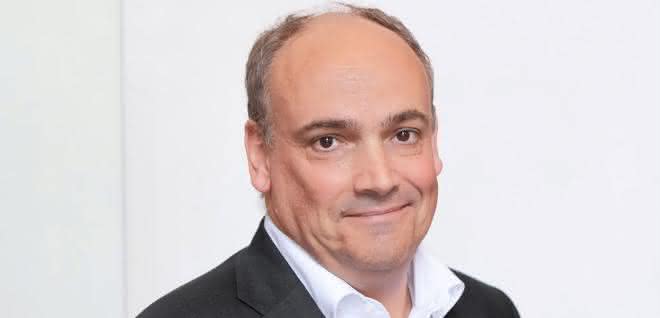
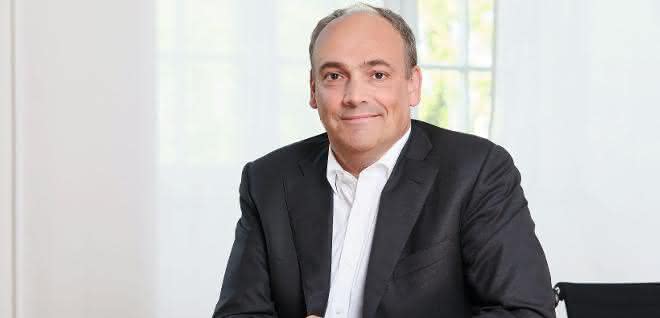
It is always a good idea to conduct an interview with Rolf Habben Jansen, CEO of Germany's largest shipping company Hapag-Lloyd. Over the past five years, the manager has steered the long-established company pragmatically and precisely into calmer waters. Now the aim is to become more sustainable and increase returns.
LT-manager : Yesterday (editor's note: the interview took place on July 24) was the ground-breaking ceremony for the deepening of the Elbe - how did you feel following the ceremony?
Rolf Habben Jansen: We are glad that the issue has finally been resolved and I already pointed out in our last interview how important the deepening of the Elbe is for Hamburg. It is and was necessary for the city. Now there is still the Köhlbrand Bridge, where I would like to see the issue tackled a little more quickly. The bridge is too low for our large ships - and we can't reach our terminal, which is located behind the bridge. As it is in a state of disrepair anyway, we are hoping for a decision on the future crossing of the Köhlbrand soon.
LTM : Hapag-Lloyd accounts for a large part of the throughput here in Hamburg. Will the deepening of the Elbe serve to maintain the status quo or will it increase the volume?
Habben Jansen: The share will not increase. We brought more volume to Hamburg at the beginning of the year by transferring the Atlantic services from Bremerhaven to Hamburg. That's all we can do at the moment. In the long term, deepening the Elbe will certainly help to secure cargo for Hamburg and remain competitive. However, the deepening of the Elbe will not give us a clear lead over the European frontrunners Rotterdam and Antwerp. We can catch up, but not overtake. The likelihood of significantly more cargo coming to Hamburg will not necessarily increase as a result.
LTM : Will this fairway adjustment - the word Elbe deepening is frowned upon in Hamburg - last for a very long time? Or is it fair to ask for how long?
Habben Jansen: It will be enough for the time being. At some point, the ship sizes will reach the limit of what makes sense. In my view, it makes relatively little sense to build ships larger than 23,000 TEU. In this respect, the deepening of the Elbe should last for a very long time. I don't expect us to be talking about the next deepening of the Elbe in the next five years.
LTM : How is Hapag-Lloyd doing today?
Habben Jansen: I am still cautiously optimistic about 2019 and confident that the forecast we gave for the year will be achieved.
LTM : Hapag Lloyd is going on the quality offensive, as you announced with Strategy 2023. Tell us more about it...
Habben Jansen: It's about the services we offer our customers. There are various interfaces here, and we have defined ten of them where we can make significant improvements. First of all, we will make these interfaces measurable and then present them to our customers. Our quality offensive should lead to customers being prepared to pay 25, 50 or 100 dollars more per container due to our measurable high quality.
LTM : Please give some examples...
Habben Jansen: For example, how quickly we respond to calls from customers or how accurate the documents we supply are, right up to the deadlines we promise. These are just a few examples. We will publish the first three interfaces in the first quarter of 2020, another three in the first of January 2020 and so on. The difficulty is not to name where we can improve, but then to deliver. Ultimately, this must lead to customers rating us better and giving us priority when booking.
LTM : Do you start with areas in which you are already good?
Habben Jansen: Not only. We are already relatively good in the area of correct invoicing, but there are also areas in which we, like others, are not yet good. Schedule reliability, for example. This is a difficult issue because there are circumstances that you as a company cannot influence yourself - bad weather, strikes, traffic jams at ports. There are segments of the market where it's all about price, but there are also segments where quality is particularly important. Customers are then prepared to pay more for this.
LTM : When will the results be visible?
Habben Jansen: We started in 2017 and began working on it in 2018. You can already see the first results, for example in terms of digitalization and how much we are already selling online. We are at eight percent worldwide, which is already a lot.
LTM : Eight percent today - where do you want to be in 2023?
Habben Jansen: At the moment, we are particularly successful with online sales in the short-term segment and have achieved almost 25 percent here. This will not grow enormously. Now it's about how much we can achieve online in other segments. Here, 15 percent is not unrealistic.
LTM: Let's talk about sustainability. From January 1, new regulations on clean fuel will come into force. Is this the end of shipping, as is currently being portrayed in some media?
Habben Jansen: Overall, shipping is the most environmentally friendly means of transportation, more environmentally friendly than many people think. Nevertheless, we still have a lot to do. Sulphur is a big issue for us and that's why I'm pleased about the new rules. They will lead to additional costs, but the air will actually be cleaner and our industry as a whole will be more environmentally friendly. We could also convert ships to LNG, i.e. liquefied natural gas. That would solve many problems. I don't know whether our industry will one day be completely emission-free, because there is currently no technology that would make this possible. In this respect, the sulphur rule will trigger a leap forward, LNG will play a more important role - and perhaps a new technology will come along afterwards that will make us emission-free.
LTM: Your positive attitude surprises me. You have significant additional costs due to the more environmentally friendly fuel?
Habben Jansen: That's right, but these additional costs are incurred if you want to produce in a more environmentally friendly way. We must not forget that although the cost of fuel is high in relative terms, shipping uses a relatively cheap fuel. We're talking about 400 dollars per ton or 40 cents per liter. The new, cleaner variant will cost 60 to 65 cents per liter. After many discussions with our customers worldwide, we know that almost all of them are prepared to accept the additional price.
LTM : Does it help that the new rules apply to everyone?
Habben Jansen: Yes. The rules are good and easy to monitor. From March 1, 2020, it will no longer be permitted to have the old fuel on board unless the ship has an exhaust gas purification system. In this respect, I believe that everyone will comply. The Europeans will anyway, but I am also confident that the Chinese and Japanese will. Nevertheless, we alone have additional costs of around one billion dollars per year due to the new fuel.
LTM : What do you think of the retrofittable systems that clean the exhaust gases from ships?
Habben Jansen: For us, this is purely a temporary solution. We are retrofitting ten of our ships, but only to gain experience. In the long term, we need clean fuels and completely new technologies.
LTM : Is the market really so relaxed about low-sulphur fuels that it accepts the higher rates without much grumbling?
Habben Jansen: The additional costs are so high that no shipping company can bear the costs itself and not pass them on. For us, as I said, it is around one billion dollars, for Maersk an estimated two billion. That's a figure that would bankrupt all shipping companies if we didn't pass the costs on to our customers. Our customers understand the issue. The bottom line is that we are talking about a rate increase of eight to ten percent in an industry in which rates have actually only ever fallen over the past twenty years. However, the additional costs are also so significant that everyone really understands that we only have one chance: to face up to this new reality and pass on the costs to our customers fairly and transparently.
LTM : The conversion and equipping of container ships for LNG propulsion is a major topic in the shipping industry, and Hapag-Lloyd is also running such an "experiment". How is it progressing?
Habben Jansen: You learn something new every day, because the technology is still very new. We will be converting the 15,000 TEU ship "Sajir" and I am confident that the ship will be fully converted in the third quarter of 2020. If everything works well, there is a high probability that we will convert another 16 ships.
LTM : Is LNG suitable as a trademark for a shipping company like Hapag-Lloyd?
Habben Jansen: That can't be ruled out, but we have to test it now and then need the funds for the conversions. The conversion costs over 30 million dollars per ship. That's not a small amount.
LTM : What is the return on investment?
Habben Jansen: It won't be inspiring, but we estimate that it will be achieved after five to seven years. For us, LNG is another step in the right direction and we should not forget that the shipping industry has already made progress. CO2 emissions per TEU are now 50 percent lower than they were ten years ago. Shipping is not in such a bad position compared to other modes of transportation.
LTM : Anyone entering the head office in Hamburg reads Albert Ballin's motto, "My field is the world". As a shipowner, you are extremely dependent on global political developments. How do you feel when you hear news from America?
Habben Jansen: I am firmly convinced that all countries benefit from free world trade. Trade restrictions benefit no one, on the contrary. Of course, relations between the USA and China are not without tension. The question is how it will turn out in the end. If the result is massive protectionism, then that will be a major setback for global trade. It is therefore important to get this redefinition of trade relations right. Free trade is immensely important to us.
LTM : Always combined with the hope that everyone involved has a strong enough sense of reality.
Habben Jansen: Yes. It is legitimate to renegotiate. And freight traffic is just one issue. Data traffic is much bigger and has hardly been regulated to date. That will certainly also become an issue. But since we can't influence politics, I try not to get too worked up about it (smiles). Fortunately, our business is not just dependent on traffic between two trading partners. Our portfolio spans the entire globe. If it decreases in one place, it may increase elsewhere.
LTM : Hapag-Lloyd then, when you took office, and today in terms of perception: is the company in calmer waters than in 2014?
Habben Jansen: It's different now. In 2014 and 2016, we were very busy due to the takeovers and mergers. Hapag-Lloyd is now almost 2.5 times as big as it was then. In this respect, things are quieter today, but on the other hand there will always be a degree of change. But of course there isn't a big merger every year.
LTM : Do you expect further mergers?
Habben Jansen: No, I would be very surprised. The additional cost advantage is getting smaller and smaller. And company prices are much higher today.
LTM : Which markets does Hapag-Lloyd want to become more involved in?
Habben Jansen: We have also grown strongly in South America as a result of the merger with CSAV, as well as in the Far East and the Middle East. We are already well represented in markets such as India, Southeast Asia and Africa, and we will invest here. Although we are dependent on the global economy, we benefit from the fact that our portfolio is very balanced across many trade lanes. A crisis here or there will not immediately cause our entire result to collapse. You can only do that if you are not dependent on one or two trades.
LTM: Why Africa?
Habben Jansen: Africa will grow strongly over the next twenty years. Our business has developed well here and will continue to do so.
LTM : How satisfied are you with your first five years as CEO?
Habben Jansen: The bottom line is that we are in a good position today. We made the right decisions and implemented them well. It always takes luck, but on the whole we can be quite satisfied.
LTM : We last interviewed you for LT-manager in 2014, when you had been in office for barely six months. What did you think of Hapag-Lloyd back then that has since come true, and what hasn't?
Habben Jansen: Even back then, there were already expectations that the company would have to grow significantly. At the time, I had imagined that Hapag-Lloyd would have a capacity of around two million TEU by the end of 2020. We won't be far away from that. Ditto for turnover of around 20 billion dollars. In the end, that was the most important thing: to grow, otherwise we wouldn't have survived. The second thing that surprised me was that the company is in a very good position to implement a wide range of different projects, including our two integrations and the IPO. What did I expect to be different? I had hoped that the market would recover more quickly. Rates are only rising very, very slowly. In terms of the environment, I had hoped to make faster progress, but that's not so easy when you have well over 200 ships in your portfolio. This is a challenge that we are facing.
LTM: In 2014, you said: "We want open discussions and transparency at all levels" - goal achieved and ticked off?
Habben Jansen: Progress made: yes. Checked off: no, certainly not. We have already done quite well in increasing employees' willingness to engage in dialog and reducing hierarchies. A few examples: Today, any employee who wants to can join me for breakfast and ask questions or make comments. My colleagues on the Management Board and other top managers offer joint lunches where you can get into conversation. The mergers with CSAV and UASC have brought us forward and the new employees have brought a different culture into the company. We have also become much more open to the outside world - whether through social media or more intensive media work. Overall, we are now much more transparent than other large shipping companies.
LTM : What are your personal goals for your second term as CEO?
Habben Jansen: Five years ago, I set myself the goal of returning to profit and being in the black. We are on the right track and have been in the black in three of the last four years. I am certain that we will also succeed in 2019, which would be four out of five years. Now we need to stick with it and offer our shareholders and investors a reasonable return. This will enable Hapag-Lloyd to gain access to capital that we can use to further develop our company. So the first goal is to stabilize the return and improve it a tad. Secondly, we want to deliver what we promised in Strategy 2023. To become the quality leader in the eyes of our customers and to grow strongly in certain markets.
LTM : Which headline would you like to read about yourself and which about Hapag-Lloyd in 2024?
Habben Jansen: "Hapag-Lloyd again voted the most popular container liner shipping company in the world in an international customer survey" - I would love to read that. For me, it was important to get out of the crisis in the first five years. Now it's about stabilizing the business and improving returns, because we're still not earning back the cost of capital. Once we have achieved this, we will ask ourselves new questions. One step at a time.
LTM: I will follow the course with interest. Thank you for the interview!
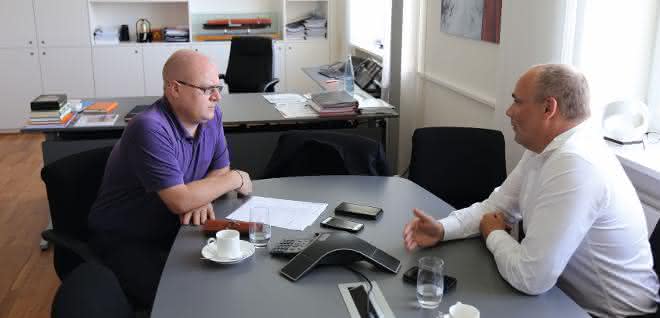
LT-manager editor-in-chief Martin Schrüfer spoke to Rolf Habben Jansen; the interview took place at the Group headquarters on Ballindamm in Hamburg.


You might also be interested in
Winner material flow PRODUCTS OF THE YEAR 2023
Conductix-Wampfler: ChargeLine 0865
Two-pole conductor rail segments for efficient opportunity charging of shuttles, suitable for thousands of cycles per day.
 read more...
Hermann Grewer celebrates his 80th birthday
Hermann Grewer, Honorary Chairman of the North Rhine-Westphalia Transport and Logistics Association (VVWL) and Honorary President of the German Road Haulage, Logistics and Disposal Association (BGL), celebrated his 80th birthday on June 6.
read more...Well chilled for sure
V-Zug Kühltechnik AG, developer and manufacturer of refrigeration appliances and part of the successful V-Zug Group, has set up a new production facility for refrigerators of all heights and dimensions at its Swiss site in Sulgen.
read more...Advantageous automation of small parts warehouses
The RSX1 shuttle system will be at the center of Rocketsolution's presence at this year's Logimat trade fair.
read more...Reduced energy requirements in the high-bay warehouse
One of Germany's leading premium car manufacturers is already focusing on energy efficiency in the production of its new SUV model with electric drive. The storage and retrieval machines in a high-bay warehouse at the production site have been...
read more...Low lift pallet truck for light duty applications
Clark has launched a new low lift pallet truck with the model designation LWio15 for light transport tasks. The truck has a load capacity of 1500 kg and is suitable for short distances in goods distribution, production or warehousing.
read more...Internationalization as an opportunity
E-commerce is in a state of flux. Changes in purchasing behavior and procurement problems are keeping e-commerce retailers busy. Logistics plays a decisive role in the overall online shopping experience.
read more...Fulfillment Center for Frisco.pl
Polish eGrocery specialist and TGW deepen partnership
TGW is building a highly automated fulfillment center for Frisco.pl in the Polish capital Warsaw. This is the second project in a row that the two companies have implemented together.
read more...Which world will it be in 2023?
Michael Schreckenberg teaches at the University of Duisburg-Essen as Professor of Physics of Transport and Traffic. Once a year, he addresses the readers of materialfluss, formerly LT-manager, with a critical and humorous expert article on transport...
read more...