
Power transmission from SEW-Eurodrive
Good technology for animal welfare
The company HoBohTec in Garrel, Lower Saxony, has developed a system for collecting turkey eggs. In addition to a highly efficient system, particular emphasis was placed on complete animal welfare. The machine manufacturer opted for a contactless energy transmission system from SEW-Eurodrive to supply the transport unit with energy.
Garrel is an hour's drive east of Bremen. Agricultural and food industry companies have settled here. In addition to pig farming, poultry and animal feed production dominate. HoBohTec Energietechnik is also based here. It received an inquiry from a customer for a fully automatic egg collector. "This time, it wasn't the idea that started it all, but the challenge," recalls Managing Director Hans-Jürgen Böhmann. He accepted the order for the innovative project for the automated collection of turkey eggs.
The collaboration between HoBohTec and SEW-Eurodrive was initially based on smaller automation projects in the food industry and the retrofitting of old systems or system expansions. HoBohTec developed a robot that searches turkey nests for eggs in large breeding farms and collects them. This egg-searching robot, called EiSam, travels on rails that were previously suspended under the ceiling of the poultry house. In a newer version, the rails are laid on a frame on the floor of the poultry house. Key components of the solution are a camera and a gripper for detecting and picking up the turkey eggs.
Contactless energy transfer
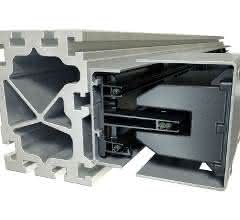
A technical highlight of this solution is the Movitrans contactless energy supply system for supplying the transport unit. It works according to the principle of inductive energy transfer: "Electrical energy is transferred from a fixed line conductor to a mobile consumer without contact, silently and without any sliders or drag chains," explains Andreas Uhlemeyer, application engineer at SEW-Eurodrive in Bruchsal. He is responsible for this application at HoBohTec. Sliding contacts and their abrasion are not desirable in food production anyway. The electromagnetic coupling takes place via an air gap; it is wear-free. The non-contact design allows speeds of over 10 meters per second to be achieved. By laying the line conductors on the rail system, there are no additional obstacles. This type of energy supply is insensitive to soiling. This is particularly important in animal stables, where animal excrement and vapors as well as dust require robust drive and energy transmission components. The energy transmission technology has been optimized for high chemical resistance so that this technology can also be used under extreme conditions.
Increased productivity
EiSam, including the egg sorting system, significantly increases the productivity of turkey farming. The robot eliminates the manual and time-consuming collection of turkey eggs, which is associated with high labor costs. In addition, the working conditions in the stables are arduous due to dust and odors. The constantly stooped posture also makes the work more difficult. By using the EiSam, a constant and exceptional repetition accuracy is achieved in the work process. This recurring process contributes to significantly improved animal welfare.
Compared to manual searching, EiSam with an egg sorting system requires only 20 percent less manpower. The system even carries out the pallet change of the egg trays fully automatically and independently. The entire design meets the highest hygiene requirements. It is the logical next step towards a smart barn for animal husbandry.
Animal welfare was an important concern right from the start. The animals are no longer acyclically disturbed by people looking for eggs. All laying boxes are checked individually for the presence of eggs. The robot carries out all work steps at exactly the same time, always in the same order and with identical noise and movement patterns. This creates routine, calm and trust among the animals and prevents stress from arising in the first place. This system also means that no germs can be introduced from outside, which further reduces hygiene requirements.
The article appeared in materialfluss 8-9/21.


You might also be interested in
Dematic and Hai Robotics launch partnership for flexible AMR solutions
Dematic and Hai Robotics have recently agreed a Europe-wide partnership to work together as integration partners in the field of warehouse automation. Through this cooperation, the provider of automation solutions for supply chains and the...
 read more...
The market for service robots
A recent report from IDTechEx analyzes the global market for service robots and examines key applications for delivery and logistics robots, cleaning and disinfection robots, social robots and more.
read more...Application phase for Innovation Award 2026 begins
How can robotics help to make packaging more sustainable? Kuka is looking for creative and innovative ideas in the new round of the Innovation Award.
read more...Exoskeleton with AI power
Robotics company German Bionic presents its most advanced exoskeleton model to date, called 'Exia', which is fully controlled by augmented AI.
read more...Strategic partnership for the promotion of AI
Jungheinrich and Merantix have announced a strategic partnership. The aim of the cooperation is to promote applications based on artificial intelligence (AI) in the industry.
read more...New robotics organization founded
Omron has announced the establishment of a global robotics organization effective April 1, 2025. It will operate in parallel with Omron's automation business so that both areas can complement and support each other.
read more...No-code tool for programming robot user interfaces
ABB provides 'AppStudio', a software tool that allows users of all skill levels to quickly and easily create customized, graphical user interfaces for robots.
read more...SLAM navigation in real time
'Freestyle Localize', 'Trailer Find' and 'Scanner Switch' are three new features of Sigmatek's real-time location software forcontour-based navigation 'SlamLoc'.
read more...Robotic solution: Aiming high under your own steam
The Skypod system is now used in more than 100 order picking warehouses worldwide by companies in all kinds of industries. The autonomous Skypod robots are able to overcome height differences of up to 12 meters.
read more...