
Know how
When is automation the best choice?
The decision for or against an automated solution is often characterized by prejudices: Automation scores with higher speed and better space utilization with lower operating costs, but requires a high investment and makes logistics less flexible. But are these advantages and disadvantages really true?
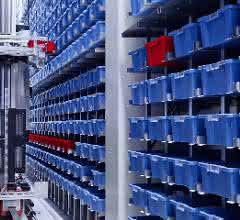
Medium-sized industrial companies are in two minds: On the one hand, they want to be able to meet the ever-increasing demands of customers for smaller batch sizes and shorter delivery times, but on the other hand they also want to avoid complex and costly interventions in the existing warehouse infrastructure. Although the degree of automation in the internal logistics of German companies continues to increase, it is still at a low level overall, as a recent study by Unitechnik shows. In some cases, this is due to a lack of awareness of the optimization potential offered by the automation of processes, but often also to prejudices surrounding implementation. Many intralogistics managers believe that automation is too expensive, too complex and too inflexible. However, it is worth taking a second look.
Expensive purchase vs. lower operating costs
It's true: Higher investment costs are required for the acquisition and commissioning of an automated solution than for a manual solution. How high the costs actually turn out to be depends on the degree of automation. There is not just black or white. An intelligent mix of automated, semi-automated and manual work steps makes sense in order to achieve the desired goals with little effort. The specific design should be part of a prior planning process. However, the investment is only one side of the coin. The initially high costs are amortized after a certain time: the higher throughput without additional personnel leads to lower unit and operating costs - especially in multi-shift operation. The lower space consumption due to the automated logistics system also has a positive effect.
Flexible - despite a fixed infrastructure
In order to keep pace with accelerated processes, intralogistics specialists are looking for solutions that are flexible and scalable. However, automated warehouses have a reputation for being the exact opposite due to their fixed infrastructure. It is true that an automated logistics system works with defined load carriers. As containers or pallets have fixed dimensions and a maximum weight, subsequent changes to the range of items are sometimes limited. However, numerous future scenarios can already be mapped by intelligently designing the solution. For example, the combination of a high-bay pallet warehouse and an automated small parts warehouse has proven its worth. In addition, solutions can be developed using trays that allow a high degree of flexibility.
Scalable solution with efficient space utilization
A certain degree of scalability is achieved with storage systems that are operated by shuttle vehicles. The performance can be adapted to increased requirements by increasing the number of vehicles. Even classic warehouses with storage and retrieval machines allow a subsequent increase in performance by retrofitting an additional load handling device. In terms of performance, automated systems score points for speed and high capacity. As it only takes a few minutes for the goods to reach the picker in an automated environment, regardless of the size of the range of items, order throughput is fast. In addition, automated solutions generally increase storage capacity: Automated high-bay warehouses, which are up to 45 meters high, make efficient use of space - especially for multiple-deep storage. Automation and assistance systems can reduce picking errors, improve packaging quality and thus optimize delivery quality.
Maintenance becomes a success factor
There is a widespread misconception that the use of an automated logistics system eliminates the need for employees. However, employees are a decisive factor when it comes to the success or failure of automation. This applies in particular to maintenance. Because the system - like any type of technology - can fail. This requires trained personnel who are familiar with how the system works and the possible causes of faults. This enables them to rectify faults as quickly as possible and ensure the highest possible availability of the system. Assistance systems such as fault analysis tools and system visualization on the status of the system and its components support this goal. If the maintenance technician cannot cope, the system supplier's specialists can help remotely. Maintenance also improves the reliability of the system by providing preventative information to logistics staff about operating errors or improper loading, which are common causes of malfunctions. A good system design is an important prerequisite for ensuring that service and repairs can be carried out quickly.
Automated systems support employees
Logistics employees work with technical devices such as smart glasses and pick-by-voice devices. This means they are supported by the technology, but also have to complete more processes in the same amount of time. Large screens that display important key figures motivate the employees as they are involved in the overall processes. The warehouse manager also benefits: The warehouse management system (WMS) provides him with all the information on orders, stock levels and system status. Comprehensive analysis tools enable him to identify bottlenecks before they become a problem. Mobile devices and clear system visualization help him to manage and continuously optimize operations.
Nowadays, ergonomics at the workplace also play a major role. An automated system can make a good contribution here: for example, the material is delivered automatically; article and order containers are arranged in such a way that distances, movement sequences and gripping heights place as little strain as possible on the employee. These aspects can already be taken into account in the planning phase and tested using virtual reality - according to the respective requirements. The automated logistics system also contributes to improved occupational safety. Possible accident risks such as forklift traffic are reduced. Automated systems can take over human activities in adverse environments, for example in deep-freeze warehouses.
One thing is certain: Automation can be an important competitive factor in meeting increasing customer requirements in terms of delivery quality and response times, while at the same time reducing costs. Whether and to what extent the advantages described are relevant for a company depends on the individual case. Before the investment decision is made, a planning phase with external support, for example from a general contractor such as Unitechnik, shows the optimum path for the company's own operations - whether manual, semi-automated or highly automated.
Published in: materialfluss SPEKTRUM 2021.


You might also be interested in
Arvato implements shuttle system for H&M in Poland
H&M will be able to handle its logistics in Central and Eastern Europe faster and more agile in future: Arvato has expanded its e-commerce distribution center in Stryków, Poland, and installed an automated shuttle warehouse with a capacity of up...
 read more...
Automation using shuttle technology and SAP
GC Corporation develops, produces and distributes dental products. In order to make the European subsidiary, GC Europe, fit for the future to meet increasing logistical requirements, the company expanded its storage and picking capacities at the...
read more...Intralogistics for steel wholesalers
Lemvigh-Müller relies on Knapp
Lemvigh-Müller is making its largest investment in logistics to date and centralizing two warehouses in Odense and Kolding, both in Denmark, into one distribution center in Kolding. This will ensure that Lemvigh-Müller can handle larger volumes of...
read more...New shuttle warehouse for BSH Hausgeräte in Dillingen
The ground-breaking ceremony for a shuttle warehouse for household appliance specialist BSH Hausgeräte recently took place in Dillingen, Bavaria. TGW Logistics will build a highly automated small parts warehouse there by spring 2027.
read more...Combined storage solution with transshipment and pallet warehouse
With the newly founded Faurecia Clarion Electronics (Fengcheng), Faurecia aims to become a global leader in electronics technology for vehicle cockpits. When it comes to intralogistics, the company relies on a combined warehouse solution from...
read more...Storage and order picking technology
SSI Schaefer automates for the market leader in ready-to-eat salads
Fresh Servant maximizes its performance through automation at its logistics center in Edsevö, Finland. The company relies on a complete system from SSI Schaefer, consisting of an SSI Cuby shuttle warehouse, pick-by-light picking and the WAMAS...
read more...30 million spare parts shipped annually
The manufacturer and supplier of automotive spare parts DRiV has put a new automated distribution center for Europe into operation. An automation solution from Knapp forms the heart of the system.
read more...Production and assembly flexibly supplied
Automotive supplier Magna manufactures exterior mirrors at its Assamstadt site in Germany. Magna relies on an automation solution from Knapp to cope with the changes in logistics and to be able to operate flexibly with a high level of vertical...
read more...Novaltia builds new distribution center with Knapp
The Spanish pharmaceutical wholesaler Novaltia is once again relying on a complete solution from Knapp: In the new distribution center at its headquarters in Zaragoza, logistics processes are to be streamlined and sequences made more precise by...
read more...