
Kik makes supplier audits transparent
Levers for better working conditions
Whether CSR, VCM or SRM - the acronyms vary, but everyone agrees on the need to create better production and working conditions. Often it is not so much the will that is lacking as the tools. The textile discounter KiK has made the audits of 500 suppliers transparent following the introduction of the OSCA VCM setlog software.
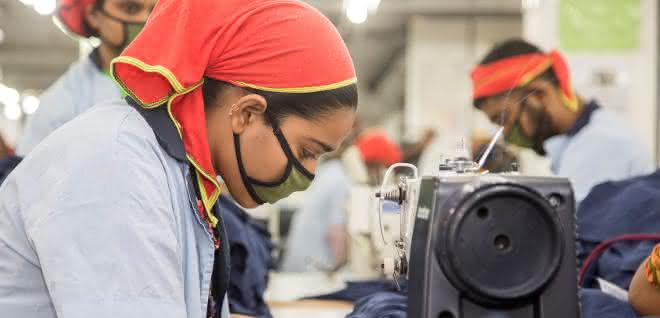
The end of a supplier. Two million parts per year, good quality, excellent delivery reliability and a marketable purchase price: the supplier in Bangladesh was something like Bosch for the automotive industry. But when it came to health and safety, of all things, the management did not want to cooperate - an area that KiK weighted particularly heavily in its test matrix. The supplier slipped far below the 50 percent line. After two audits, three requests for improvements and two training courses, it was over. KiK terminated the business relationship.
"CSR is the gateway to the KiK supplier. Only when we give the green light can they be listed," says Ansgar Lohmann, Head of Corporate Social Responsibility at KiK Textilien.
Social Responsibility at KiK Textilien und Non-Food GmbH in Bönen. He and his 20-strong team are responsible for compliance with social, environmental and fire protection standards at the textile discounter. They put each of the 500 suppliers through their paces without exception.
KiK's test matrix: ten areas, 130 criteria
The specially developed matrix comprises ten sub-areas with a total of 130 test points. Above all, the auditors are interested in the working conditions on site: Working hours, minimum wage, social benefits and freedom of assembly, the ban on child labor and protection against discrimination are just as much a part of this as fire extinguishers, fire doors and smoke detectors or building statics. All official permits such as fire protection and environmental licenses or the business license are also checked. Anyone who stands out for poor performance and fails to rectify defects will be delisted. Those who develop positively, on the other hand, can hope for continuous orders.
Asia: stronghold of textile production
Since the 1960s, almost all textile and non-food production has taken place in Asia, with child labor, toxic dyes in textiles and construction defects repeatedly making headlines and shocking images. Most recently, on April 24, 2013, more than 1,100 people lost their lives in the collapse of Rana Plaza, 25 kilometers northwest of the capital Dhaka in Bangladesh.
The abbreviations differ: whether Corporate Social Responsibility (CSR), Vendor & Compliance Management (VCM) or, as in the automotive industry, Supplier Relationship Management (SRM).
Relationship Management (SRM) - they all agree on the need to create better production and working conditions. Numerous initiatives, such as the Alliance for Sustainable Textiles of the German Federal Ministry for Economic Cooperation and Development, which gathers more than 50 percent of the German purchasing volume and therefore a great deal of market power, are working to effectively improve standards. Lohmann is convinced that there is less a lack of goodwill than a lack of tools: "We at KiK alone carry out around 1,000 audits a year and were inundated with emails and Excel spreadsheets. It had little to do with transparency and effectiveness."
Real-time data for more transparency
KiK is one of the largest German textile retailers. The discounter sells 250 million items a year. 60 percent come from China and Bangladesh, with a further 20 percent coming mainly from Pakistan and Turkey. In order to make the processing of audits faster and more transparent, the company has sought software support. "Pure audit management was not enough for us. We wanted a holistic approach with different factory audit options in an automated system with real-time data," says the CSR manager, describing the challenge. It was important to be able to connect different players, because that's what speed is all about. Following a provider analysis, the decision was made in favor of the OSCA system from the Bochum-based software company Setlog. The cloud-based supply chain software had already been supplemented with a comprehensive vendor & compliance management module before 2013. OSCA VCM can be used stand-alone or in combination with the OSCA SCM supply chain module and covers the entire supply relationship from onboarding to quality management, social and qualitative audits including rework, document management, reporting and ratings. "Setlog already had a great understanding of CSR process management, we were impressed by the price-performance ratio and it was very easy to explain the system to our Asian business partners," says Lohmann, citing the key factors in the decision. The go-ahead for the IT project was given in May 2015 and six months later the audits of the entire textile range were live. For this purpose, the audit matrix developed by KiK was compared with the standard functionalities of OSCA VCM and individually adapted. This was followed by the integration of procurement agencies, testing institutes, training and qualification partners. Each supplier was recorded in OSCA VCM as part of master data maintenance and linked to relevant supply chain players on the platform. A further six months later, the suppliers were trained. Since then, emails and Excel lists have been a thing of the past, as the stakeholders communicate centrally and in real time via the platform.
CSR performance at the touch of a button
If an audit is to be carried out, the CSR team commissions an audit institute via OSCA VCM, which confirms the agreed date and the order. The audit report, including photo documentation, is uploaded to OSCA VCM, with all 130 audit criteria weighted differently in the overall score. Corrections are discussed with the factories on site and rectified within set deadlines. An early warning system displays all audits on the dashboard and automatically lists the progress of rectification measures according to the traffic light system. The result is available at the touch of a button and objectively quantifies how good a factory actually is. What's more, it makes the performance of the sourcing agencies and even the CSR performance of an entire sourcing country visible. "We can compare China with Bangladesh or benchmark new procurement markets," explains Head of CSR Lohmann. This is not an unimportant aspect, as the monthly evaluations are well received by the management, as they provide the basis for strategic decisions.
From cotton field to textile discounter: Tier 1 to 7
The next milestone is already on the agenda. The 500 Tier 1 suppliers are to be followed by audits at other stages of the value chain. The complete monitoring of all production stages was long considered unrealistic and it is indeed not easy to trace supply chains from the T-shirt to the cotton field. The production chains are branched and the number of subcontractors can hardly be recorded, as only very few suppliers are prepared to disclose their upstream suppliers. The fear of being circumvented is too great. In a pilot project, KiK is currently examining the supply chains of ten percent of its Indian factories as an example, which corresponds to a procurement volume of around two million euros. "We cannot yet trace back to the cotton field, but we are getting close," says Lohmann. With the yarn spinning mills, weavers, knitting mills, dyeing mills and garment manufacturers, five out of seven stages of the value chain are already transparent and can be mapped as a production network in OSCA VCM. Lohmann sees the fact that CSR performance will be lower in the preliminary stages as an opportunity. "Our software not only helps KiK, but also helps suppliers to achieve improvements. There is no point in imposing Western standards with a raised index finger. The trading partners must recognize that they have a competitive advantage," emphasizes the KiK man. Training is therefore the be-all and end-all. He also advises setting milestones and involving employees and suppliers from the outset in order to prevent delays and check the plausibility of process steps. The before-and-after comparison shows that the effort is worth it: the auditing process from commissioning to the report is ten working days shorter with OSCA and improvement measures are visible in the system around a week earlier. In addition, auditing costs have fallen by three to five percent. "The biggest success is that we have a good feeling because it works," summarizes Lohmann, and that's what it's all about.
About Setlog
Setlog Holding is a provider of customized supply chain management
management (SCM) solutions. Its core product is the cloud-based SCM software OSCA, which is used by over 150 brands in the clothing, electronics, food, consumer goods and hardware sectors. With the help of OSCA, companies network with their customers, suppliers and service providers in order to optimally coordinate their supply chain, accelerate processes and manage supply chains efficiently. Setlog GmbH is a wholly owned subsidiary of Setlog Holding AG. The company was founded in 2001 and is now one of the leading providers of SCM software with over 35,000 users in 92 countries. The software company employs 60 people at its locations in Bochum (headquarters), Cologne and New York.


You might also be interested in
Logistics service provider honored
Dachser receives German CSR Award 2018
Logistics service provider Dachser has been awarded the German CSR Prize in the "Civil Society Commitment" category at the German CSR Forum.
 read more...
Merry Christmas and a Happy New Year!
The materialfluss team wishes you a Merry Christmas and a successful and healthy 2026.
read more...Partner country Canada shows the future
Under the motto "The future's here", Canada is showcasing its industrial strengths in areas such as automation, energy, digital transformation and green technologies.
read more...LogiMAT 2025: Trade fair with consistently high visitor numbers
Under the motto "Passion for Solutions", the international intralogistics world came together at LogiMAT 2025 in Stuttgart from March 11 to 13. After three days of presentations, information and trend checks, trade visitors, exhibitors and trade...
read more...Effects on trade and strategies
Results of the reader survey on the Trump administration
In our reader survey, we examined the impact of Trump's presidency on international trade and business strategies. Most respondents fear trade difficulties, tensions in transatlantic relations and political uncertainty. Many companies are focusing...
read more...Focus on sustainability and AI at the trade fair
With more than 120,000 square meters of exhibition space, LogiMAT 2025 will once again occupy all ten halls of the Stuttgart exhibition grounds. From March 11 to 13, global players, medium-sized companies and start-ups will provide an overview of...
read more...The nominees in the Project of the Year category
In the competition for the materialfluss products of the year 2025, five nominees are competing in the project of the year category. Find out more about the projects up for election here.
read more...IfW, DIW, IWH, RWI and Ifo Institute
Economic researchers lower their growth forecasts further
The leading German economic institutes see hardly any growth impetus for 2025, but instead rising unemployment figures and persistent weaknesses in the location. According to experts, only a stable government with a clear economic policy strategy...
read more...Exports shrink - exports to the USA collapse
The headwind for Germany's exporters on the global markets remains strong. In October, they had to cope with sharp declines - especially in their most important sales market, the USA.
read more...