

Load Carrier Pooling
A Clearer View of Pallet and Container Flows
Losses of returnable containers are usually more costly for companies than they realize. Digital container management enables control, transparency, and more efficient return processes.
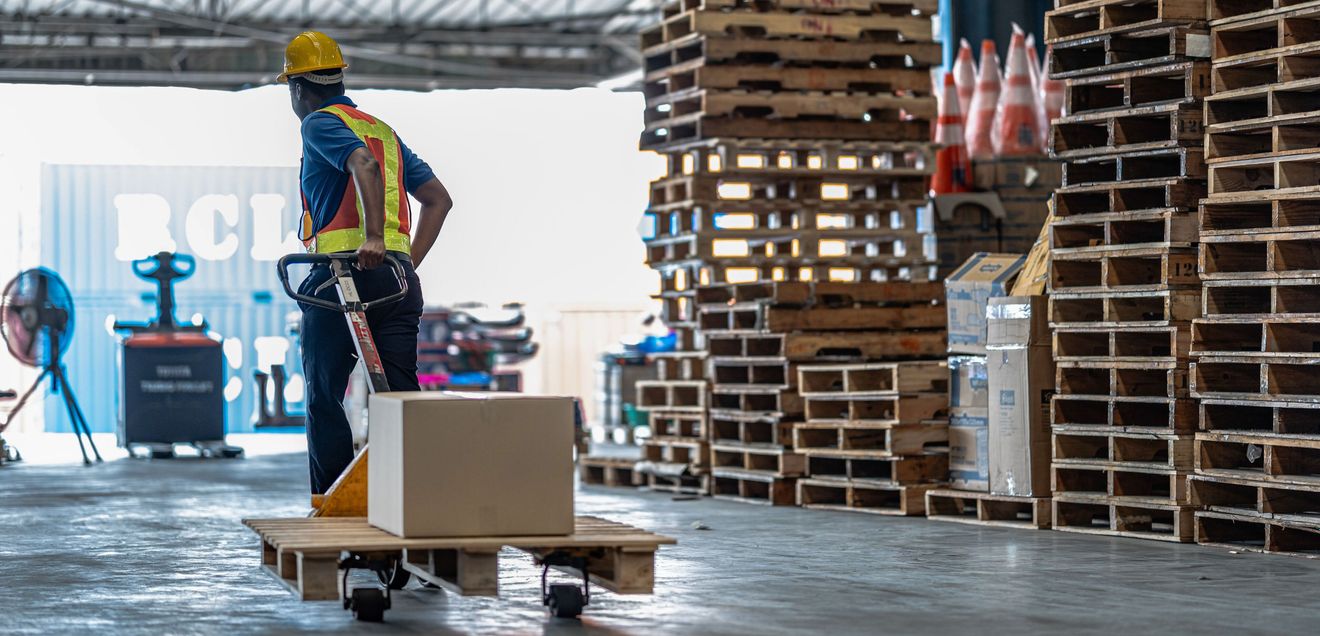
Pallets, KLTs, mesh boxes, or reusable containers rarely go missing all at once in companies. Most often, the loss occurs gradually. A pallet is shipped out with a delivery but is not properly recorded as returned. A reusable container is left with the customer. A damaged mesh box is taken out of circulation without the process being documented. In practice, these discrepancies quickly add up to a cost and organizational problem. The situation becomes particularly critical when companies lack a reliable overview of where their loading equipment is located, who is responsible for it, and which returns are long overdue. Digital load carrier management makes movements traceable, provides transparency regarding inventory, and helps companies identify losses early on, rather than reacting only when inventory counts or bottlenecks occur.
More Parties Involved, Higher Losses
Losses of loading equipment often occur when multiple parties are involved in a process. Warehouses, shipping, production, customers, suppliers, retail locations, freight forwarders, and external service providers all work together—but the movements of loading equipment are not always accurately documented. If pallets and containers are tracked only via paper lists, Excel files, or not at all, discrepancies quickly arise between the actual inventory and the inventory expected in the system.
The direct replacement cost of a pallet or container is only part of the problem. In many companies, there are also hidden costs that go largely unnoticed in day-to-day operations. Missing loading equipment must be replaced, re-rented, or procured on short notice. At the same time, this creates internal administrative work: employees search for delivery slips, cross-check Excel lists, follow up with customers, or resolve outstanding returns with transportation service providers. The situation becomes even more problematic when there aren’t enough loading units available for production, order picking, or shipping. Damaged or late-returned containers also lead to additional work.
Overview Through Digitized Container Management
Cosys Container Management helps companies digitally record, track, and analyze pallets, containers, and other loading equipment. Movements are documented as part of the process—for example, using a mobile data collection device or a smartphone. The recorded data is consolidated in Cosys WebDesk.
Companies gain a centralized view of inventory levels, movements, receipts and issuances, stock transfers, returns, damage, and open transactions. The dashboard serves as the control center for load carrier management. An important feature in Cosys WebDesk is the analysis of overdue load carriers. It shows which load carriers are still in circulation and for which returns defined deadlines have been exceeded.
The life cycle of loading equipment can be better illustrated
Cosys WebDesk also allows companies to analyze the lifecycle of individual loading units. Companies can see how long containers remain in circulation, how often they are returned, and where problems occur. Damaged loading units not only incur costs but also provide important insights into weaknesses in the process. If damage is systematically tracked, companies can identify whether certain locations, transport routes, or handling processes are particularly prone to damage.
In addition to tracking existing loading equipment, planning also plays an important role. Cosys offers forecasting features that enable companies to better estimate their future needs for pallets, containers, or other loading equipment.


You might also be interested in
Smart and environmentally friendly load carriers
Epal Germany is focusing on solutions for efficient and environmentally friendly logistics at transport logistic 2025.
 read more...
Focus on sustainability and digitalization
PAKi Logistics, provider of load carrier management in the open pool, will be represented at this year's transport logistic - together with its sister companies IPP, vPOOL under the umbrella of the Faber Group and the partner company Connected Load...
read more...Sustainable savings through open pooling systems
PAKi Logistics recently carried out a life cycle analysis to compare the environmental impact of different pallet systems. The results show that PAKi's open pooling system enables savings in CO₂ emissions, fossil resources and wood consumption. A...
read more...Chep: Helen Lane is CEO for Europe
Chep, a supply chain solutions company with an international pooling network for load carriers, has appointed Helen Lane as the new CEO for its European business, effective November 11. She succeeds David Cuenca, who recently assumed the role of CEO...
read more...Changes in corporate management at vPool Logistics
vPool Logistics, a Faber Group subsidiary specializing in load carrier pooling in the food industry, has undergone a change in management: On October 1, 2024, Andreas Lenz took over the position of CEO, while Torsten Junker completes the new top...
read more...New EU packaging regulation: pooling as an opportunity
The Packaging & Packaging Waste Regulation (PPWR), which is due to be ratified by the European Parliament this year, is one of the most significant changes in European packaging regulation. It represents a major challenge for companies'...
read more...Anne Kramer-Münch new CEO at PAKi Logistics
Anne Kramer-Münch has been CEO of PAKi Logistics, a well-known open pooling service provider for the management of standardized exchange pallets and boxes, since 1 April.
read more...Management change at Paki Logistics
Marc Groenewoud, who has developed Paki Logistics into the European market leader for load carrier management in the open pool over the past two and a half years, has left the company as of February 15 and will join a German trading company as a...
read more...EPAL digitizes the open pallet pool
At the beginning of the year, the European Pallet Association introduced the EPAL Euro pallet QR as a new product in the open EPAL pallet pool.
read more...