
Weighing technology
Second chance for defective components
Rapid technological progress not only brings benefits for consumers and manufacturing companies. The downside of this development is the sharp increase in the amount of scrap, as appliances have to be replaced more frequently and then disposed of properly. Companies can address this issue with well thought-out service concepts and create added value for customers and the environment.

A new regulation for consumers regarding the return of electronic waste came into force in July 2016. Both stationary retail chains and online marketplaces are affected. They must take back small electronic devices up to an edge length of 25 centimetres, even without buying a new product. For larger devices, the regulation still applies that the old device must be taken back when a new one is purchased.
According to Federal Environment Minister Hendricks, the aim of the change in the law is to create a collection structure with which more electrical appliances can be recycled to a high standard. This reduces waste and saves raw materials and energy. The manufacturer must also take back industrial machines if the customer is unable to dispose of them properly.
Responsibility lies with those who produce waste
However, the proper disposal of old electrical appliances in particular has become a problem for our society: Digitalization and automation mean that devices need to be replaced more and more frequently. In addition, the lifespan of computer-based systems is shorter, as the computing power of old devices is not sufficient to meet the requirements of new programs.
According to the Basel Convention of 1989, the resulting increasing quantities of e-waste may only be disposed of in countries that can process it properly. This means that the responsibility should remain with the countries that produce the waste.
However, the shipping of electrical appliances declared as "functional" to Africa is increasingly hitting the headlines. Some reports claim that two thirds of the electrical waste generated is 'disposed of' in this way. The population of the Agbogbloshie slum settlement in Ghana earn their income by extracting precious metals from the old appliances. Improper separation of the raw materials produces vapors and liquids that contaminate the inhabitants and the soil. These precious metals are then sold to dealers for starvation wages, who then sell these materials back to electrical appliance manufacturers. Although the materials are put back into circulation, the impact on people and the environment is immense.
Professional disassembly or repair
To break this cycle, manufacturers themselves need to show more responsibility and think about how appliances can be used as efficiently as possible. Companies should ensure that appliances are properly dismantled at the end of their service life. This includes the proper separation of stainless steel, cables and plastics, for example.
Bizerba
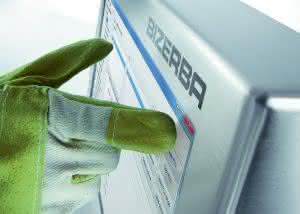
Bizerba offers customers in the trade, retail, industry and logistics sectors a portfolio of hardware and software solutions relating to the key parameter of "weight". This range includes products and solutions for cutting, processing, weighing, cashing, checking, picking and labeling. Comprehensive services ranging from consulting, service, labels and consumables to leasing round off the range of solutions. Bizerba has been shaping technological development in the field of weighing technology since 1866 and is now present in 120 countries. The customer base ranges from globally active commercial and industrial companies to retailers and the bakery and butchery trades. The headquarters of the group of companies, which has been family-run for five (!) generations and has around 3,900 employees worldwide, is in Balingen (Baden-Württemberg).
But before the machines are finally disposed of, there are ways to extend their service life. The long-established Swabian company Bizerba can repair around 75 percent of the electronic components of devices and systems as part of its range of services. Figuratively speaking, this means that since the 1990s, Bizerba has repaired electronic components with a total weight of around 500 tons - waste that was never generated in the first place.
Conserve resources
In order to decide which component of an appliance must be disposed of after replacement or which can be repaired, all individual elements of the machines are recorded in a central ERP system. The information as to whether a part can be repaired or not is also stored there. Bizerba makes the decision based on availability, complexity and repair costs in relation to the manufacturing costs of the product. If a component is repairable, the packaging is given a label and the service technician knows that he can send the defective element back to the head office for replacement, where it is then repaired and Bizerba returns it to circulation later.

Intra says: This is how it works
As a company, you could make it easy for yourself: What do I care about tomorrow's junk that I sell to the customer today (at that moment, of course, as a high-end frills-state-of-the art luxury solution)? Companies such as Bizerba, which, as you ever-attentive readers of Materialfluss now know, can repair 75% of its installed components thanks to a sophisticated recycling concept, show that there is another way. It's not just "ecologists" who think this is good, but anyone with half a brain. Well done!
In addition to resource-friendly management, another advantage is that Bizerba can also keep spare parts for older products in stock without having to go to the expense of re-producing them. Manufacturing companies in particular should make it a priority to produce sustainably and recycle wherever possible. Because: It pays off, both for the company and for the environment.
Robert Keller


You might also be interested in
Antares Vision Group at the Interpack 2026
Ecosystem for quality and traceability
At Interpack 2026 in Düsseldorf, the Antares Vision Group will be presenting solutions for greater transparency, security and compliance along global supply chains.
 read more...
Arvato further expands customs logistics in Turkey
With a new type A customs warehouse in Istanbul-Tuzla and additional capacity, Arvato is strengthening its cross-border logistics expertise and positioning Turkey as a strategic hub between Europe and Asia.
read more...Brand presence in a new design
In Nuremberg, the Bluhm Weber Group will be presenting marking systems with labels, ink and lasers for the packaging industry. The company will also be presenting its new visual concept for the first time and underlining its innovative character...
read more...Roadshow: Bluhm Weber Group at all about automation
The Bluhm Weber Group will be exhibiting with a mobile showroom at all about automation in Straubing: From 26 to 27 June 2024, the coding and marking specialist will be showcasing the latest technology with labels, ink and lasers specifically for...
read more...Optimize logistical processes
At Logimat, Bluhm Systeme will be demonstrating the optimization potential of industrial marking for logistics processes. The new look of the digital trade fair stand also visually underlines the message that Bluhm is focusing on pioneering elements.
read more...Intelligent depalletizing robot in the warehouse
The supply chain and e-commerce service provider Arvato has had an intelligent robot-controlled depalletizer developed that further accelerates processes and the flow of goods in the warehouse.
read more...Linerless printing - for added sustainability
Linerless, self-adhesive labels are ecological and efficient - and are available from Mediaform in top quality in many versions. The new Bixolon XL5-40CT, a desktop model whose siliconized print roller guarantees clean label printing, is available...
read more...TSC Printronix Auto ID introduces new direct thermal printer
TSC Printronix Auto ID has launched a new mobile direct thermal printer - adding another basic and premium model to its Alpha series in the 3-inch segment.
read more...REA Elektronik at the Fachpack
Labeling and testing, but high quality!
REA Elektronik supports the packaging industry with solutions for high-quality marking and reliable code verification.
read more...