Coca-Cola in Mannheim
New returnable glass line optimizes sorting processes
Within three years, Coca-Cola has invested around 50 million euros in one of its largest plants in Mannheim, Germany. KHS is contributing a returnable glass line that also handles highly complex sorting tasks.
When beverage trader Wilhelm Müller acquired the bottling rights for Coca-Cola in Germany in July 1950, he created the entrepreneurial basis for the company, which is still located in Mannheim today. While many work steps, such as sorting and quality assurance, were initially carried out manually, the first fully automated system was put into operation in 1965: It removes the empty bottles from the drinks crates, reinserts the full ones and inspects each one automatically with the help of testing equipment.
In the 1960s and 1970s, Müller held the sales record of all independent Coca-Cola concessionaires in Germany for 18 consecutive years. After he died in 1971 at the height of his success, his wife took over the management of the company. In 1983, his widow made the courageous decision to build a completely new plant - at the current location in Mannheim-Vogelstang. Shortly after the opening, more than 30,000 bottles per hour are bottled on a new line.
High-tech in Mannheim
Today, the production facility is part of Coca-Cola Europacific Partners Germany (CCEP DE), the largest beverage manufacturer in Germany. "There are still many of our older employees who fondly remember the era of the so-called Cola Millers," says Christopher Bee. The 39-year-old has been working in Mannheim for seven years and has been Operations Manager since September 2021. And indeed, the Wilhelm Müller Foundation still owns the extensive company premises - the lease was extended by 30 years just two years ago. "However, nothing about our technical equipment is reminiscent of the past. In 2018 and 2019, we invested a total of around 50 million euros in two new bottling plants. These were the largest investments in the history of our site to date. This makes us in Mannheim one of the most technically advanced Coca-Cola plants in Germany and Europe."
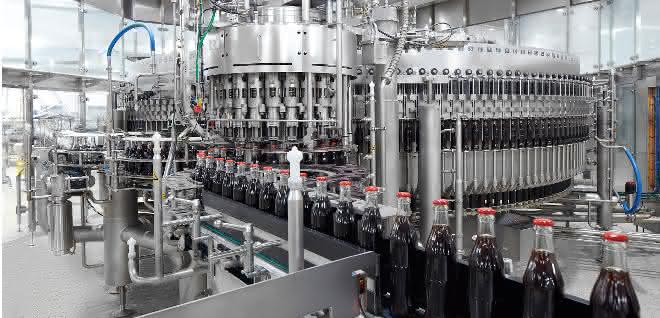
One of the two new production lines is a returnable glass line from Dortmund systems supplier KHS. "We fill a total of six different bottles on it, four of which are in 200-milliliter format and two in 330-milliliter format. The smaller sizes are mainly used in the food service industry, where the packaging has to look a little more impressive than in retail. For this reason, the Coke, Fanta, Sprite and mezzo mix brands each have their own bottle design. We use two formats for the larger containers that are also sold in the retail trade: The so-called contour bottle for the Coke family products and our green multi-bottle for Fanta, Sprite and mezzo mix."
The outstanding feature of the KHS line is the sorting system, with which the empties can be fed into the cleaning and filling process fully automatically and sorted by type. "In principle, the sorting and filling processes run on two separate systems. Especially for our main types, the 200 and 330-milliliter Coke bottles, we use a line that connects the two sections. Here, the containers, which are essentially returned from the market unmixed, are fed directly from sorting into production. They no longer have to take the detour via the empties warehouse. This reduces the handling effort." The other five types are first packed from the sorting process into beverage crates, then onto pallets, before being temporarily stored until they are filled.
Intelligent unpacker
The only manual work that is required due to the high degree of automation of the system takes place right at the start of the sorting process: When the crates arrive, they are scanned from above. If, for example, there are foreign objects such as paper cups or foil on them, the crate cannot be identified. The interfering element must then be removed during manual sorting before it is fed back into the automatic process. "The unpacker is so intelligent that it places the largest of the bottle types on a conveyor," explains Bee. "The smaller ones are placed on another conveyor, where they are separated and directed onto different lanes with the help of camera systems and pushers. Our aim is to manipulate the containers as little as possible, i.e. to allow them to come into contact with the machine. In this way, we can minimize the risk of something falling over at high speed." With an output of up to 66,000 bottles per hour, the sorting system has a higher capacity than the returnable glass line, which can fill up to 60,000 bottles per hour. As a result, CCEP in Mannheim rarely comes to a standstill with its empties, even during the peak season.
High flexibility
The uneven return of empty bottles often leads to peaks, explains Bee. A good example of this is music festivals, where a higher than usual number of glass bottles can be expected. "The special feature of the system is that it can react to these peaks individually," says Bee. "To make this possible, we carried out a live simulation with an external service provider during commissioning. Based on the results, we were able to optimize and fine-tune the layout in close cooperation with KHS, which led to an improvement in performance. This was very helpful, especially as we were unable to work under real conditions during the pandemic due to closures in the catering industry."
For Christopher Bee, one highlight of the new refillable glass line from KHS is the Innoclean DM double-end bottle washer. "We save up to 40% water and energy on average for every bottle we fill compared to systems of previous generations," emphasizes Bee. This is thanks to the fresh water control system, for example, which automatically adjusts to the current machine output using a control valve. The new Eco-Carriers are also good for the energy balance: they weigh around a quarter less than previous bottle racks and have side openings that allow better rinsing. This reduces the carry-over of lye and heat and thus the cooling requirement within the machine. And if no empties are available for a short time, the washer switches to an energy-saving idle state, the new standby mode: the Liquid Efficiency Spraying System (LESS) reduces the pressure of the spray pumps to 0.3 bar during downtimes, thus reducing power consumption by up to 80 percent.
On the way to net zero emissions
As in more and more companies, sustainability plays a major role at CCEP: by 2030, greenhouse gas emissions in Europe are to be reduced by 30% compared to 2019. And by 2040, CCEP wants to achieve the goal of net zero emissions and no longer have any impact on the climate. This does not just include emissions from the core business. Rather, the company is looking for significant potential savings in greenhouse gas emissions along the entire value chain. This applies to the investment in energy and resource-saving machinery as well as the 2,300 company and commercial vehicles that will be completely converted to electric drives by 2025. Coca-Cola avoids further emissions in Germany through its close-knit production and distribution network, which largely produces and delivers beverages regionally. Where this is not possible, the beverage manufacturer is increasingly relying on rail transport: in 2021, a freight network was set up with DB Cargo that connects 13 locations. In the same year, this has already saved 1.7 million truck kilometers and 1,000 tons ofCO2.
Successful collaboration at several locations
In the Coca-Cola network, Mannheim is the latest of a total of three major projects that KHS has implemented with CCEP Germany in recent years on the way to more climate-friendly production. The first was a canning line in Karlsruhe, around 70 kilometers away, in 2015. "The line, which has a capacity of up to 120,000 cans per hour, is impressive thanks to our resource-saving tunnel pasteurizer, for example," says Robert Fast, project manager at KHS. "It uses water that is collected from the empty can rinser. And the use of ionized air in the process water makes it possible to reduce the use of chemicals compared to the standard process." The packaging machine is just as climate-friendly, explains Fast. Its gas burner in the shrink tunnel reduces the consumption of electrical energy by up to 75 percent andCO2 emissions by up to 60 percent.
In 2017 KHS installed a non-returnable PET line with a capacity of up to 42,000 bottles per hour in Mönchengladbach in the Lower Rhine region. "One of the reasons we were awarded the contract was our comprehensive concept for saving electricity, water and gas," reports Fast. "One example is the InnoPET Blomax stretch blow molder. It achieves a reduction in energy consumption thanks to the near-infrared (NIR) technology of the oven in which the preforms are heated before the actual stretch blow molding process."
Of course, Christopher Bee also knows that investments on this scale are not the norm. He is therefore all the happier that he was able to have this experience at "his plant". "Seeing how a site develops and reflects the entire spectrum of production is something special," he says with a smile. "It is clear that we will return the trust placed in us in the form of very good performance." The "cola miller" would certainly have seen it the same way.


You might also be interested in
Winner material flow PRODUCTS OF THE YEAR 2023
Conductix-Wampfler: ChargeLine 0865
Two-pole conductor rail segments for efficient opportunity charging of shuttles, suitable for thousands of cycles per day.
 read more...
Hermann Grewer celebrates his 80th birthday
Hermann Grewer, Honorary Chairman of the North Rhine-Westphalia Transport and Logistics Association (VVWL) and Honorary President of the German Road Haulage, Logistics and Disposal Association (BGL), celebrated his 80th birthday on June 6.
read more...Well chilled for sure
V-Zug Kühltechnik AG, developer and manufacturer of refrigeration appliances and part of the successful V-Zug Group, has set up a new production facility for refrigerators of all heights and dimensions at its Swiss site in Sulgen.
read more...Advantageous automation of small parts warehouses
The RSX1 shuttle system will be at the center of Rocketsolution's presence at this year's Logimat trade fair.
read more...Reduced energy requirements in the high-bay warehouse
One of Germany's leading premium car manufacturers is already focusing on energy efficiency in the production of its new SUV model with electric drive. The storage and retrieval machines in a high-bay warehouse at the production site have been...
read more...Low lift pallet truck for light duty applications
Clark has launched a new low lift pallet truck with the model designation LWio15 for light transport tasks. The truck has a load capacity of 1500 kg and is suitable for short distances in goods distribution, production or warehousing.
read more...Internationalization as an opportunity
E-commerce is in a state of flux. Changes in purchasing behavior and procurement problems are keeping e-commerce retailers busy. Logistics plays a decisive role in the overall online shopping experience.
read more...Fulfillment Center for Frisco.pl
Polish eGrocery specialist and TGW deepen partnership
TGW is building a highly automated fulfillment center for Frisco.pl in the Polish capital Warsaw. This is the second project in a row that the two companies have implemented together.
read more...Which world will it be in 2023?
Michael Schreckenberg teaches at the University of Duisburg-Essen as Professor of Physics of Transport and Traffic. Once a year, he addresses the readers of materialfluss, formerly LT-manager, with a critical and humorous expert article on transport...
read more...