
Warehouse-/Picking technology
Material Flow Round Table: In search of the USP
How do you stand out as a provider of shelving and storage technology in a tough competitive environment? Is it the advice, the price, the intelligence in the product or the aftersales that makes the difference when awarding a contract? The traditional Material Flow Round Table focused on the search for the USP. Industry experts also discussed the market of the future and their strategies.
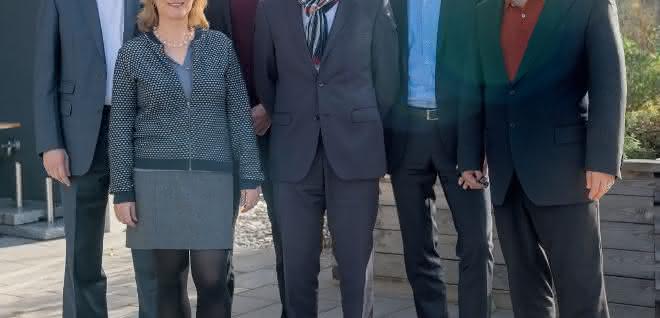
This time, Materialfluss editor-in-chief Martin Schrüfer welcomed four warehouse technology experts to the Bader Hotel in Parsdorf. Ronald Brade, Vice President Industry, SSI Schäfer, Giebelstadt; Tim Crone, Sales Manager, Julius vom Hofe, Lüdenscheid; Frédéric Meyer, Sales Manager, Galler Lager- und Regaltechnik, Kulmbach and Dipl.-Ing. Jan Sperling, Sales Manager Germany, Bito-Lagertechnik Bittmann, Meisenheim sat at the round table.
The opening question was initially about how the companies present themselves to the outside world - are they more of a specialist or an all-rounder on the market? Bito sales manager Jan Sperling sees his company more as an all-rounder: "We are broadly positioned, both in terms of our product portfolio and in terms of sales markets and sectors. We produce plastic containers and the entire range of shelving and storage technology largely in-house. Our webshop is aimed at small and medium-sized companies, but we are also able to handle complex project sizes," emphasizes Sperling.
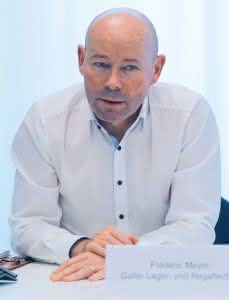
Galler sales manager Meyer is of the opinion that you first have to specify what you consider to be an all-rounder. "We are already very flexible and respond to a large number of customer inquiries. Our product range is limited to what we produce ourselves, supplemented by the activities of 15 sister companies in the group, which produce different types of racking technology. Galler is at home in many different variants of pallet racking technology. What we lack for an "all-in-one solution", we get from our sister companies," says Frédéric Meyer.
"In principle, it's similar for us," confirms Julius-vom-Hofe Sales Manager Tim Crone. For him, too, the question is what is an all-rounder and what is a specialist? "We manufacture shelving racking systems ourselves, but we also buy in some products so that the customer receives a complete offer from us."
As an all-rounder, SSI Schaefer is at home in all sectors and markets, emphasizes Ronald Brade, Vice President Industry at SSI Schaefer. From the standardized world of shelving racks to automated racking systems, the company can offer everything. "We have very high added value in the Schaefer Group. We produce steel shelving for all sectors, as well as conveyor technology and highly complex IT solutions. Within the Schäfer world, we also operate as a general contractor and deliver complete turnkey projects for our customers."
Advice is the be-all and end-all
When it comes to a characteristic that distinguishes a product or service from other offerings, marketers talk about a Unique Selling Proposition (USP). Editor Susanne Frank wants to know what providers do to differentiate themselves from the competition and what priorities are set?
"Advising the customer correctly and then being present with the right solution" is the most important thing for Ronald Brade. This is how the Schäfer Group wants to differentiate itself from the competition and meet the customer's needs with the right solution.
Frédéric Meyer sees it the same way and adds: "Advice is now a prerequisite. We focus on market presence. Customers don't expect to visit the supplier. You have to be there and advise them on site. If they first have to drive 1,000 kilometers, the response time is different than if they have a representative office on their doorstep. Being present is the be-all and end-all for me," emphasizes the sales manager from Gallen.
The basics must be regulated
Jan Sperling echoes this sentiment. "When looking for the USP, there are certainly things that the customer expects. I don't need to discuss with the customer that a weld seam on a vertical crossbeam will deliver what it promises. On-site advice is of course very important. Despite all the YouTube instruction videos, a face-to-face meeting is irreplaceable because the customer buys a system from which he assumes that everything will work in terms of processing and execution." He is referring to the classic medium-sized company that does not deal with racking and storage technology on a daily basis and plans a new logistics center once every 20 years. They need specialist support, unlike large key accounts or logistics service providers, whose professionals know exactly what is important when it comes to project execution. In general, it is important for the customer that things such as the relationship with the local authorities, test statics, assembly coordination with other trades on the construction site are regulated. "We offer our customers this service," promises the Bito sales manager.

Tim Crone, Head of Sales at Julius vom Hofe, takes a similar view. However, his sales network is not comparable to that of his predecessors, which is why a more targeted approach is required. "We consider in advance where we want to go and which customers we want to address. Once we have decided on a customer, personal on-site consultation is essential for us. Once the order has been placed, we invest our resources in customer loyalty. We want the customer to come back," emphasizes Crone.
Proving yourself again and again
Editor Susanne Frank asks: "The customer can only determine whether he has received good advice if the project actually works in the end. What arguments do you use to win customers? What do you start with and how do you differentiate yourself? Meyer: "Our sales network is not so spread out that you can be active everywhere. That means you have to arouse the customer's interest with marketing activities. There is a clear strategic focus. Everyone knows where their strengths lie and what is best avoided."
"The customer looks at the market when planning a project," interjects Brade. "They ask for references and we look at suitable solutions together. Then a project develops. What special features, what specific things should be implemented? Despite all the standardization, you have to adapt to the customer individually every time." The logistics manager reveals that the topic of processing is ultimately one of the strongest customer loyalty programs. As customers are becoming less and less "repeat offenders", you have to prove yourself again and again and place the best solution on the market when implementing a project. "Nothing gets around faster than a good or not-so-good project," says Brade.
Meyer confirms the trend in the frequency of changes. Processing is an issue that everyone has to deal with. Nothing must go wrong if the customer is to come back. But it is the best way to differentiate yourself from low-cost providers.
On the subject of follow-up orders, Sperling points to the fact that shelving technology is not a typical consumable good. "The products simply don't break. If someone has planned their system well, the storage technology will still be doing its job after 20 or 30 years. What helps us a little as an industry are the changing market requirements of our customers, who have to deal with e-commerce and similar things. It makes sense for the customer to be able to rely on a partner with whom they can cover their further growth requirements in logistics."
Not an emotional product, but smart details are well received
"The big challenge that we all have to deal with here at the table is that we are not selling an emotional product like an iPhone," Crone points out. Meyer: "I can't bring our shelf to life. That means we have to focus on user benefits. We still have certain marketing measures, but we always come back to the topic of advice. What we are also very concerned with at the moment is the question of how we can perhaps make our product a little more emotional. A lot can be gained from the range, and the variety of versions is an important point. "Not only simple trusses or simple supports but also variety in tonnage are a good way to score points with the design variants," says Meyer.
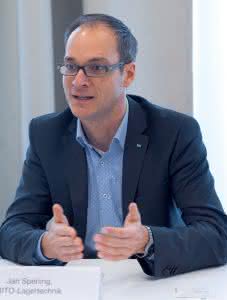
"It's often the small, clever details that give customers the feeling that they've landed with an innovative, competent partner," Sperling believes. "This could be an individually adjustable shelf, a storage box that allows me to reach even the smallest screw in the furthest corner, or a particularly ergonomic handle on the container. The consultant has to find out where he can help during the conversation!"
Trends in sight?
"Are there any trends that you are currently hearing more of?" the editorial team wants to know. According to Sales Manager Meyer, occupational safety is always an issue. We must not forget that the company ultimately has to ensure that ergonomic workplaces are created.
Brade identifies a trend in customer expectations regarding the flexibility of the solution. Customers expect their investment to be open to the further development of their business model. The logistics expert predicts that the warehouse of the future will be even more complex and automated. "We are thinking about driverless transport systems. A forklift-operated warehouse is manned by a driver as standard. In the future, an AGV will also be able to do this and move freely around the warehouse without a driver via corresponding lanes, corresponding IT and corresponding communication points. In the group at SSI Schaefer, we have the topic of driverless transport systems on the agenda as a link in logistics, both in the pallet area and in the container area."
Focus on human-machine interaction
Many solutions are growing in line with customer needs - including in the direction of IT. According to Brade, Industry 4.0 is no longer just a buzzword. "We notice this when we talk to customers about equipping automated, highly complex warehouses. Customers now expect the machines involved in the project to be able to communicate with each other. We are being asked to meet these requirements, so we have to think about how we can make our solutions fit with the appropriate sensors and IT processes to meet these needs," reports Brade, adding that the systems are already so safe that nothing happens in human-machine interaction. This is ensured by safeguards using light barriers or rotation scanners.
Another trend is the topic of visualization, says Brade. "We have developed a module called Lighthouse to visualize all processes for the customer. This lighthouse is nothing more than a central platform where all information from the entire project is collected by the customer. They can use this data for their processes, for status messages, for reports and for tour data. This means they can track the entire system, improve it and make adjustments to increase their added value."
"Does everyone need it, does everyone want it?"
Jan Sperling has his doubts about the trend towards automation technology. "Does this affect all companies or just the big ones? How will medium-sized companies react? We were positively surprised by the response to our LEO Locative, a container transport system with a much simpler level of automation. Large corporations were also grateful for such simple technology that is not integrated into a central control unit and does not need to establish a WLAN connection. This can be a major issue in the IT infrastructure of large corporations. Some prefer a simple, pragmatic system that can also be integrated into complex IT structures as a standalone system. We have received positive feedback, not least from large corporations, due to the simplicity of the system. It's a bit of a paradox: simplicity is the real innovation here. A comparatively simple yet intelligent technology can certainly lower the barrier to entry for Industry 4.0. Perhaps it is a temporary gap in the market. The response has been extremely positive, along the lines of 'this also helps me in terms of ergonomics, benefits and picking performance and it's not such a 'huge thing' with control software and integration into the IT landscape. Simply plug and work - you can buy it, put it down and drive off," enthuses Sperling.
Simple or complex - individual systems are in demand
Brade admits that the right solution for the customer is not characterized by greater complexity. The best solution could be the simplest shelf, a manual container transport system or a complex system.
Frédéric Meyer also agrees with this statement. "Individualization is the real trend. Of course, everyone is trying to cover the market with standard products. I estimate 80 to 90 percent. However, the remaining ten percent make the difference between the good market players, which don't differ too much in terms of price, and the very cheap ones with little advice behind them."
Highly automated or standard - what is more in demand in practice?
"It depends on the business or the customer," says Meyer. You can't generally say that the trend is towards replacing people. The trend is there, but there are industries that continue to rely on manpower.
"In a number of large warehouses of quite advanced logistics service providers, you still find simple pallet racking, operated by forklift trucks and with manual picking," notes Sperling. "An automated solution might be better, but if I don't know whether I'll still need it after a year, then I'm almost forced to go for conventional techniques that are scalable via manpower. Investments in complex, highly structured logistics processes only pay off if they are backed by long-term service contracts."
For Brade, too, it makes a big difference whether it is a logistics service provider with contract logistics and limited transit times, for whom unit volumes are the primary factor, or an end customer who has their own or long-term leased property.
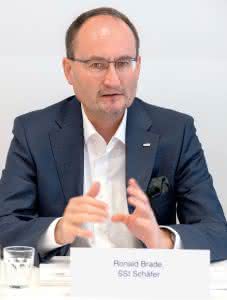
During the discussion about future warehouses, Brade rejects the accusation that the aim is to banish workers from the warehouse in future. "It's much more about making workers fit and supporting them so that they are able to map processes in the complex world of logistics in the future. It's about strengthening the order picker's manpower and reducing their physical exertion. The work process for employees in the supply chain is made easier. That is the goal, not replacing the worker," emphasizes Brade. However, they also need to be better qualified for the new systems.
Stainless into the competition
Editor-in-chief Martin Schrüfer heralds the start of the final round. He wants to know whether there is still something to be gained in the field of materials or whether physics has been exhausted.
Meyer reports that a new coating system is aimed at customers in the chemical and pharmaceutical industries, where aggressive environmental conditions attack the steel material. One customer approached the company because his mobile racking was no longer functional due to rust. "We managed to install the same system there with a special coating. This special coating is a major advantage that sets us apart on the market."
New materials are also a topic that Bito is looking into, reveals Sperling. The focus is on non-combustible materials in the area of plastic containers. The topic of new materials for pallet racking has largely been exhausted. The weight per tonne in relation to the payload is already quite optimized. There is not much more to "tease out", concludes the sales manager.
Walter Dorsch


You might also be interested in
Standardized in design, flexible in use
Automated guided vehicles are increasingly in demand in production and logistics as they automate processes efficiently - but in addition to the vehicle, the right peripherals are also crucial for safe operation. A new solution consisting of a...
 read more...
Outdoor AGV networks production and logistics
An international company in the plastics industry is automating its intralogistics at its German site with a solution from ek robotics. A specially developed vehicle model from the Out Move series, an outdoor AGV, is being used.
read more...Transport systems for automated material flow
The Leo transporters from Bito make it easier for users to get started with the automation of material processes, which is possible from 20,000 euros. The system is a flexible all-in-one complete solution that is ready for immediate use and can be...
read more...Automated logistics for the university hospital
As part of the new construction of the University Hospital of Reims (CHU), France, the hospital has taken a number of steps to improve the needs of its patients and the working environment of its employees.
read more...K.Hartwall: Topping-out ceremony for the German site
The topping-out wreath was raised at the new building in the TIP Innovationspark Nordheide in Buchholz near Hamburg on February 27: The new K.Hartwall plant will comprise approx. 3,500 m² of hall space and around 2,000 m² of office and social areas.
read more...Noerpel Group tests driverless high lift trucks
The Noerpel Group has tested driverless pallet trucks in one of its two logistics facilities in Giengen. During a four-week trial, two autonomous systems were used to transport goods within the warehouse.
read more...Supply and disposal of printing machines by AGV
Numerous companies rely on AGVs in intralogistics to increase efficiency and meet challenges such as the shortage of skilled workers. One such company is GGP Media GmbH in Pößneck, Thuringia.
read more...Sophisticated automation: AGV and cobot combined
On behalf of Krefeld-based Saurer Technologies, the engineering team from Project Automation & Consulting developed a solution for production logistics that combines AGVs and cobots.
read more..."Herbie" robot in the Körber portfolio
Carrybots, a specialist in mobile robotics, is a new partner in the Körber supply chain ecosystem. The aim of this collaboration is to strengthen the position of both companies in intralogistics. Herbie" enables robot-based goods-to-person processes.
read more...