
Guest article
What soccer and container management have in common
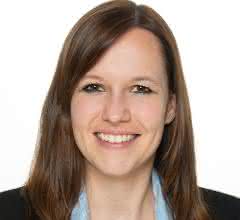
Long steep pass to the gate: optimization algorithms go further than any Excel genius could. In container management, they can almost halve the occurrence of bottlenecks and reduce the loss of containers by up to 25 percent, says guest author Jennifer Stead, an expert in container management at optimization specialist Inform.
The circulation frequency can even be increased fivefold. But as in soccer, it's the team game that counts: the algorithms work particularly effectively in close cooperation with other logistics-related IT systems. Narrowly missing out on the European Championship title in extra time 2:1: Nevertheless, that was the end of a great UEFA European Women's Football Championship 2022 at the end of July. As one of the sports that is certainly most talked about in Germany, soccer is known to many interested parties and laypeople as an intense team sport. It depends on good passes and forward-thinking teamwork.
At first glance, container management may not seem like the most obvious association, apart from the fact that container managers run after their load carriers every day just like professional athletes run after their soccer. On closer inspection, however, the analogy does reveal certain strengths that could serve as inspiration in logistics: In both cases, there is a need for a central bird's eye view of the entire playing field. And in both cases, the quote from cult coach Jürgen Klopp is true: "How good you are shows on bad days."
Getting containers out of the offside
The primary task of container management is to supply each stakeholder - whether customers, partners, the company's own production or a warehouse - with load carriers as required at all times. In practice, however, getting an overview of the status and location of each container and then keeping track of it is usually associated with enormous effort, as their data is often stored in several systems across different companies. Any misplaced data can throw the whole team into disarray. And so boxes, pallets and containers disappear far too often, are stored in large numbers in the wrong place and are missing where they are urgently needed. On a bad day - thank you, Mr. Klopp - the volatility of logistics is added to the mix: transport delays, incoming rush orders or other last-minute changes make planning more difficult.
If you only have a very manageable number of resources and a limited number of locations, spreadsheets and Excel calculations may still be able to help. In most cases, for example when hundreds of thousands of containers are involved across Europe, even the greatest spreadsheet experts and rule-based approaches reach their limits. Based on the experience that containers could run out at peak times, those responsible overstock high safety stocks. But even if these scheduling decisions have been centralized, the day-to-day complexity is almost impossible to keep track of. Every decision has an impact on future decisions. Getting the right number of the right containers to the right place at the right time can be a real challenge. The latest tracking technologies appear to be the solution, but even simply tracking the bins does not initially have any influence on their availability.
These complex environments require algorithmically supported planning software in order to make the best possible decisions or even automated scheduling. In the words of former Dutch professional player Dennis Bergkamp: "There has to be a thought behind every kick of the ball." Intelligent demand forecasts, dynamic optimization logic and holistic transparency are needed. Practical experience shows that considerable results can be achieved in container management using modern algorithms based on operations research and artificial intelligence: On average, this results in a 5 to 25 percent reduction in container losses, a 25 to 500 percent increase in the circulation frequency of load carriers and an 8 to 45 percent reduction in last-minute transports.
Algorithms reduce transportation costs by a third
The effects are even greater if container management is carried out in close interaction with other logistics systems and these are also controlled using intelligent algorithms. Transport management systems (TMS) have proven to be the strongest players here: Inform carried out a project study for a European pooling operator, with real data from various depots and load carriers as well as thousands of demand reports, locations and transports. The algorithms simulated optimized scheduling decisions and transport orders across the entire container cycle. A key finding was that the company was operating with a total surplus of 150,000 containers of two load carrier types - a huge amount of unused working capital. Although these two types were the company's most used resource, they were overstocked due to the unoptimized processes. In this case, the algorithmic optimization of the processes had the potential to increase the service level from 60 to 90 percent, while at the same time reducing transport costs and kilometers driven by almost a third each.
Focus on sustainability
With the kilometers saved, the possibilities for improving the ecological footprint have not yet been exhausted. Intelligent planning software helps to consolidate shipments between depots and other locations, which improves vehicle utilization. In particular, however, optimized, demand-driven container cycles reduce the followingCO2 traps: That companies buy too many new containers, schedule them incorrectly and lose them early. In contrast to the upcoming soccer World Cup in the desert - who would store refrigerated containers in the blazing sun? - the ecological added value is fortunately far less controversial.
The article appeared in materialfluss 10/22.


You might also be interested in
Winner material flow PRODUCTS OF THE YEAR 2023
Conductix-Wampfler: ChargeLine 0865
Two-pole conductor rail segments for efficient opportunity charging of shuttles, suitable for thousands of cycles per day.
 read more...
Hermann Grewer celebrates his 80th birthday
Hermann Grewer, Honorary Chairman of the North Rhine-Westphalia Transport and Logistics Association (VVWL) and Honorary President of the German Road Haulage, Logistics and Disposal Association (BGL), celebrated his 80th birthday on June 6.
read more...Well chilled for sure
V-Zug Kühltechnik AG, developer and manufacturer of refrigeration appliances and part of the successful V-Zug Group, has set up a new production facility for refrigerators of all heights and dimensions at its Swiss site in Sulgen.
read more...Advantageous automation of small parts warehouses
The RSX1 shuttle system will be at the center of Rocketsolution's presence at this year's Logimat trade fair.
read more...Reduced energy requirements in the high-bay warehouse
One of Germany's leading premium car manufacturers is already focusing on energy efficiency in the production of its new SUV model with electric drive. The storage and retrieval machines in a high-bay warehouse at the production site have been...
read more...Low lift pallet truck for light duty applications
Clark has launched a new low lift pallet truck with the model designation LWio15 for light transport tasks. The truck has a load capacity of 1500 kg and is suitable for short distances in goods distribution, production or warehousing.
read more...Internationalization as an opportunity
E-commerce is in a state of flux. Changes in purchasing behavior and procurement problems are keeping e-commerce retailers busy. Logistics plays a decisive role in the overall online shopping experience.
read more...Fulfillment Center for Frisco.pl
Polish eGrocery specialist and TGW deepen partnership
TGW is building a highly automated fulfillment center for Frisco.pl in the Polish capital Warsaw. This is the second project in a row that the two companies have implemented together.
read more...Which world will it be in 2023?
Michael Schreckenberg teaches at the University of Duisburg-Essen as Professor of Physics of Transport and Traffic. Once a year, he addresses the readers of materialfluss, formerly LT-manager, with a critical and humorous expert article on transport...
read more...