
Software
A look into the warehouse of tomorrow
The Material Flow editorial team asked representatives of software companies to take a look into the future for us and imagine themselves in the year 2030: If you were standing on a glass roof and looked down on a smart factory from above, what would you see?
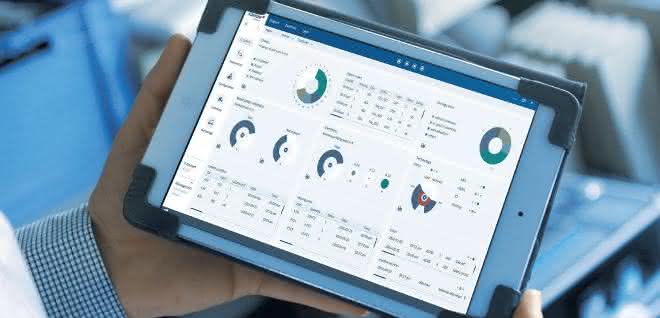
Hartmut Braun, Division Manager of the Aschaffenburg site of PSI Logistics GmbH, sees how driverless transport vehicles and drones, containers, cartons and pallets drive or fly through the warehouse. "Seemingly without a fixed route, moving very quickly. Robots that pick and pack. Employees in the warehouse working together with the robots and employees standing at a logistics control station. They monitor the in-house processes, transport chains and supply chain resources on a huge screen and intervene when necessary."
"Smartphones, wearables and apps make work easier, not dumb it down."Dipl.-Inf. Hartmut Braun, Division Manager Aschaffenburg site, PSI Logistics
Photo: PSI Logistics
Dipl. Ing. Johann Klug, Head of Global Product Management IT at SSI Schäfer, sees IT as a decision-making assistant: "Through the glass roof, I can see that physical activities have been taken over by more sensitive automated machines and driverless industrial trucks - strategic and tactical decisions are made by humans." The influence of IT will be noticeable in that communication will become faster and easier. Klug believes it is likely that the "devices will be perfectly integrated into the existing systems so that they are no longer visible through the glass roof."
The networking that is being discussed everywhere today will be a reality in more than 10 years' time. The experts interviewed agree on this. Michael Wack, Managing Partner of IdentPro GmbH, sees the machines controlling themselves and taking communication into their own "hands", in line with the much-vaunted Internet of Things. He believes: "In the factory of the future, production and intralogistics processes will interlock in a self-controlling manner. Machines, goods, containers and transport vehicles will communicate directly with each other in real time. The objects have their own intelligence, they know themselves, their job and their route to their destination."

"The more intelligent the processes are, the more intelligent the employees who monitor these processes need to be."Michael Wack, Managing Partner, IdentPro
Photo: IdentPro
Patrick Diedrich, Sales Manager and IT Consultant at the Klinkhammer Group, takes a similar view and predicts the realization of "Industry 5.0": "Imagine a system in the future that decides on its own how many workstations and employees are needed and deploys them independently as required."
Fewer people, more robots
All of the IT experts surveyed believe that autonomous vehicles and robots are on the rise. But despite all the automation, humans will not be superfluous. However, the unanimous opinion is that fewer people will definitely be needed. Markus Müllerschön, Vice President Sales at viastore Software GmbH, is convinced that machines will take over heavy, tiring and monotonous tasks: "They will be equipped with their own intelligence, autonomous vehicles and robots will transport goods in and out of the warehouse, for order picking, production or shipping," says the viastore manager.
Michael Baranowski, Managing Director of TEAM GmbH, believes that people will continue to pull the strings. A logistics supervisor will monitor and control the entire system. The few employees still required will be managed via intelligent devices. His assessment: "People will certainly continue to be at the center of events in the future and will be the final decision-making authority. Intelligent IT systems should be seen as assistance systems for people."
"People will certainly continue to be at the center of events in the future and will be the final decision-making authority."Michael Baranowski, Managing Director, TEAM
Photo: TEAM
Thinking still in demand
How clever can, can or must people still be in the face of IT that does a lot for them? Markus Müllerschön from viastore is certain that intelligent devices will not take over people's thinking, "but will support them in finding their way around their working environment and reliably mastering new tasks.
SSI Schaefer's IT expert Johann Klug emphasizes that the company does not want to do without human intelligence and the special abilities of people in the future: "IT devices in the consumer sector are now cost-effective due to their rapid spread and impress with short release cycles - they are constantly improving and becoming smarter. However, they are and will remain tools that support people in their activities but are by no means intended to or able to replace them."
Michael Wack from IdentPro believes that employee qualifications will be more important than ever in the face of increasing digitalization and automation: "The more intelligent the processes are, the more intelligent the employees who monitor these processes need to be, because they need to have an overview of the overall context. Simple tasks are becoming less important."
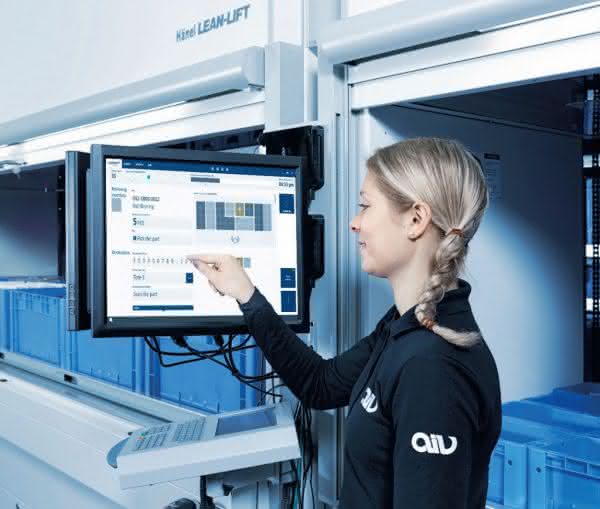
TEAM Managing Director Baranowski is also of the opinion that warehouse employees without IT knowledge will find it difficult and that the requirements will increase: "Warehouse employees now have the task of verifying the system specifications and applying them in the best possible way. The prerequisite for this will be that they can handle such systems in the warehouse and have no fear of contact. Of course, you also need a certain IT affinity in order to use the available IT systems smoothly. As always, there will be winners and losers from this development among warehouse employees."
According to computer scientist Hartmut Braun from PSI Logistics, intelligent systems also require intelligent users. He sees the trend that industrial applications are increasingly based on device developments from the consumer electronics sector, "with which users are familiar, from smartphones and wearables to apps and PC applications. They serve to make work easier, not to dumb things down."
Even though many things will be automated with the help of software systems, the PSI manager is convinced that people and their ability to assess things will remain indispensable: "Acting in accordance with the situation requires enormous knowledge and skill."
What can software do today - what will it do tomorrow?
Life without a smartphone is unthinkable for most people in their private lives today. Their influence will soon be felt in business and in the logistics centers of the world. Software developers are focusing on what even the youngest children can do effortlessly - swiping with their finger. Patrick Diedrich: "Everything is getting closer to smartphones in terms of intuitive usability. Services that we need in industry could already be converted into apps today with little effort and therefore be used on any end device. The new generation of robots, on the other hand, interacts with the worker. Thanks to touch-sensitive elements, today's robots enable direct collaboration with humans. Klinkhammer wants to be a pioneer with KlinkWARE. The warehouse management system from the Nuremberg-based provider relies entirely on touchscreen operation of panels, tablets and forklift terminals. Diedrich: "The slide function avoids time-consuming scrolling. The swipe finger navigates effortlessly through lists, relevant functions can be zoomed in by tapping, and the one-page function displays complete or partial views with a single touch."

"Everything is getting closer to smartphones in terms of intuitive usability."Patrick Diedrich, Sales Manager and IT Consultant at Klinkhammer Group
Photo: Klinkhammer
viastore also relies on intuitive user interfaces in its software development. And even the setup should be made as convenient as possible for the user. Müllerschön describes viadat's configuration wizard: "With a click, the user can, for example, create new forklift or picking workstations, add additional storage zones and integrate further warehouse technology components such as shuttle systems or driverless transport systems."
"Developers must ensure that their products simplify warehouse activities and are not a technical gimmick that makes everything more complicated."Markus Müllerschön, Vice President Sales, viastore Software
Photo: viastore Software
SSI Schaefer manager Klug has an example of how IT supports the packaging process today: "In the background, special mathematical algorithms are used to evaluate various item information based on thousands of arithmetic operations per second and calculate the ideal packing pattern for a shipping pallet. Based on this calculation result, the employee is visually guided through the sequence of the picking and packing process. They are shown which item to pick next and where to place it on the target pallet. The result of the IT support is a stable pallet with a higher packing density in addition to reducing the workload of the employees - the quality of the end product increases."
TEAM's aim is to make companies "Logistics 4.0 ready". This can only be achieved through "clarity of content, ease of use and, where possible, input via scanner or voice". The latest development in TEAM's ProStore warehouse management system involves the use of smart glasses for order picking.
Braun sees the development of adaptive scenario management in PSIwms as forward-looking. "This allows system settings to be modeled depending on the scenario and corresponding control processes to be specified. Scenarios and key performance indicators can be defined for different situations, such as 'early shift' or 'late shift', and PSIwms reacts specifically when these occur and automatically adjusts the process coordination accordingly."
What are the limits of software support?
All software company experts agree that the possibilities of IT in and for intralogistics are almost limitless. For Dietrich, the limits are at most set by the developers, whose imagination is what counts.
Müllerschön raises the question of "to what extent people are willing to accept this support. Some employees are skeptical about wearing headsets or glasses - be it because of the operation, functionality or comfort." The viastore manager demands that the developers of such solutions must ensure "that their products actually simplify activities in the warehouse and are not a technical gimmick that makes everything more complicated. If employees recognize and understand the practical benefits of IT support for their daily work, acceptance will automatically increase."
It will be interesting to see how the interaction between technology, IT and humans will develop in practice. None of the interviewees see the danger of a dystopia in which machines are superior to humans. Despite all the "intelligence" of robots, forklifts and the like - they are all intended to make work easier for people in the smart factory and not overburden them - it is also obvious that many activities will be eliminated as a result. However, it is clear that the challenges in the smart warehouse lie in maintaining an overview of the processes and making the increasing complexity of logistics processes manageable. According to Michael Baranowski, this can only be achieved by providing clear and comprehensible information through the IT systems.


You might also be interested in
Industrial scanners for harsh environments
Honeywell presents 'Granit Ultra 2105i', an industrial scanner for demanding environments in production and logistics.
 read more...
Convenient measurements even in harsh environments
Hexagon Manufacturing Intelligence introduces a new handheld 3D scanning technology that adds convenient new functionality for flexible measurement to its wide range of manufacturing inspection devices.
read more...Pick-by-voice solution with wearable scanners
Proglove is cooperating with Topsystem, a division of the Ehrhardt Partner Group (EPG), to meet the industry's high demand for mobile logistics solutions.
read more...Wearable scanners for warehouse and retail
Proglove will be presenting the Mark Basic multi-range wearable scanner and the new advanced scanning software functionalities for the first time in Germany at Logimat.
read more...Automated guided vehicle systems for washing machines
The domestic appliance manufacturer Miele develops and produces a large proportion of its washing machines and washer-dryers at its Gütersloh plant. Pressed and cast components are also produced here for the other Miele plants.
read more...Working platform for safe access to train roof areas
KRAUSE has developed a roof working platform with zero gap for the Hohenzollerische Landesbahn transport company of SWEG in Gammertingen. It was adapted exclusively for "Lint 54" trains of the 622 series.
read more...On-board sensors replace GPS
In the "Autodrone in Production" project, researchers at the Institute of Integrated Production Hanover (IPH) have developed a drone that can fly autonomously in unknown indoor spaces.
read more...Working independently in the warehouse
With the Linde C-Matic HP autonomous transport robot and the Anyfleet cloud platform, goods handling specialist Linde Material Handling (MH) is expanding its portfolio to include two core products from Munich-based company Idealworks.
read more...Ultra-fresh thanks to dynamic calculation
Flow-Picking-Machinery (FPM) raises the dynamics in fresh food logistics to a new level - the Witron system dynamically calculates the store pallets during operation.
read more...