
Software & Ident
Zebra study: wearables are on the rise
Zebra Technologies Corporation, a leading global provider of hardware, software and analytics solutions for real-time enterprise visibility, has released the results of its 2017 Manufacturing Vision Study. The results show that manufacturing companies want to use the IIoT in particular to improve product quality and increase the transparency of their operations.
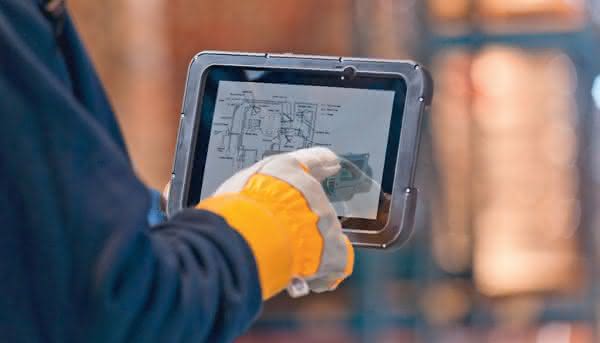
Globalization, increased competition and rising customer demands require factories to be increasingly networked - and the manufacturing companies surveyed also recognize this necessity. According to the study by Zebra Technologies, the number of manufacturers with fully networked factories will increase significantly over the next five years.
The results at a glance
- Manufacturing companies will continue to drive Industry 4.0 and the transformation to the smart factory. With the help of RFID, wearables, automated systems and new technologies, employees will monitor the physical processes in factories. This will enable companies to make decentralized decisions. By 2022, 64% of manufacturing companies expect their factories to be fully networked, compared to only 43% at present.
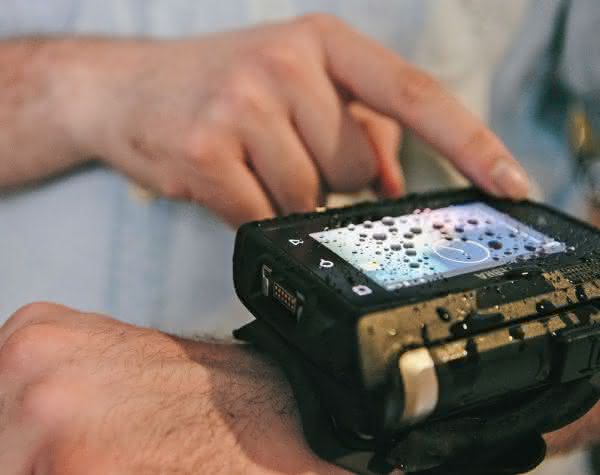
- Half of manufacturing companies are planning to introduce wearable technology by 2022. 55% of companies that already use wearables intend to expand their use over the next five years.
- Manual processes will decrease significantly. Today, 62% still use pen and paper to control important production steps. According to the study, only one in five companies will still use this method by 2022, as the use of pen and paper to track work in progress is inefficient and error-prone.
- Executives in all regions named quality assurance as a top priority for the next five years. Forward-thinking companies are focusing on high-quality products to improve growth, throughput and profitability. They are confident that improvements on the manufacturer and supplier side will increase the quality of finished products: Only 34 percent expect quality issues to be their main concern in 2022.
- The majority of manufacturers surveyed are convinced that investing in the transparency of operational processes will promote company growth. For 63%, the focus is on tracking through a combination of different technologies (e.g. barcodes, RFID and real-time tracking systems).
- 51% of the companies surveyed plan to expand their use of voice technology over the next five years. The largest companies (with a turnover of more than 1 billion dollars per year) expect the highest increase in usage: 55% of them plan to use voice technology in 2022.

"Manufacturers have recognized the opportunities of the Industrial Internet of Things and are investing heavily in technologies that enable smarter, connected factories and thus greater transparency and higher quality."Jeff Schmitz, Senior Vice President and Chief Marketing Officer, Zebra Technologies
Regional results
- The use of on-demand, cloud and software as a service (SaaS) solutions for manufacturing execution systems (MES) is expected to increase rapidly. 58% of decision-makers surveyed in North America estimate that they will use these services by 2022.
- 54% of European manufacturers plan to use real-time location solutions by 2022 to collect important data on company assets, such as their location, condition and production stage.
- Around half of manufacturers from Latin America (51%) and the Asia-Pacific region (48%) plan to use RFID to optimize production by 2022.
- For 58% of the Latin American manufacturers surveyed, improving quality assurance is the top priority for the next five years.
- In order to deliver products on demand, companies are increasingly relying on suppliers instead of storing materials on site. Just-in-time (JIT) delivery is expected to be most prevalent in Latin America (42 percent) and the Asia-Pacific region (40 percent).
Background and methodology
On behalf of Zebra Technologies, Peerless Insights surveyed 1,100 decision-makers with influence over the purchase of manufacturing technologies from North and Latin America, Europe and the Asia-Pacific region. The online study was conducted in the first quarter of 2017 and covered various industries, including the automotive, high-tech, tobacco, pharmaceutical and food and beverage sectors.


You might also be interested in
Datalogic: Gryphon GD4600 Series
High performance 2D handheld scanner
The Gryphon GD4600 series from Datalogic offers professional 2D handheld scanners for retail, industry, logistics and healthcare.
 read more...
Intelligent Kanban solution thanks to RFID
Kanban systems make everyday production easier - Otto Roth showed what this looks like in concrete terms at Logimat in Stuttgart. The C-parts management expert presented its wide range of products.
read more...When the manhole cover recognizes the car
Tönnjes and Kathrein develop the ID e-reader Inroad with integrated RFID technology.
read more...CCL Faubel shows applications of smart labels
Paper labels can only represent one status of a container or storage bin. Every change in status requires a new label. CCL Faubel will be demonstrating at Logimat 2024 how this time-consuming process of manual replacement can be replaced.
read more...Secure keys for automated intralogistics processes
Euchner's new CKS2 key system promises significantly simplified handling to safely start or stop dangerous machine movements.
read more...Identification technology and RFID
Networked container terminals: 5G campus networks for Eurogate
Deutsche Telekom is equipping port terminals in Hamburg, Bremerhaven and Wilhelmshaven with local 5G networks by spring 2024.
read more...Cooperation for load carriers
The Munich-based family business Baumann Paletten will be working with Logistics Arts on the digital development of EUR load carriers in future
read more...Winner material flow PRODUCTS OF THE YEAR 2023
IPP: RUDi - innovative returnable display for the POS
Every year, around 30 million disposable displays are placed on the market in the D-A-CH region. The majority of these displays are constructed on quarter pallets or dollies, the rest are purely disposable constructions.
read more...Battery-free and cloud-based
Faubel has launched battery-free smart labels that work via a cloud application.
read more...