
Column: What worries Würmser
Five marks for change
Why is everyone so upset about the high fuel prices? After almost a quarter of a century, they are now at the level that the Greens were already demanding when trucks were still running on Euro 2 and the pumps were labeled in Deutschmarks. At the time, it said 1.14 Deutschmarks for a liter of diesel and 1.59 for Super, the equivalent of 58 and 81 cents respectively. At their federal delegates' conference in 1998 - the year Gerhard Schröder became Chancellor - Bündnis 90/Die Grünen wrote the so-called five-mark resolution into their election manifesto. It states that the price of a liter of petrol must be gradually raised to five marks.
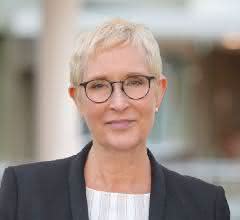
That's a wrap. It wasn't planned that way, but it fits: Climate neutrality is the order of the day and transport plays a major role in this. One third of traffic emissions in Germany are caused by road freight transport alone. And who can seriously deny that change in general and towards e-mobility in particular is best achieved through price. At best, some aid packages will have to be put together; after all, disruption is not the job of politicians. It must ensure continuity, security and peace, and mitigate the consequences of transformation in order to involve as many sections of society as possible. After all, it won't get any cheaper with a capital E in front of mobility, rather more complicated, not necessarily better, at best different. What remains is the good conscience of saving the world, and even that is doubtful when you consider that Germany contributes just 1.8% to global CO2 emissions, while China emits over 30% and therefore twice as much CO2 as all OECD countries combined.
Germany is good at putting itself at the forefront of idealistic movements that don't really exist. It is honorable, but also pointless, utopian and addictive to reduce CO2 emissions to zero when at the same time more oil than ever is being burned worldwide, the climate protocols are not worth the paper they are written on and coal-fired power plants are being built in over 30 countries, with China and India alone currently building hundreds of them.
Goals must be realistic and achievable, otherwise we will lose motivation, and the fundamental question must be: How do we move from a growth-oriented consumer society to a climate-neutral circular economy?


You might also be interested in
The best comes at the end
You are currently reading my latest column in materialfluss and LT-manager, the intralogistics and logistics trade journal. At the start in 2010, I already had a bit of a problem with the name "Was Würmser wurmt"...
 read more...
Idiotysicher gendern for beginners
Something different: Do you already use gender? No. Why don't you try "gendering according to Phettberg"? It works like this: For personal names, add a "y" to the root of the word, precede it with a neutral "das", and you're not just referring to...
read more...Gold rush 4.0
Experience shows that where there is gold, the rush is not far away. The first gold rush in history was documented 325 years ago in Brazil.
read more...Startup-friendly?
It's taken a long time, but something like a culture of innovation is finally developing in Germany. Artificial intelligence, robotics, IoT, big data and autonomous mobility promise nothing less than to reinvent the world. Exciting. And then this:...
read more...Discriminated
Most people have a keen sense of genuine discrimination. We have nothing against foreigners, but these foreigners are not from here - in Bavaria, for example, this applies to everyone north of the Main line and somewhere south of the Alps, in...
read more...Tattoo, original sin, hippster beard
So, IT nerds are doing away with shipping. And very quickly. Said a professor from TU Berlin recently at the 6th National Conference on Freight Transport and Logistics in Neuss. They are pierced and tattooed, young and, of course, ingenious - just...
read more...Merry Christmas and a Happy New Year!
The materialfluss team wishes you a Merry Christmas and a successful and healthy 2026.
read more...Partner country Canada shows the future
Under the motto "The future's here", Canada is showcasing its industrial strengths in areas such as automation, energy, digital transformation and green technologies.
read more...LogiMAT 2025: Trade fair with consistently high visitor numbers
Under the motto "Passion for Solutions", the international intralogistics world came together at LogiMAT 2025 in Stuttgart from March 11 to 13. After three days of presentations, information and trend checks, trade visitors, exhibitors and trade...
read more...