
From materialfluss 5/2020
Sustainability in real time
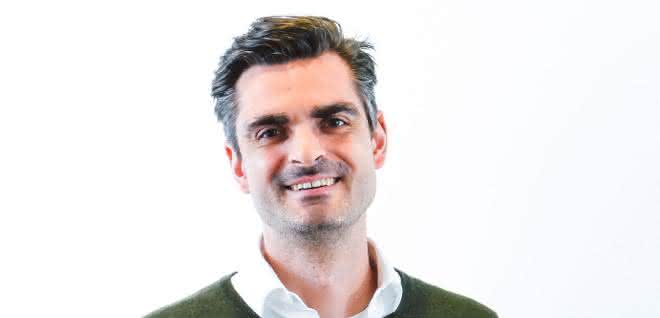
The coronavirus crisis is currently having a major impact on our lives and is also affecting the environment - but in this case in a very positive way: the current situation is giving us a positive carbon footprint. Agile supply chains with the right transport software play their part, and not just in times of coronavirus. A guest article by Janis Bargsten, Managing Director of Flexport Germany.
This is already particularly evident in major cities such as Delhi and Beijing. Satellite images indicate that the air is currently much less polluted. In the logistics industry, too, the issue of sustainability remains a key concern for everyone involved. The new regulation of the International Maritime Organization (IMO), which has reduced the limit value for the sulphur content in fuel used by ships (outside of emission control areas) from 3.5 to 0.5 percent, demonstrates the importance for the industry. In fact, logistics plays a not insignificant role in global environmental pollution. As a result, the carbon footprint will also change again with the return to the new everyday life of freight forwarding in the post-pandemic period. For the environment, this means more intensive use of the various transport routes and thus increased pollution. However, even during the coronavirus crisis, environmental pollution remains an important issue and companies should take responsibility in this area.
Contributing to environmental protection with an agile supply chain
Modern technology as the basis of agile supply chains can help to sensitize logistics to environmental protection issues: Digitalization helps companies to obtain a transparent overview of the emission of harmful substances at the various supply chain steps. Accordingly, digitalized processes can show customers different options for action. A cloud-based platform, such as the one offered by Flexport, and the associated interactive dashboard enable customers and service teams to keep an eye on all transactions in real time. The environmental benefit for companies: An analysis of carbon dioxide emissions is also shown here and alternative courses of action are worked on together with the team of experts. Documents can be added centrally by all suppliers and stakeholders involved and the current delivery status, including the carbon footprint, can be easily kept in view.
Companies can take advantage of all the features for their environmental footprint, because if container volumes can be used 100 percent, the carbon dioxide emissions per unit are reduced. Thanks to the digitalization of the supply chain and data transparency in the processes, there are a wide range of options for transporting even smaller shipments efficiently, so that both the traditional criteria - the cost-effective shipment of the goods - and the environmental footprint of a transport can be taken into account in the decision. The Flexport platform offers a carbon dioxide emissions calculator that checks and analyzes pollutant emissions. It is advantageous for companies to be able to implement environmentally friendly decisions without great effort and with technological resources. If a freight forwarder offers the option of determining the most economical and environmentally friendly transportation method before shipping, taking all conditions into account, this is a great advantage.
Efficient container loading
Customers need flexible, customizable services to keep an eye on their own sustainability goals even in stressful everyday life. Flexible container loading is no longer a problem for an agile, digitally networked supply chain. Thanks to real-time insight into all information, the teams supporting the digital freight forwarder can make adjustments at important interfaces and check the best routing and alternative solutions at the time of decision. The basis for this is a technological platform that enables an advanced networked logistics infrastructure at all levels.
Offsetting carbon dioxide emissions through donations
Another aspect is offsetting carbon dioxide emissions. Digital freight forwarders can use technology to increase the efficiency and transparency of global supply chains. They enable detailed analyses and insights into the environmental footprint of transports. This makes it easy for companies to contribute to environmental protection. Flexport, for example, works with the organization Carbonfund.org, a non-profit provider of climate solutions. Customers can offset their carbon dioxide emissions by paying a financial levy per tonne of carbon dioxide emitted. The levies are invested by Carbonfund.org in certified projects that promote renewable energies or the protection of the Brazilian rainforest, for example. The carbon offset is used in full and does not include any service costs. Customers can not only see exactly how their donations are being used, but are also entitled to label their company with the globally recognized Carbonfree label.
Even though the economy is currently facing major challenges due to the virus, environmental and climate protection are also influencing the world and therefore the economy. Companies can already optimize their supply chain today through digital technology - digital freight forwarders such as Flexport show how supply chain processes can become transparent and clear and how efficient decisions can be made through real-time data insight and information bundling. At the same time, the technological possibilities of automated supply chain processes also serve to protect the environment, as they can take many new criteria into account in real time thanks to the wide-ranging analyses and information. Digitalization makes it possible to make the best possible decisions and to incorporate environmental protection in an uncomplicated way.


You might also be interested in
Winner material flow PRODUCTS OF THE YEAR 2023
Conductix-Wampfler: ChargeLine 0865
Two-pole conductor rail segments for efficient opportunity charging of shuttles, suitable for thousands of cycles per day.
 read more...
Hermann Grewer celebrates his 80th birthday
Hermann Grewer, Honorary Chairman of the North Rhine-Westphalia Transport and Logistics Association (VVWL) and Honorary President of the German Road Haulage, Logistics and Disposal Association (BGL), celebrated his 80th birthday on June 6.
read more...Well chilled for sure
V-Zug Kühltechnik AG, developer and manufacturer of refrigeration appliances and part of the successful V-Zug Group, has set up a new production facility for refrigerators of all heights and dimensions at its Swiss site in Sulgen.
read more...Advantageous automation of small parts warehouses
The RSX1 shuttle system will be at the center of Rocketsolution's presence at this year's Logimat trade fair.
read more...Reduced energy requirements in the high-bay warehouse
One of Germany's leading premium car manufacturers is already focusing on energy efficiency in the production of its new SUV model with electric drive. The storage and retrieval machines in a high-bay warehouse at the production site have been...
read more...Low lift pallet truck for light duty applications
Clark has launched a new low lift pallet truck with the model designation LWio15 for light transport tasks. The truck has a load capacity of 1500 kg and is suitable for short distances in goods distribution, production or warehousing.
read more...Internationalization as an opportunity
E-commerce is in a state of flux. Changes in purchasing behavior and procurement problems are keeping e-commerce retailers busy. Logistics plays a decisive role in the overall online shopping experience.
read more...Fulfillment Center for Frisco.pl
Polish eGrocery specialist and TGW deepen partnership
TGW is building a highly automated fulfillment center for Frisco.pl in the Polish capital Warsaw. This is the second project in a row that the two companies have implemented together.
read more...Which world will it be in 2023?
Michael Schreckenberg teaches at the University of Duisburg-Essen as Professor of Physics of Transport and Traffic. Once a year, he addresses the readers of materialfluss, formerly LT-manager, with a critical and humorous expert article on transport...
read more...