
Logistics service providers
Logistics, close to industry and trade
Getting goods from A to B on time is something that many logistics service providers, both large and small, manage to do flawlessly and to the satisfaction of their customers. However, when we talk about the transportation of hazardous materials, returns handling or transport and handling under special hygienic conditions, the choice becomes smaller. Materialfluss spoke to three established logistics service providers to find out in which segments growth is still possible.
Three questions for Achim Schäflein, CEO of Schäflein AG
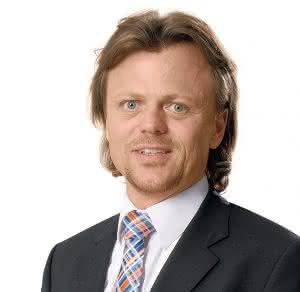
Materiafluss: Many logistics service providers offer comprehensive outsourcing services. How does your company want to differentiate itself in the market?
Achim Schäflein: "We are there where the customer needs us and show a willingness to invest, for example with a new building on a greenfield site. We have in-house construction expertise and are very IT-savvy, which is demonstrated by our own logistics IT company Eikona, among other things. Eikona enables increased productivity through efficient warehouse management. In the area of hardware, we have shown a flair for innovation in the past, for example with new warehouse technologies such as the AutoStore system. Niches such as the logistics and cleaning of reusable containers, rental & pooling and hazardous materials logistics are also exciting for us.
MFL: Do you focus on specific segments? And if so, why?Schäflein: Schäflein originally concentrated on mechanical engineering and automotive, but now also offers solutions in the chemical and hazardous materials industry, retail including e-commerce and food logistics. Know-how transfer and lateral thinking are the order of the day: logically, it is important to "understand the language of the customer" and to concentrate and focus with them on their industries and segments. In my opinion, however, process expertise and the ability to transform processes and solutions from one segment to a new segment are much more important.
MFL: What can we expect from your company in this segment in the coming year? New strategies, investments, objectives?Schäflein: Firstly, the establishment and expansion of new locations throughout Germany (Langenau near Ulm, Schweinfurt and Kitzingen), but also abroad (Wroclaw location). Then lateral thinking and the targeted expansion of processes, for example in the chemical, e-commerce or food sectors, reusable container logistics. Then there is "mechanization", for example with a logistics app for applications in trucks, among other things. In concrete terms, this means that the driver receives additional IT systems not only for vehicle data, but for the entire logistics process from collection to handling and delivery.
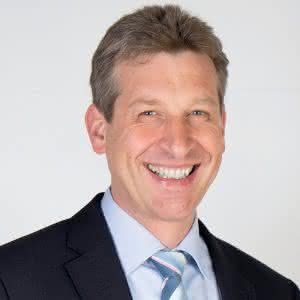
Three questions for Stefan Porcher, COO Contract Logistics Germany at Hellmann Worldwide Logistics
MFL: Many logistics service providers offer extensive outsourcing services. How does your company want to differentiate itself in the market?
Stefan Porcher: Our primary goal is to inspire our customers with our service and the quality of our service in the long term. This also includes working together with our customers to develop individual solutions to their problems. For this reason, we scrutinize our processes and all points of contact with our customers on a daily basis in order to become even better in terms of quality, costs and performance. This is the only way we can meet the increasing demands of the market in the long term. In addition to our CIP program, which has been successfully established in our branches for many years, we focus on our customers' perception of our performance. In this way, we can professionalize what is good, tackle problems at their roots and quickly establish changes. Always with the aim of making our customers' business easier.
MFL: Are you concentrating on specific segments and if so, why?Porcher: One of our medium to long-term priorities is the automotive sector with a focus on spare parts logistics. In this area, the speed and quality of supply along the entire supply chain is particularly important. As a full-service logistics provider, we have the network, the IT infrastructure and the expertise to economically map such complex material flow requirements as delivery to the service technician's trunk. Even with the imminent change in the automotive industry from combustion engines to alternative drives, we continue to see the automotive industry as a stable growth driver for Germany as a business location.
Another focus is and remains retail and its development in the omnichannel sector. Here, too, our past performance shows that we stand for excellent service in this segment and are known for reliability and performance. With our multi-user locations, we are also very well positioned in these segments to respond quickly to increasing individualization and customer requests for ever shorter delivery times.
The e-commerce sector is becoming increasingly important. With our subsidiary Hellmann e-Commerce, we are able to map the requirements of end customers in terms of IT technology and ensure the level of service up to same-day delivery with the help of a 'state of the art fulfillment solution'.
MFL: What can we expect from your company in this segment in the coming year? New strategies, investments, targets, etc.?Porcher: In 2016, we opened four new modern locations in our target regions in Germany. These will make a significant contribution to our growth in the coming years in 2017. This shows that our focus on our selected target sectors is proving to be the right one. We will continue along this path in order to continue to impress our customers with an excellent level of service and in-depth understanding of processes. It is important for us to create an overall solution with our various transport products in order to offer our customers a platform that enables them to operate globally. A strategic example of our further development in Germany is the expansion of our e-commerce portfolio in conjunction with our new "Service Plus" transport product. This enables us to offer end customers in both B2B and B2C business the entire warehousing and transportation chain, including assembly and dismantling services to their homes.
Intra says: I've seen them before!
Wait a minute ... I know the two gentlemen who are beaming at us on this page as if they had just abolished the truck toll! Yes, that's right, both Matthias Schadler and Stefan Porcher were guests at the Material Flow Round Table Logistics Service Providers, to be found in issue ... Wait a minute ... Materialfluss Markt 2016, and online at www.materialfluss.de/lager-und-kommissioniertechnik/round-table-wir-sind-systemjongleure/. Please omit the dot after the slash, which the final editor prescribes here, otherwise nothing will work. Then as now, professionals like Matthias Schadler and Stefan Porcher were sure that a logistics service provider would be well advised to respond to the individualization of society and its wishes as well as the ever-shorter delivery times. Not so easy when you've just built a logistics center that can't be moved just like that. It will remain exciting, certainly in the coming year!
Three questions for Matthias Schadler, Managing Director of pfenning logistics
Material flow: Many logistics service providers offer extensive outsourcing services. How does your company want to differentiate itself in the market?
Matthias Schadler: In outsourcing projects, we attach great importance to taking an overall view of the process chain in order to deliver greater efficiency for our customers. As we see our services as part of an integrated supply chain, we optimize outsourcing projects with a view to the upstream and downstream processes. This also includes returns logistics. What sets us apart is our comprehensive supply structures right down to the capillary vessels of store networks. And a network of special warehouses that are geared towards the latest safety and hygiene standards. This forms the basis for outsourcing projects with a direct connection to customers and sales markets.
MFL: Do you concentrate on certain segments? And if so, why?Schadler: We grew up in retail and are now at home in many industrial sectors. These include the chemical industry, the automotive industry, food and fast-moving consumer goods. We don't focus so much on individual segments, but rather on industry- and trade-related logistics that enable our customer companies to meet the growing demands of the market and their customers in a relaxed manner. The associated services include short throughput times and an extremely high delivery capability with low inventories.

MFL: What can we expect from your company in this segment in the coming year? New strategies, investments, objectives, etc.?Schadler: Everyone is investing time and money in digitalization strategies. We are also expanding our investments in this area, but without losing sight of what is essential in logistics: proximity to the customer. This is why we are expanding our presence at important hubs such as Hamburg, Bremen and Baden-Württemberg, where we will be offering additional capacity to the pharmaceutical, FMCG and automotive sectors in the short term.
Martin Schrüfer


You might also be interested in
Winner material flow PRODUCTS OF THE YEAR 2023
Conductix-Wampfler: ChargeLine 0865
Two-pole conductor rail segments for efficient opportunity charging of shuttles, suitable for thousands of cycles per day.
 read more...
Hermann Grewer celebrates his 80th birthday
Hermann Grewer, Honorary Chairman of the North Rhine-Westphalia Transport and Logistics Association (VVWL) and Honorary President of the German Road Haulage, Logistics and Disposal Association (BGL), celebrated his 80th birthday on June 6.
read more...Well chilled for sure
V-Zug Kühltechnik AG, developer and manufacturer of refrigeration appliances and part of the successful V-Zug Group, has set up a new production facility for refrigerators of all heights and dimensions at its Swiss site in Sulgen.
read more...Advantageous automation of small parts warehouses
The RSX1 shuttle system will be at the center of Rocketsolution's presence at this year's Logimat trade fair.
read more...Reduced energy requirements in the high-bay warehouse
One of Germany's leading premium car manufacturers is already focusing on energy efficiency in the production of its new SUV model with electric drive. The storage and retrieval machines in a high-bay warehouse at the production site have been...
read more...Low lift pallet truck for light duty applications
Clark has launched a new low lift pallet truck with the model designation LWio15 for light transport tasks. The truck has a load capacity of 1500 kg and is suitable for short distances in goods distribution, production or warehousing.
read more...Internationalization as an opportunity
E-commerce is in a state of flux. Changes in purchasing behavior and procurement problems are keeping e-commerce retailers busy. Logistics plays a decisive role in the overall online shopping experience.
read more...Fulfillment Center for Frisco.pl
Polish eGrocery specialist and TGW deepen partnership
TGW is building a highly automated fulfillment center for Frisco.pl in the Polish capital Warsaw. This is the second project in a row that the two companies have implemented together.
read more...Which world will it be in 2023?
Michael Schreckenberg teaches at the University of Duisburg-Essen as Professor of Physics of Transport and Traffic. Once a year, he addresses the readers of materialfluss, formerly LT-manager, with a critical and humorous expert article on transport...
read more...