
Logistics service providers
Confidence despite complexity (from: LT-manager 2/17)
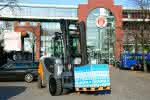
The 15th Hamburg Logistics Days organized by LMS took place in mid-February at the FC St. Pauli stadium at Millerntor and offered a multifaceted view of the challenges facing sustainable logistics in increasingly complex economic processes. This year, Jörg Hermsmeier once again summed up the claim of his planning and consulting company LMS Logistik Management Service GmbH, which he has been running in Hamburg since 1994 together with his partner Dirk Lange, at the Logistics Days: logistics must not only function professionally in the here and now, but also be future-proof and therefore transcend borders. This philosophy was supported at the event by dedicated sponsorship plus an interesting accompanying exhibition - the premium partners Container Centralen, Still, PSI Logistics, Dachser and Wagner are particularly worth mentioning here.
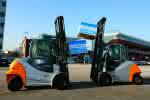
International auditorium - top-class speakers The Hamburg Logistics Days have become a permanent fixture in the logistics industry's event calendar. Once again, more than 300 participants from all over Germany and abroad listened to the high-caliber and varied presentations, which presented aspects from research and practice for the consideration of best practice and a look into the crystal ball for the requirements of tomorrow. Dr Giovanni Prestifilippo, Managing Director of PSI Logistics, and Christian Maasem from FIR at RWTH Aachen University presented "Smart Movement" using IoT beacons that communicate with PSItms, enabling transport processes and intralogistics material flows to be optimized. Werner Gliem from Logistik-Initiative Hamburg then spoke about the SMILE - Smart Last Mile Logistics project, which aims to enable city logistics with better air quality, less noise and more traffic flow despite growing e-commerce. Matthias Bähr from REWE then spoke about supply chain management at REWE Markt GmbH and its focus on the interests of customers. His question: Satisfaction at what price with ever increasing demands? Uwe Ratajczak from the Koch, Neff & Volckmar (KNV) group of companies gave an insight into the world of book logistics. According to him, the industry, which is undergoing major changes, will have to concentrate on just a few service providers in future and create additional distribution channels. Erik Düwel from Still spoke about the interactive interaction between man and machine. He attaches great importance to the assistive function of industrial trucks in the future and in this context presented the Still iGOneo, which scores highly in terms of efficiency, ergonomics and occupational safety. Dirk Lange from LMS and Michael Bindernagel from Logipet, a wholesale company for pet retailers in Germany and Austria, then spoke about determining the optimum warehouse and location strategy, taking into account various future scenarios. Christian Seidl from Imperial explained to the audience the greatest challenges facing the "supreme discipline" of automotive logistics and used the example of VW to show how a smooth supply chain can still function despite increasing logistics costs. Logistics in travel retail - Marco Rebohm from Gebr. Heinemann explained the challenges and opportunities in this special market environment, which includes duty-free retail at airports, in airlines and on cruise ships. Logistics is an integral part of the economy and depends on its prosperity. In this respect, Jürgen Matthes' assessment of the economic situation in Europe from the German Economic Institute in Cologne was an interesting way of assessing future logistics developments. He sees the positive effects of the reforms in the European countries and warned against jeopardizing them by reversing course. Georg Weinhofer from COOP in Switzerland spoke about his company's goal of becoming CO2-neutral by 2023. And they are well on the way: as a visionary and sustainable solution, COOP now has eight electric trucks in use for transporting goods to supermarkets. What will make tomorrow's retail tick - online, offline or omnichannel? Michael Gerling from EHI spoke about the future of retail and the future of stores, which will remain but will look different and will be concentrated in large cities in the future. What type of people will the world of logistics be dealing with in the near future? Prof. Dr. Christian Scholz from the University of Saarbrücken, representing the "baby boomer" generation, spoke about the global phenomenon of Generation Z, what makes them tick, what makes them different and why they are infecting us all with their specific nature. With their unorthodox presentations, Alexander Hartmann and David Lohmüller invited us to break out of our own prison of habit and try new approaches. Hartmann, a media professional, explained mechanisms with which the subconscious can be programmed for success - photographer Lohmüller reported in pictures about his road trip to the end of the world. A special kind of know-how transfer - good for logistics.
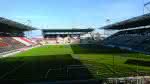
Entertaining evening event The traditional evening event was organized by the HLT evening partners Container Centralen, Garbe and Still in the ballroom of the main stand of the Millerntor Stadium and offered the opportunity for networking in a chilled St. Pauli atmosphere. State Councillor Dr. Rolf Bösinger from the Ministry of Economics, Transport and Innovation of the Free and Hanseatic City of Hamburg addressed the importance of logistics for Hamburg as the dinner speaker. These Logistics Days were once again held under the umbrella of a good cause and, as in previous years, generous donations were made to the Sternenbrücke children's hospice run by Ute Nerge. The location is not yet known, but the date is: the next Hamburg Logistics Days are expected to take place on February 21 and 22, 2018. Gisela Upmeyer


You might also be interested in
Cooperation for last-mile baggage automation
Vanderlande and airport operator Avinor have entered into an innovation partnership to explore ways to fully automate the last mile of the baggage handling process.
 read more...
Röhlig Logistics expands its global network
Röhlig Logistics has expanded its local presence in Belgium with the opening of a new office at Liège Airport on January 1, 2023.
read more...Interroll opens new plant in Suzhou
After two decades on the Chinese material handling market, Interroll has opened a new plant in Suzhou. The aim is to double production capacity in the Asia-Pacific region and in China.
read more...Hörmann Industries bundles intralogistics and brings in ex-Swisslog boss Christian Baur
Hörmann Industries GmbH has established a new business division. "Intralogistics" unites the companies Hörmann Logistik with its subsidiary Hörmann Logistik Polska, Klatt Fördertechnik and Hörmann Logistik Systeme under one roof.
read more...Interview with Christoph Beumer
"Sustainability is not annoying, but a real asset"
Dr. Christoph Beumer, CEO and owner of the system integrator Beumer Group, is one of the most profound experts in the German intralogistics industry.
read more...Security and performance at the latest level
New electric tow tractors and platform trucks from Linde Material Handling
New powerful electric tow tractors and platform trucks from Linde Material Handling are now flexing their muscles.
read more...50 years of Vanderlande in Germany
The Vanderlande branch in Mönchengladbach celebrates its 50th anniversary as the first and therefore oldest German location of the globally active Dutch group.
read more...Bodo Schlenker new Divisional Director Software Solutions at Beumer
Bodo Schlenker has been Divisional Director Software Solutions at the Beumer Group since April 2021. The computer science graduate can draw on many years of experience.
read more...Fraunhofer IML and KION Group further develop LoadRunner
In a joint Enterprise Lab, the partners want to further develop and industrialize the autonomous vehicle swarm equipped with distributed artificial intelligence.
read more...