

Cranes & Components
Highest performance at the highest temperatures
Gusszentrum Ostfriesland GmbH (GZO) is getting fit for the future: In order to produce ever larger components for wind turbines, GZO is modernizing its production halls with new, more robust cranes. Konecranes designed six double-girder overhead travelling cranes for this purpose and at the same time loaded, modernized, relocated and dismantled existing cranes.
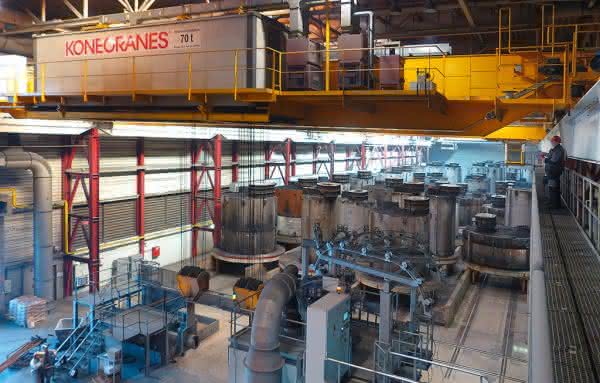
The energy transition brings new challenges for wind turbine manufacturers: Increasing capacities require ever larger components. Gusszentrum Ostfriesland GmbH is therefore producing ever larger machine carriers, rotor hubs and stator bells for parent company Enercon GmbH. In order to be prepared for the future, GZO, based in Südbrookmerland, East Frisia, is modernizing numerous crane systems. A major project involving all production areas of the production site. Konecranes designed a total of six new double-girder overhead cranes for the molding shop, foundry and casting post-treatment, loaded one crane, dismantled three cranes and relocated four existing cranes within the halls. The conditions require particularly robust cranes: the new double-girder overhead traveling cranes are sometimes exposed to extreme heat and high levels of dust.
Redundant drives safeguard the casting process
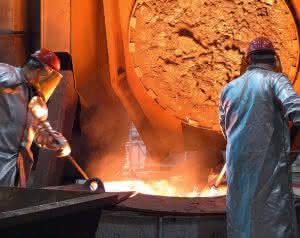
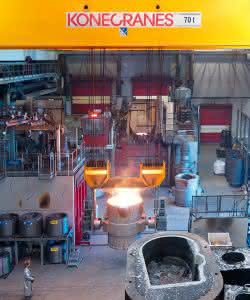
The most powerful new CXT double girder bridge crane in terms of load capacity, with a lifting capacity of 100 tons, is used in the moulding shop. Two parallel wire rope hoists, each with a load capacity of 50 tons, jointly lift the sand core casting moulds to their position in the GZO foundry. There, the new foundry crane with a lifting capacity of 85 tons, a span of 24.50 meters and a lifting height of 13 meters fills up to 50 tons of liquid nodular graphite into waiting casting moulds. "We have equipped the double-girder bridge crane with redundant drives, four drive motors and two frequency inverters in each of the crane and trolley trolleys. The hoist unit is also completely redundant. This ensures that the crane with the ladle crossbeam can continue working in any case and that the molten metal does not cool down and become unusable," explains Ralf Baresel, Sales Heavy Duty Cranes at Konecranes in Berlin. The electrical system is housed in an air-conditioned container on the crane. The foundry crane and ladles can also be remotely controlled from a separate cabin crane, which has been moved to a new position on the crane runway. Also relocated to the end of the crane runway, the old foundry crane serves as a support during maintenance work, for example. In addition, a new double-girder bridge crane is now used in place of the furnace crane. "The new furnace crane can now transport heavier loads of up to 30 tons," says Ralf Baresel.
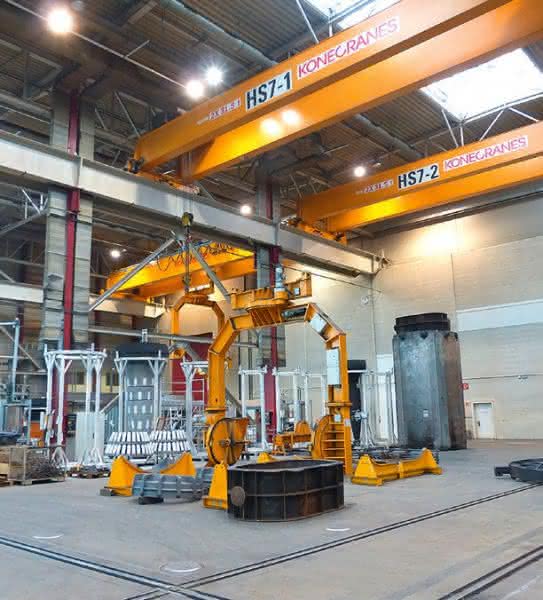
After casting, GZO employees in the demoulding area remove the cooled component blanks from their sand molds - this creates a lot of dust. The new Smarton process crane with a load capacity of 63 tons is therefore specially protected. "All of the Smarton's electrical systems are housed in a control cabinet outside this area of the hall," explains Ralf Baresel. "With its additional dust covers on the motors, the crane is well suited to these harsh conditions. We dismantled the old 40-tonne crane in the demoulding area and increased the load capacity of the transport crane in the adjacent blasting cabin to 38 tons."
Reinforced rope drives for harsh conditions
At the end of the production process are the finishing and casting post-treatment stages. In the finishing area, a CXT double-girder bridge crane with two wire rope hoists and a lifting capacity of 40 tons now lifts the wind turbine components, which previously transported casting moulds in the moulding shop. In addition, a 30-ton CXT double-girder overhead crane replaces its 20-ton predecessor.
Christop Lerf, Head of Operating Technology at Gusszentrum Ostfriesland GmbH, on the major joint project: "The modernization of the crane systems went smoothly despite the very tight time frame. And the new cranes with their equipment increase safety during the production process. It is particularly important in melting operations that the foundry crane is always ready for operation. Its redundant drive concept is therefore very reassuring for us."


You might also be interested in
Crane retrofit in Emmerich
In the inland port of Emmerich, Tsubaki Kabelschlepp has overhauled the cable routing of a container gantry crane belonging to Contargo Rhein-Waal-Lippe. A pre-assembled Totaltrax solution was used, which the experts for energy chain systems...
 read more...
For drumming and towing - cables that pull along
With the Reeltec and Festoontec product series, TKD Kabel offers a portfolio of robust cable solutions for cranes and hoists. The specialist for application-oriented cable solutions thus also supports the increasing digitalization and automation of...
read more...Crane retrofit in Emmerich
In the inland port of Emmerich, Tsubaki Kabelschlepp has overhauled the cable routing of a container gantry crane belonging to Contargo Rhein-Waal-Lippe. A pre-assembled Totaltrax solution was used, which the experts for energy chain systems...
read more..."Customer awareness of environmental issues is increasing"
What trends and developments are there in the industry when it comes to green logistics? Experts provide insights: Christian Heid is Managing Director, SWF Krantechnik.
read more...New standards in lifting technology and material handling
Crane technology manufacturer SWF is now embracing digitalization and networking with a vengeance. Intelligent control aids make work safer and easier.
read more...Next generation electric wire rope hoist
SWF Krantechnik, supplier of components for industrial cranes and hoists, presented its new product innovationsto a broad specialist audience for the first timeat LogiMAT.
read more...Premieres for wire rope hoist and chain hoist
Rope hoist, chain hoist, Demag KBK light crane system: Demag will be presenting new products in each of the three product areas at Logimat.
read more...Crane technology: Konecranes presents solutions for material handling
Konecranes will present its latest Industrial Service and Equipment products at Logimat. Konecranes has pioneered safer, more productive and more sustainable material handling equipment.
read more...Starting signal for the intralogistics trade fair
The annual event opened its doors to trade visitors at 9 a.m. today. By midday, it was clear that there was a high level of interest from visitors, which corresponds to the fully booked halls.
read more...