
From materialfluss 5/2020
Omnichannel: The future of grocery retail?
Michael Schedlbauer, Industry Manager at TGW Logistics Group, gives an insight into the future of food retail and how the advantages of online shopping and stationary retail can be combined.
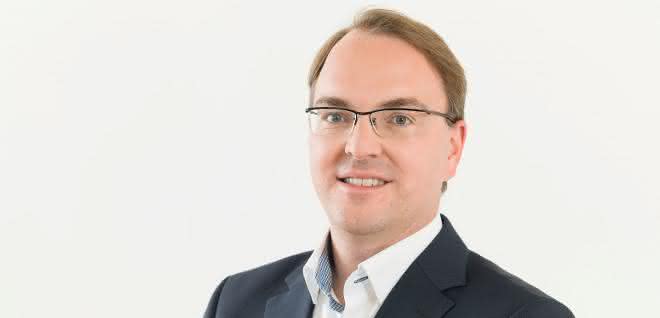
materialfluss: Mr Schedlbauer, before corona, it seemed as if many consumers in Germany and Austria were still writing a shopping list, working through the list at their favorite supermarket and then waiting in a long queue at the checkout. Why have so few people shopped online from the comfort of their sofa so far and will this change now?
Michael Schedlbauer: There are a number of reasons for the low level of acceptance. One of the most important is the high density of stores in Germany and Austria, which means that the stores are relatively easy to reach. In addition, consumers in Germany in particular tend to be price-sensitive and don't necessarily want to spend extra money on a delivery service. Even those who are willing to pay extra for home delivery are somewhat skeptical about the quality of fresh food delivered online. Customers prefer to inspect the quality of fruit and vegetables in-store. However, it is also a fact that online food retail in Germany is still at a relatively low level, but is growing strongly: total sales in online food retail rose by 20.3% to 1.36 billion euros in 2018. Growth will receive an enormous boost from the coronavirus crisis, as many customers are just discovering this channel for themselves, as can be seen from the delivery slots that are fully booked for weeks, and will also take advantage of the benefits later.
mfl: What does online retailing look like for the established supermarket chains?
Schedlbauer: Rewe is the only major player in the food retail sector to offer its online range almost nationwide. Some retailers, such as the large discounters, are still in a waiting position. This is mainly due to the fact that it has not been possible to earn money with the service due to the lack of mass in online retail. This is because the goods usually have to be picked purely manually at great expense. Many providers are starting out in just one or two regions or are waiting until acceptance is higher. Despite the competition, most of them are still earning money with stationary retail. Many customers are very loyal to their favorite grocer, but will also want an online offering from them in the future.
mfl: In March 2019, online retail giant Amazon announced that it would be looking into the nationwide delivery of fresh goods in Germany. Should we be afraid of the retail giant?
Schedlbauer: The fact is that Amazon currently only offers the "Amazon Fresh" service in four German cities - for Amazon Prime users who pay 7.99 euros a month for Fresh membership with free delivery for orders over 40 euros. Fear is the wrong word. Rather, established retailers should analyze exactly what the Americans are doing. Amazon is setting new standards with its consistent customer orientation in terms of service levels and its focus on customer wishes. If consumers want groceries delivered within two hours, Amazon can already fulfill their wishes in Munich and Berlin with its "Prime Now" service. We know from the past that Jeff Bezos and the management don't mind if they don't initially earn any money with a service. According to recent reports, Amazon in the USA is also thinking along similar lines to TGW about how to turn a store into a local fulfillment center in order to ideally combine stationary retail with online shopping. Amazon has an advantage over established grocery retailers: the company does not have an existing store network, at least in Europe, and can therefore choose locations and layouts more easily. The disadvantage, however, is that the online specialist does not have as efficient a supply chain network as the established players, who have been constantly optimizing their supply chains for half a century.
mfl: According to TGW, where is the journey in food retail heading?
Schedlbauer: Studies show that 60 to 80 percent of customers' shopping baskets are identical week after week. Only the rest is bought spontaneously. However, regardless of the risk of coronavirus infection, many consumers are annoyed by the fact that they have to spend time searching for the products they always buy throughout the store. This is a waste of time and usually brings little joy. Our approach is to shift this time-consuming process to the online world. This means, for example, that customers can order their standard products online from home after work and collect them from the store the next day. And if required, they can also pick up fresh products or try out new items. The advantage for the consumer: shopping becomes more convenient and time-saving. The advantage for the retailer: they can plan the picking of orders by their employees well and utilize their logistics evenly. And they can automate part of the order picking process, which in turn saves money. At the same time, they get to know their customers better and can make them more individualized offers.
mfl: To prepare food retailers for the future, TGW has teamed up with shopfitting specialist umdasch for the "OmniStore" solution. How does OmniStore work?
Schedlbauer: TGW is cooperating with umdasch and a retail company to realize the first OmniStore. In principle, the idea behind this is that, in addition to the store, there is a separate logistics area in which parts of the product range are efficiently stored and put together with the help of automation solutions from TGW. This can then be exactly the same shopping basket ordered online, which the customer picks up or receives at their desired time. Retailers can thus make their existing stores fit for the future and continue to use them consistently. The stores are a valuable mainstay for the companies and have a loyal customer base. And this customer base is to be given a new shopping experience in future. In future, those customers who are online-savvy will be able to use the internet for regular and spontaneous orders. Our approach is that logistics must follow the customer's wishes, not the other way around. In doing so, we are adapting to very different customer needs.
mfl: What does the intralogistics process and order picking in the OmniStore look like?
Schedlbauer: An OmniStore can either be built from scratch or an existing store can be remodeled. At the heart of the logistics area, which is separate from the store, is a Stingray shuttle system from TGW with one or more aisles. Containers with goods are stored there. When a customer order is received, the totes with the desired goods are retrieved and picked at the TGW PickCenter One picking workstation. Important: The shuttle system is mostly used for so-called B and C articles, i.e. no fast-moving items or bulky products such as beverage containers. The latter are picked manually. The performance of the ergonomic PickCenter One is very high compared to picking goods in a store: one employee can achieve up to 500 picks per hour. By way of comparison, someone picking the same items from the shelves in a store can only manage 80 to a maximum of 120 picks per hour. The output is therefore four times as high. The processing of an online order is particularly fast because employees can process an order, which comprises an average of 30 to 40 items, at the same time. One of them picks at the PickCenter, while the others pick the fast-moving items or items from other temperature ranges.
mfl: How difficult is it to convert existing stores to the OmniStore concept?
Schedlbauer: We have calculated our business case for existing stores with an area of 1,200 square meters or more. Conceptually, it is therefore primarily designed for stores outside the city center. The whole thing makes sense if the ceiling height is six or more meters and the Stingray shuttles can cover at least 40 meters in an aisle. Several thousand containers can be stored in a single-aisle system with one picking workstation, whereby these can also be divided into two or more compartments, depending on the item structure. The installation of a temperature control system is also conceivable. But this of course requires higher investment. The crucial point will sometimes be the ceiling height. But it can be adjusted by partially converting the building.
mfl: How have retailers reacted to the new TGW concept?
Schedlbauer: We presented the concept to a number of food retailers. They all liked the idea. But all but one of them want to wait and see. I am very positive that this will change quickly after the coronavirus crisis.


You might also be interested in
Winner material flow PRODUCTS OF THE YEAR 2023
Conductix-Wampfler: ChargeLine 0865
Two-pole conductor rail segments for efficient opportunity charging of shuttles, suitable for thousands of cycles per day.
 read more...
Hermann Grewer celebrates his 80th birthday
Hermann Grewer, Honorary Chairman of the North Rhine-Westphalia Transport and Logistics Association (VVWL) and Honorary President of the German Road Haulage, Logistics and Disposal Association (BGL), celebrated his 80th birthday on June 6.
read more...Well chilled for sure
V-Zug Kühltechnik AG, developer and manufacturer of refrigeration appliances and part of the successful V-Zug Group, has set up a new production facility for refrigerators of all heights and dimensions at its Swiss site in Sulgen.
read more...Advantageous automation of small parts warehouses
The RSX1 shuttle system will be at the center of Rocketsolution's presence at this year's Logimat trade fair.
read more...Reduced energy requirements in the high-bay warehouse
One of Germany's leading premium car manufacturers is already focusing on energy efficiency in the production of its new SUV model with electric drive. The storage and retrieval machines in a high-bay warehouse at the production site have been...
read more...Low lift pallet truck for light duty applications
Clark has launched a new low lift pallet truck with the model designation LWio15 for light transport tasks. The truck has a load capacity of 1500 kg and is suitable for short distances in goods distribution, production or warehousing.
read more...Internationalization as an opportunity
E-commerce is in a state of flux. Changes in purchasing behavior and procurement problems are keeping e-commerce retailers busy. Logistics plays a decisive role in the overall online shopping experience.
read more...Fulfillment Center for Frisco.pl
Polish eGrocery specialist and TGW deepen partnership
TGW is building a highly automated fulfillment center for Frisco.pl in the Polish capital Warsaw. This is the second project in a row that the two companies have implemented together.
read more...Which world will it be in 2023?
Michael Schreckenberg teaches at the University of Duisburg-Essen as Professor of Physics of Transport and Traffic. Once a year, he addresses the readers of materialfluss, formerly LT-manager, with a critical and humorous expert article on transport...
read more...