
Data analytics for sorting technology from Beumer
Collect, analyze, optimize
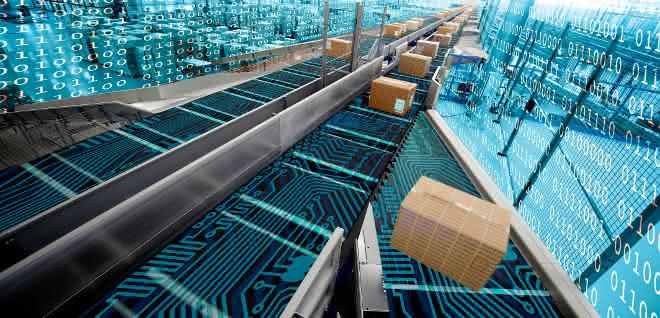
What are the benefits of big data and data analysis for intralogistics? The system provider Beumer is presenting an intelligent data analytics solution that can be used to examine large volumes of data that are generated during sorter operation, for example, and visualize the results. The information obtained in this way can be used to optimize processes and determine maintenance measures with foresight and at the perfect time.
The Beumer Group presents its new BG SorterCompact CB. This crossbelt sorter is very small and increases throughput. Among other things, the possibility of data analysis ensures this. "With data analytics, we can collect large amounts of data on our sorters, evaluate it in a targeted manner and use it to uncover potential for improvement, for example," explains Thomas Wiesmann, Director Sales Logistic Systems at the Beumer Group in Beckum. Among other things, the information obtained can be used to continuously improve the operation of the system, identify when maintenance is required at an early stage and optimize system management. This has a positive effect on life cycle costs.
With data analytics, the Beumer Group is able to increase the availability and performance of its sorters - keyword "machine learning". "The decisive factor here is continuous access to real-time data from every area of the system," explains Wiesmann. With the help of a digital twin, material flows or even the routing of the system can be monitored in detail. This is supported by the visualization of the results. The operator can use color codes, for example, to make bottlenecks visible or - with the help of time filters - include historical data in the analysis.
Maintenance only when necessary
With the support of data analysis, it is possible to identify the actual operating hours and loads. This allows maintenance cycles to be adjusted based on the actual load. For example, service personnel only replace a component when it is really necessary - and not after a set cycle.
"Data-driven analysis will continue to increase," Wiesmann is certain. After all, sensors are already part of every system today and are capable of generating and processing enormous amounts of data. In the long term, further services can be added on the basis of this information. Wiesmann is thinking of video coding for machine learning. However, cloud-based optical character recognition is also possible in order to convert scanned images with text into machine-readable text.
Where the journey is going
"Some of our customers are already using data analytics," reports Wiesmann. "They use it to reliably monitor their systems and recognize in good time when an error would occur. This enables them to maintain the system at the perfect time." And the better a company knows the operating status of the system, the better it can make use of this option. This is because the machine will learn with the help of this data - and instead of just recognizing that something is wrong, it will also recognize the causes with the support of the information gained. "This will enable the system to independently generate a perfectly suitable maintenance plan in the future," predicts Wiesmann.
While data analytics is currently based primarily on existing operating data, even more sensors and other systems will be used in the future to collect even more data. In future, the sorter will be able to continuously make processes more intelligent and automated. A clear competitive advantage for every operator.


You might also be interested in
e2open bonded warehouse solution for several European countries
e2open, a provider of networked supply chain platforms, has expanded its customs warehouse management in Europe. Companies that import goods to Europe now have the option of using various customs warehouse programs.
 read more...
New start-up aims to facilitate access to robotics
Pssbl.Robotics, a start-up founded jointly by Schubert and Weiss, aims to simplify the introduction of robotics in mechanical and plant engineering.
read more...Test shipment with RoRo Car Carrier via Bremerhaven
Last August, the RoRo Car Carrier MV Cosco Shengshi moored in the northern port of Bremerhaven and started its first test shipment in order to expand the service to Europe.
read more...Rhenus grows at sea and on the road
At the northern tip of Lower Saxony, the logistics service provider is preparing for the growing import of cars via Cuxhaven; in Nuremberg, Rhenus is building a new logistics center next to the existing high-bay warehouse; in Dietzenbach, Hesse, the...
read more...Hermann Grewer celebrates his 80th birthday
Hermann Grewer, Honorary Chairman of the North Rhine-Westphalia Transport and Logistics Association (VVWL) and Honorary President of the German Road Haulage, Logistics and Disposal Association (BGL), celebrated his 80th birthday on June 6.
read more...Group7 expands corporate headquarters
The logistics service provider is planning 60,000 square meters of service and logistics center and an administration building with 5,000 square meters of floor space near Munich Airport.
read more...Cross-channel logistics: overcoming hurdles after Brexit
Hardly any other event has presented European road freight transport with such enormous challenges as Brexit. But there are solutions.
read more...Transport Logistic 2023
After a four-year break with a virtual interlude in 2021, Transport Logistic will return to the Munich exhibition grounds from May 9 to 12, 2023.
read more...Focus on internationalization
L.I.T. will be represented twice at Transport Logistic. The Brake-based logistics service provider's service portfolio ranges from warehousing and transportation using various modes of transport to contract logistics and comprehensive value-added...
read more...