
Top news
New build - top or flop?
There are usually photos of the ground-breaking ceremony and the official opening - but the time in between is often turbulent for clients and contractors. Good project management is essential for a new build project. But which "hard" and "soft" factors should be taken into account to ensure that the new-build project is a success? Materialfluss asked experienced managers for their opinion.
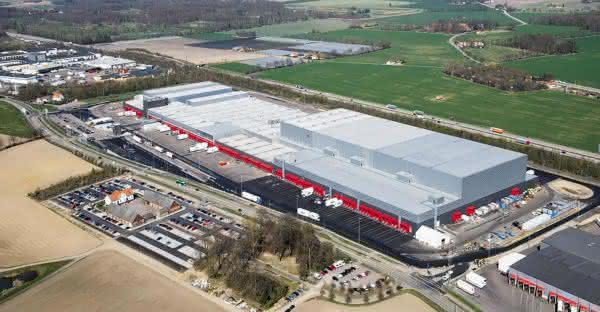
Questionable responsibilities, faulty budget planning, inadequate fire safety precautions, forgotten cable ducts - these are just a few of the factors that have made the Berlin airport project one of the most embarrassing construction projects in German history. To speak of stumbling blocks in this new construction project would be an understatement. However, you can read counter-examples of how to successfully complete a project in our special section from page 25 onwards. How can the project partners ensure that cooperation runs smoothly from the laying of the foundation stone to the go-live? What helps to ensure that logistics centers, goods distribution centers and high-bay warehouses can go live as planned? We went in search of clues - both success factors and stumbling blocks. And we interviewed construction experts and managers in logistics companies.
Success factors - how new construction projects succeed
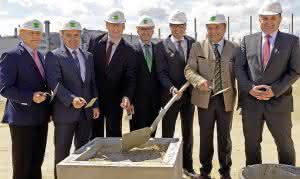
Volker Knuff, Managing Director of Aberle Logistics GmbH, answers from the perspective of the general contractor (GC). In addition to the reliability of suppliers and partners, he believes that the foundation for the successful implementation of a project lies in the proper preparation of tenders and a clear contractual basis. In his opinion, the general contractor should have an appropriate credit rating and experience with comparable projects.
Bito-Lagertechnik does not act as a general contractor for fully automated complete solutions on the market, but takes on the role of general contractor when it comes to manual systems such as static pallet racking or partial automation such as mobile pallet racking systems. Bito's Head of Key Account Management, Uwe Sponheimer, reports: "In these projects, we combine the systems with trades such as platforms, lighting equipment or even workstation systems for customers. This allows us to reduce interfaces." He also sees detailed planning as a prerequisite for professionally integrating the various trades. According to Sponheimer, if a company itself acts as a supplier of trades, it should have the ability to think outside the box and see the big picture.
Manfred Schleicher has a similar view. The managing partner of Wegener + Stapel has managed and supported dozens of international projects in the distribution and automotive sectors in his 25-year career as a planner, consultant and managing director. In his opinion, it is important that the "trade manufacturer" understands the planned overall functionality of the project and - in coordination with the overall project management - shows a willingness to communicate with the neighboring trades. He warns against a "blinkered mentality". And the general contractor? "He must act in an interdisciplinary manner and recognize possible sources of error and project risks in advance and deal with them proactively," says Schleicher.
Dos
- Hold a kick-off event with all relevant project participants
- Work breakdown structure with work packages and clearly defined responsibilities
- Regular jour fixe appointments
- Experienced and qualified project manager
- Clear reporting line
- Project review (target/actual comparison)
- Test and acceptance procedure agreed between the client and the contractor at least six months before acceptance
- Clarification of country-specific requirements (e.g. fire protection regulations)
Werner Gubesch is Engineering Manager Europe at Daifuku, the Japanese manufacturer of conveyor technology and order picking systems. The European headquarters are located in Milton Keynes, England, while the German branch is in Mönchengladbach. Gubesch is responsible for project management, installation and commissioning of all projects in Europe. He considers three factors to be essential in order to be successful as a general contractor: "Reliable products, integration expertise and solid project management. Building on this, even large projects can be realized safely and on time." He sees a further success factor in the "cross-divisional, shared project understanding of all those involved with clearly defined goals in terms of deadlines, costs, performance and quality criteria."
Despite meticulous preparations, you are never immune to surprises. Manfred Jenschke, Senior Logistics Real Estate Consultant for New Construction at Logivest GmbH, knows an example: "A new 30,000 square meter building was to be constructed on a site in Salzgitter where ammunition casings used to be manufactured. It was known beforehand that the soil was to be classified as critical due to contaminated sites. During excavation work, however, bunkers with extremely thick walls and corresponding cavities came to light.
Successfully mastering pitfalls
Thanks to a rapid risk assessment, the exchange of information between all parties involved and cooperation with the local authorities, the project was prevented from being jeopardized. Ultimately, it is above all technical expertise and open communication that allow you to successfully overcome such 'stumbling blocks'."
What are the pitfalls on the way to a successful go-live? You should recognize alarm signals, says Manfred W. Schleicher and gives an example: "During a project implementation, it became clear that the customer's employees were talking negatively about the project. This is an alarm signal that must be taken very seriously. After a diplomatic discussion with the customer's overall project manager, the project, its benefits and advantages were presented to the employees. It was recognized that the negative attitude of the employees was driven by fear. By informing the employees and training the workers, a successful commissioning could be realized."
Werner Gubesch from Daifuku warns against a lack of or inadequate controlling: "Particularly with large and complex projects, there is a risk of negative 'surprises' in terms of costs and deadlines - at a late stage in the project, it becomes difficult or even impossible to actively take countermeasures." Gubesch was responsible for the expansion of a distribution center of the Swedish supermarket chain ICA, one of the largest in Northern Europe. The Daifuku manager explains that the particular challenge was that the construction work took place during ongoing operations, which could not be disrupted under any circumstances. Where does he see a typical stumbling block? For example, country-specific requirements relating to safety or fire protection that were not yet known or communicated at the time the contract was awarded. Gubesch recommends reaching an agreement with the authorities as early as possible.
Don'ts
- Tolerate non-compliance with information channels of the established project organization
- Temporarily diverting assigned project resources to other priorities
- Staffing tasks with insufficiently qualified personnel
- Changing the project manager during implementation
- Not sufficiently introducing and training the customer in the technology
- Changing requirements under time pressure
- Bringing forward deadlines
- Blaming each other for problems
Senior consultant Jenschke from Logivest can only agree with this. He warns against involving experts or authorities too late. In his view, "yellow" and "red flags" should also be taken seriously: "If a trade manufacturer is outside the construction schedule, for example, then this should be viewed critically. If the yellow flag is then raised and a deviation from the original plan is signaled, appropriate corrective measures can be initiated."
Other countries, other rules
Bito's Key Account Manager, Uwe Sponheimer, recommends paying particular attention to projects abroad: "The general conditions abroad are often different. We have to adapt to different cultures and working methods during projects - both as individuals and as a company." It is then an advantage to have a large number of subsidiaries like Bito in order to be close to the customer on site. Sponheimer recalls a major order for one of the largest retail companies in the UK. As a trade supplier, there were several challenges for Bito to overcome: "We had to coordinate closely with the customer. This was because newly developed components were to be used in large-scale production with a short lead time. In addition, there were strict local safety regulations for the assembly, which had to be carried out within a very tight schedule."
Ralf Ohme, Head of the Construction Department at Hellmann Worldwide Logistics, also confirms that security is a major challenge. Access to the site and the separation of facility management services must be taken into account when planning a logistics center. From the logistics service provider's point of view, it is "very important that the general contractor and the suppliers deal intensively with our requirements right from the planning stage and think along with the logistics processes. During the construction phase, it is then necessary to react flexibly to changes in order to complete the project successfully," says Ohme.
A schedule with clearly defined work packages, milestones and responsibilities is the basis for a successful project. Bringing forward a deadline is a bad idea, says Ralf Ohme from Hellmann. His advice: "In our opinion, the don'ts are a strict separation between the project team and operations. Intensive collaboration and constant communication are a must. Problems would arise if a move-in date was brought forward and we would also refrain from using buffer times. Realistic planning with fixed milestones ensures that a project is implemented on time."
Don't let the price decide
Aberle Managing Director Volker Knuff points out another point that is at the very beginning of the project - the selection of the general contractor: "There is a negative trend towards deciding on a general contractor based on price. The contract is not awarded to the best bidder. We sometimes find these projects back on the desk years later as a retrofit."
And if something does go wrong?

According to Uwe Sponheimer from Bito, influences on time and costs in the project should definitely be allocated according to causation. But: "A clear 'don't' would be to put the question of blame before the solution to a problem. Professional suppliers always put the success of the project first." He sees potential risks if requirements are changed under time pressure during the project. "It is important to raise awareness of this among everyone involved right from the start of the project." However, he also knows that not everything can be planned. His advice: "If unplanned changes occur, open communication and fair treatment of all parties are extremely important. It is important to point out the consequences for everyone involved and to find solutions for this eventuality. This is the only way to create transparency and trust."
Value fair play
Transparency and trust, cooperation based on partnership - if these maxims are adhered to, a lot has already been gained. Bito's project in the UK, Daifuku's project in Sweden and the projects presented in our special section have this in common. Aberle Managing Director Knuff can also report on one such project. The project in question is Schaeffler's EDC South logistics center, which was inaugurated in Carisio, Italy, on May 19 of this year. Knuff: "In a planned short realization time, it was handed over for go-live in October 2015 with a large number of trades. The basis for this was a textbook good partnership between Schaeffler and Aberle."
Susanne Frank
Contact:Aberle GmbHwww.aberle-automation.com
Bito Lagertechnik Bittmann GmbH
Daifuku Co. Ltd. www.daifukueurope.com
Hellmann Worldwide Logistics GmbH & Co. KGwww.hellmann.net
Logivest GmbHwww.logivest.de
Wegener + Stapel Fördertechnik GmbHwww.wegenerplusstapel.com


You might also be interested in
Circular load carriers for more sustainable supply chains
With the planned Industrial Accelerator Act, the European Union wants to accelerate the transformation of industry towards low-carbon production processes and resource-efficient supply chains. Logistics and transportation are also increasingly...
 read more...
Integration of a robotics solution
Lyreco modernizes logistics center in France
Lyreco is pressing ahead with the automation of its central site in Villaines-la-Juhel with an investment volume of over 25 million euros.
read more...Dragsbæk halves pallet area
By using automated pallet solutions from Palomat, Dragsbæk has halved the space required for pallets, optimized processes and sustainably improved working conditions.
read more...Pixels instead of paper
With the solutions from Logistikbude, Bekuplast, manufacturer of plastic containers, keeps an eye on its load carriers, saves costs and can work more efficiently with forwarding partners.
read more...Flexibility in saving space
Purus Plastics has developed a new retail range. The company operates a processing plant for plastics; recycling creates new products from secondary raw materials, including pallets.
read more...Solutions for the food industry
At Werit, the focus is on customer-specific solutions, sustainable recycling and pooling systems and products made from recyclate. The stand concept is divided into four areas: Products and innovations in the food sector, customer solutions,...
read more...Pallets with QR code
At the Epal Germany stand, visitors can gain an insight into the reusable system propagated by Epal, the life cycle of an Epal pallet and the newly developed QR pallet.
read more...The path of the Euro pallet into the IoT
With the introduction of the EPAL Euro Pallet QR in 2024, the European Pallet Association (EPAL) aims to set a new standard for the classic Euro pallet, which has been used successfully for over 60 years, and pave the way for ecologically...
read more...Retail range: flexibility to save space
Purus Plastics has developed a new retail range that is designed to attract the interest of retailers in particular. The company operates a modern plastics processing plant in Arzberg, Bavaria; new products are created from secondary raw materials...
read more...