
Guest commentary
Impetus for new solutions
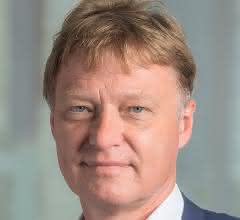
Dr. Malte-Maria Münchow, spokesman for the Logistics Property Initiative (Logix) and Head of Purchasing and Sales Retail, Hotel, Logistics at Deka Immobilien GmbH, on limitations and solutions for the establishment of logistics properties.
Logistics real estate is of central importance for the functioning of an economy. The realization that this is particularly true in times of high economic growth, digitalization and automation, as well as e-commerce and multi-channel trade, has now become established in broad sections of society as well as in municipalities and business development agencies. However, there are still too few concrete answers or concepts for the challenges that arise when locating logistics real estate. The prerequisite for this is that all parties involved - associations, local authorities and business promoters, planners, developers, logistics service providers, CEP service providers and shippers - talk to each other. The Logix Initiative was founded in 2013 to promote this dialog and provide facts for discussion.
Dialogue based on facts
Over the past two years, the studies sponsored by Logix have contributed to a fact-based discussion and highlighted possible solutions. In autumn 2017, the authors of the 2nd Logix study "The future of logistics properties and locations from the user's perspective", Prof. Dr. Christian Kille and Dr. Alexander Nehm, identified a minimum requirement of an additional 30 million square meters of logistics space by 2025. In the medium term, they expect a need for 100 logistics properties close to city centres in the 15 major German cities with more than 500,000 inhabitants. An additional 150 to 200 new parcel centers or depots are expected to be needed to supply the 80 major cities with more than 100,000 inhabitants. However, there is currently not enough land available to meet this demand. The reason for this is that logistics competes with more prestigious building types such as residential or office and is generally given lower priority for approval. As a result, the logistics sector can no longer meet the growing demand for "same-hour delivery", for example, and multi-storey logistics properties increasingly have to be built in Germany's conurbations.
Nevertheless, the authors of the Logix study also state that one of the future trends is that logistics real estate is gradually changing from a "dirty child to a worker bee to an enabler". The reason: "Dealing with the topic of e-commerce on a daily basis is changing the perception of the logistics industry and therefore its acceptance in politics and society." There is therefore hope that local authorities and cities will be more willing to make more space available for logistics use in the future. However, land is not the only bottleneck for the establishment of logistics in conurbations. The trend is exacerbated by the shortage of skilled workers. It is therefore only logical that the 3rd Logix study entitled "Location Compass - Space and Employment Potential" highlights the interdependencies between these two limitations.
Study shows options for action
The study, conducted by Uwe Veres-Homm and Dr. Alexander Nehm, also identifies solutions and practical options for action for local authorities and business development agencies in the top logistics regions. It will be presented to the public at Expo Real in October. It is to be hoped that this study will also be taken up as an impulse. Time is of the essence, because without functioning logistics and logistics real estate, the economy is at risk of suffering serious damage.
In the Einwurf section, politicians, managers and industry experts regularly comment on current topics in logistics and transportation.


You might also be interested in
Winner material flow PRODUCTS OF THE YEAR 2023
Conductix-Wampfler: ChargeLine 0865
Two-pole conductor rail segments for efficient opportunity charging of shuttles, suitable for thousands of cycles per day.
 read more...
Hermann Grewer celebrates his 80th birthday
Hermann Grewer, Honorary Chairman of the North Rhine-Westphalia Transport and Logistics Association (VVWL) and Honorary President of the German Road Haulage, Logistics and Disposal Association (BGL), celebrated his 80th birthday on June 6.
read more...Well chilled for sure
V-Zug Kühltechnik AG, developer and manufacturer of refrigeration appliances and part of the successful V-Zug Group, has set up a new production facility for refrigerators of all heights and dimensions at its Swiss site in Sulgen.
read more...Advantageous automation of small parts warehouses
The RSX1 shuttle system will be at the center of Rocketsolution's presence at this year's Logimat trade fair.
read more...Reduced energy requirements in the high-bay warehouse
One of Germany's leading premium car manufacturers is already focusing on energy efficiency in the production of its new SUV model with electric drive. The storage and retrieval machines in a high-bay warehouse at the production site have been...
read more...Low lift pallet truck for light duty applications
Clark has launched a new low lift pallet truck with the model designation LWio15 for light transport tasks. The truck has a load capacity of 1500 kg and is suitable for short distances in goods distribution, production or warehousing.
read more...Internationalization as an opportunity
E-commerce is in a state of flux. Changes in purchasing behavior and procurement problems are keeping e-commerce retailers busy. Logistics plays a decisive role in the overall online shopping experience.
read more...Fulfillment Center for Frisco.pl
Polish eGrocery specialist and TGW deepen partnership
TGW is building a highly automated fulfillment center for Frisco.pl in the Polish capital Warsaw. This is the second project in a row that the two companies have implemented together.
read more...Which world will it be in 2023?
Michael Schreckenberg teaches at the University of Duisburg-Essen as Professor of Physics of Transport and Traffic. Once a year, he addresses the readers of materialfluss, formerly LT-manager, with a critical and humorous expert article on transport...
read more...