
Logistics properties in the city center
"Innovation at all levels"
The requirements for logistics real estate close to cities call for new approaches. Panattoni Europe is developing a concept with mixed-use, small-scale "City Docks". Mike Evers, Head of Business Development Business Parks, explains why the understanding of the role of project developers needs to change and how Panattoni Europe has succeeded in creating a viable solution for city logistics with the "City Docks".
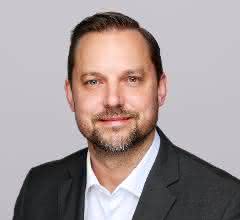
LT-manager: There are many issues that the logistics real estate sector is currently having to deal with. Panattoni Europe is currently working intensively on the future of city logistics. Why is that?
Mike Evers: The difficulties facing city logistics are enormous and acute. Time efficiency and maximum flexibility, volume growth, various requirements from local authorities and, above all, the glaring lack of suitable inner-city space are already determining the everyday lives of logistics companies, especially parcel services. This will hopefully improve in the future if local authorities realize that they need to improve the framework conditions for the supply infrastructure for citizens.
LTM : You seem seriously concerned...
Evers: I am. Delivery to end customers from well-connected but more remote logistics locations is made enormously more difficult by various factors. These include not only the high volume of traffic, but also noise and pollution regulations in cities, i.e. regulatory measures such as environmental zones and driving bans. Above all, however, there has been an increasing shortage of suitable land for years, which is compounded by an acute labor shortage. According to the 2018 Logix study, not a single logistics region in Germany currently has high potential for both space and labor. Meanwhile, we are seeing a strong and continuous increase in e-commerce, i.e. online trade, and the associated disproportionate growth in shipment volumes. This has also changed the distribution structures of urban logistics. Proximity to consumers has become indispensable due to increasing consumer demands on delivery - keyword same-day and same-hour delivery - especially with regard to inner-city supply in the B2C segment. The demand for strategically and conveniently located commercial properties in city centers and on the outskirts of cities is correspondingly high. This applies in particular to the so-called "last mile". It is precisely this combination of increasingly difficult conditions for city logistics and the simultaneous enormous growth in demand that drives us.
LTM : How does Panattoni Europe intend to solve these difficulties?
Evers: To solve the problems, innovation is needed at all levels. Everyone involved is needed here, the local authorities, the service providers, but also the project developers. We need to develop new concrete solutions. Nobody has a patent remedy at the moment.
LTM: Let's start with the project developer. What needs to be done?
Evers: Our self-image has to change. We can no longer see ourselves as those who build a certain amount of concrete on a green area. Instead, our main task must be to find intelligent solutions to increasingly complex problems. This in turn means developing truly innovative and intelligent concepts for current and future logistics real estate.
develop.
LTM : You call for innovation on several levels. What is innovative about the development of business parks marketed by Panattoni Europe under the title "City Docks"?
Evers: The "City Docks" don't have much in common with conventional logistics properties. They complement the large-scale logistics centers outside the cities as smaller, flexible units that are combined in a business park. This means that we make the units smaller and more compact overall, but above all that we bring them directly into the cities and align them not only to the needs of city logistics, but multifunctionally to various industries.
LTM : To what extent do the City Docks solve the problems you mentioned of space and labor shortages or the difficult traffic situation in cities?
Evers: The "City Docks" provide a complex solution to a complex problem. Several factors are decisive here: size, usability, location and attractiveness. In the business parks, the area to be developed is kept small so that several thousand square meters do not have to be built on. Tenants have access to units starting at around 700 square meters. At the same time, these units can be used flexibly. The business parks are open to a wide range of target groups, as the space can be tailored to individual requirements in terms of fittings and layout. From small to medium-sized businesses to chain stores offering a showroom or repair center, but also start-ups will find the right conditions here to build up their business. Tenants can quickly and easily rent additional or larger spaces if required, so that the often rapid growth can be accommodated. Individual conversions are also possible. Despite all the flexibility, we do not lose sight of the logistics. The City Docks are ideally suited for deliveries to businesses or consumers and are therefore at least as interesting for logistics companies as for any other tenant.
LTM : What about the location and attractiveness factors?
Evers: We are pursuing a dual strategy with the location close to the city. On the one hand, we are circumventing the adverse traffic conditions in cities by developing properties in the city center or at least close to the city. At the same time, we are solving the problem of labor shortages by building where skilled workers actually live. Then there are the convenient transport links. This brings us to the issue of attractiveness. Companies must create attractive conditions for their employees across all sectors. This is not only a reason why many companies choose locations close to the city center, but also for the realization of attractive commercial properties where people enjoy spending time. This is precisely the aspiration we are pursuing in the development of the business parks. Another factor here is the wide range of services we provide when renting the "City Docks". We offer an all-round carefree package for our tenants, including facility management and a 24/7 hotline.
LTM : How far along is Panattoni Europe in realizing the concept? Are the City Docks still just dreams of the future, or have the first concrete steps towards realization already been taken?
Evers: These are far more than just the first steps. Our team, which now consists of six people and specializes in the development of City Docks, is working at full speed. The business parks are mainly being developed on a speculative basis. We have already secured plots in major conurbations such as Berlin and Stuttgart. In Berlin Spandau, for example, around 15,000 square meters of usable space is being created just a few kilometers from the city center in small, flexible units that are open to various users. We will start demolition work there at the beginning of next year and aim to hand over the property to the tenants at the end of 2020. But admittedly: The challenge is and remains the search for suitable inner-city properties. Further properties will be added in the near future. In total, Panattoni Europe will invest a good one billion euros in commercial real estate close to city centers over the next three years. We are currently investing around 100 million euros in Germany.
LTM: Thank you very much for the interview.


You might also be interested in
Compact motorized castor for pallets and heavy loads
Rulmeca has launched a new motorized roller onto the market. The EPS-AS1 roller motorizes roller conveyors for heavy loads of up to 1,500 kilograms.
 read more...
Torwegge presents new Eco transport trolley
Torwegge has added a new eco transport trolley to its product portfolio. The trolley was developed to facilitate the transportation of heavy loads of up to 250 kilograms in various sectors such as the food industry, retail, catering, healthcare and...
read more...New transport trolley at Logimat
Fetra is also coming to Logimat. The manufacturer of transport equipment for efficient intralogistics processes will be presenting new products and program highlights. Wuppi" will also be there: The aluminum compact trolley is a powerful helper on...
read more...AR Racking equips new Lekkerland logistics centers
The German company, which specializes in consumer goods to go, recently opened two new warehouses in Germany, one in Kerpen and one in Wedemark, which have a storage capacity for 57,459 pallets.
read more...Paper manufacturer with innovative production logistics
Paper manufacturer Franz Veit has made its intralogistics operations much more efficient with the help of Linde Material Handling and Ernst Müller Fördertechnik.
read more...AR Racking equips new Lekkerland logistics centers
Lekkerland is reorganizing its logistics in Germany by 2030 to make it fit for the opportunities and challenges in out-of-home consumption today and tomorrow. As part of this, the storage solutions specialist has supported AR Racking in the opening...
read more...Automated intralogistics system
AMI Förder- und Lagertechnik exhibited an automated intralogistics system at Logimat that covers the entire packaging process right through to shipping.
read more...High-performance electric floor track
Transport system for small load carriers and pallets
Where efficiency and high availability are important, electrically driven floor conveyors are often an alternative to continuous conveyors.
read more...Satellite warehouse turns 40
Westfalia Logistics Solutions celebrated the 40th anniversary of the Satellit load handling device at Logimat. The system is designed for storage on pallets, other loading aids or without pallets.
read more...