

Humanitarian logistics
ConnectChains: Improving logistics for disaster relief
The Logistics Hall of Fame brought together top-class international experts for the first time at the ConnectChains conference at the Federal Ministry of Transport in Berlin for networking and knowledge transfer. The players in humanitarian logistics exchanged views on the greatest challenges and possible solutions.
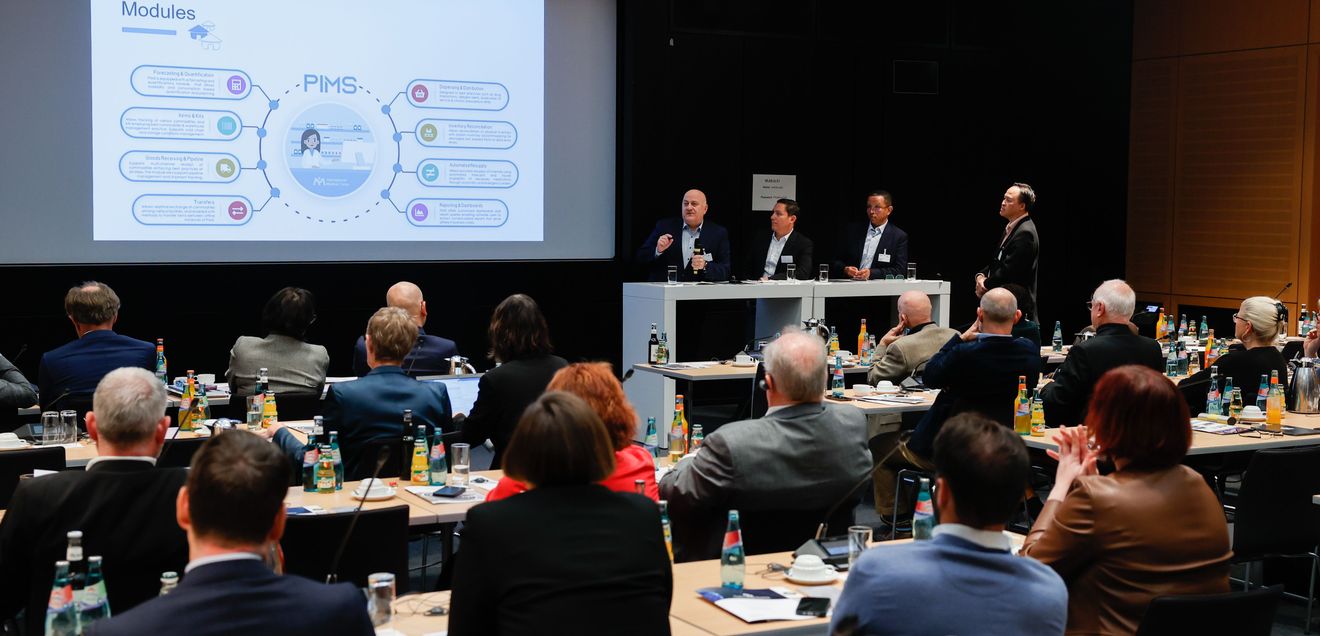
Only with agile supply chains, local partnerships and long-term collaborations can disaster relief actors overcome future challenges. This was the tenor of the premiere of ConnectChains - The Humanitarian Supply Chain Conference on November 29 at the Federal Ministry of Transport.
For the first time, the Logistics Hall of Fame organization brought together more than 60 top-class international experts from the field of humanitarian logistics, including several humanitarian organizations, logistics companies, scientists, donors and politicians. The aim of the summit was for the stakeholders to network better, identify the biggest challenges and exchange best practice examples. The event was hosted by the Federal Ministry for Digital and Transport Affairs.
Challenges for humanitarian logistics
During the discussions, the experts emphasized that work in disaster areas is made more difficult by factors such as climate change, political crises and water and energy shortages. They called on politicians - especially in countries affected by crises - to ensure a uniform legal framework. Rapid assistance is particularly difficult in transnational operations because regulations differ from country to country and change quickly. They also believe that forward-looking investments in infrastructure and crisis plans are necessary.

Oliver Luksic, Federal Government Coordinator for Freight Transport and Logistics, emphasized that the Federal Ministry for Digital and Transport Affairs had already responded to recent crises such as the floods in the Ahr valley or the war in Ukraine and had become even more professional in the area of disaster management. "The crises have shown how important it is to manage aid supplies quickly and efficiently," said Luksic.
During the summit, the representatives of the various stakeholders worked out what homework they need to do quickly and which best practice examples are exemplary in the field of humanitarian logistics.
Award for pharmaceutical logistics software
Representatives from International Medical Corps, winner of the Lynn C. Fritz Medal for Excellence in Humanitarian Logistics 2023, reported on the use of their self-developed Pharmaceutical Information Management System (PIMS) software. The US organization thus achieved a milestone in managing the last mile in the pharmaceutical supply chain. The use of the tool not only brings deep transparency to the supply chain in 16 countries, but also saves a great deal of time for medical staff, pharmacies and patients.
According to Thilo Jörgl, conference director of ConnectChains, humanitarian organizations and their partners are faced with the "Herculean task of having to work on many problems at the same time despite increasingly difficult conditions." The conference impressively demonstrated the urgent need for action.


You might also be interested in
LTW Intralogistics at the Logimat 2026
Efficiency and quality in the material flow
LTW Intralogistics is presenting its holistic approach to future-oriented material flow solutions at Logimat. Under the motto "Flow. In every detail", the company will be demonstrating how integrated systems, intelligent software, design and service...
 read more...
Neura Mobile Robots at the Logimat 2026
Cognitive robotics meets transportation expertise
Neura Mobile Robots will be presenting the X MOVE driverless transport platform in combination with the MAiRA cognitive robot from Neura Robotics for the first time at Logimat 2026 in Stuttgart.
read more...Kion significantly increases order intake
Kion holds its own in a difficult environment in 2025, increases order intake significantly and looks ahead to profitable growth in 2026 with a new segment name and efficiency gains.
read more...Who will make it into the Logistics Hall of Fame 2026?
The Logistics Hall of Fame is entering a special election year: in 2026, several new members will be inducted by decision of the Council. Nominations are now open and the gala will return to Vienna in December.
read more...Cooperation agreed for the logistics circular economy
Booxit aims to make logistics processes more efficient and sustainable with intelligently networked reusable boxes. The start-up is receiving support from plastics specialists Haidlmair and Polytec.
read more...CTP builds another business park in the Dresden area
CTP Eigentümer, a developer and portfolio holder of logistics and industrial real estate, has acquired a plot of land in the Cossebaude district of Dresden to begin the development of a modern business park.
read more...Focus on sustainability and AI at the trade fair
With more than 120,000 square meters of exhibition space, LogiMAT 2025 will once again occupy all ten halls of the Stuttgart exhibition grounds. From March 11 to 13, global players, medium-sized companies and start-ups will provide an overview of...
read more...Tim Schönherr new Global Head of Sales Transport and Customs at Transco
With Tim Schönherr as the new Global Head of Sales, the Transco Group aims to strengthen its strategic focus on customer-oriented logistics and international expansion in the areas of transportation and customs.
read more...Women's power in logistics
Romina Wolff is Managing Director of Haberland Möbelspedition. In this interview, Romina Wolff talks about the challenges she faced on her way to the top and how she overcame them.
read more...