

Digital port call planned
Shipping company ONE continues to use PortXchange
Following a successful test with the port call optimization tool PortXchange, container shipping company Ocean Network Express (ONE) will continue to use the digital platform in future to make its port calls in the port of Rotterdam as efficient as possible.
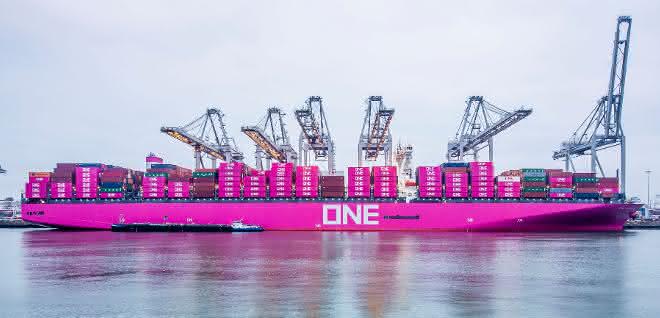
PortXchange, a development of the Port of Rotterdam Authority, enables shipping companies to monitor, analyze and optimize the arrival and departure of their container ships in the seaports. ONE tested the tool for two months in 2019.
''The Port of Rotterdam Authority introduced PortXchange to our office in London,'' says Keith Bamber, Port Operations Manager at ONE in London, where ship planning for Europe takes place. "We were impressed by the broad applicability and the large amount of information this tool offers. For us, this would lead to more transparency than in the past. That's why we decided to test it. The better we can manage our ships in the port of Rotterdam, the more accurately we can plan and the more reliable our schedules will be."
Just in time
The ONE shipping company receives approximately 350 calls per year for Rotterdam. This means that approximately one ONE ship docks in the port of Rotterdam every day. It is therefore important for the shipping company that the ships arrive just-in-time in the port of Rotterdam. It costs a lot of money if a ship wants to dock and the terminal does not yet have space for the ship, for example. Bamber: "It's difficult to manage this efficiently, but thanks to our good contacts with ECT in Rotterdam, this went very smoothly during the week. During the weekend, we often didn't have enough information to be able to respond appropriately to changes in the schedule. Now we are automatically notified of changes via PortXchange. In this way, our operators can also contact the terminal directly on Saturdays and Sundays to check whether the information is correct and to adjust the arrival time. If a ship is already on its way to Rotterdam, we ask the captain to adjust the speed. This saves fuel costs and protects the environment." During the trial, the Port of Rotterdam Authority made several changes to the PortXchange user interface at ONE's request. "We wanted a timeline with the sailing speed in real time, but also information on the required sailing speed for timely mooring at the terminal."
ONE will continue to use PortXchange after the pilot project in the port of Rotterdam and would also like to use the tool in other main European ports, including London Gateway and the southern Spanish port of Algeciras. According to Bamber, this would further increase efficiency. Around twelve people are currently working with the system in the ONE offices in London and Rotterdam. ''A nice, user-friendly solution,'' summarizes Bamber. "What we would still like to see in PortXchange is information about the tides. When loaded, our ships from Asia have a draught of up to 16 meters. Even in very deep ports like Rotterdam, you are still dependent on the water levels. It would be very useful if PortXchange could provide information on this."


You might also be interested in
Maersk and Hapag-Lloyd agree on joint operational cooperation
Hapag-Lloyd and Maersk have signed an agreement for a new, long-term operational cooperation called "Gemini Cooperation", which will start in February 2025. The aim is to create a flexible and interconnected service network in maritime...
 read more...
Successful 2023 - subdued prospects for 2024 in Bremen
As part of the 11th Project Logistics Forum, BHV-Bremische Hafen- und Logistikvertretung presented the initial results of its survey for the current "BHV Project Logistics Monitor".
read more...New rail transshipment facility in Bremen
Rhenus Weserport Bremen is building a fully automated new rail transshipment facility for loading aluminum hydroxide and aluminum oxide at Terminal 4 of Bremen's industrial port.
read more...Rising demand for nearshoring
The trend towards nearshoring is continuing even after the coronavirus pandemic, according to Munich-based international freight forwarder Robert Kukla. The intermodal service provider is seeing continued growth in transport from Turkey and the...
read more...Doubled storage space in Allermöhe
Nagel-Group is launching an extensive expansion and modernization project at its Hamburg site. Germany's largest food logistics company will completely restructure the site in the Allermöhe industrial estate.
read more...Port of Hamburg handles 58.2 million tons
Both the tense economic situation in Europe, and in Germany in particular, and the geopolitical conditions continue to have an impact on handling in the Port of Hamburg.
read more...Port of Hamburg suffers from loss of Russian business
The difficult economic development of the global economy is affecting the handling figures of the Port of Hamburg. As in other ports in Northern Europe, seaborne cargo throughput in Hamburg is declining, although individual trade lanes are...
read more...Green logistics facility for Mercedes-Benz
The largest photovoltaic system on an industrial building in Germany to date is the hallmark of the new "C3 Bremen" logistics center in the Freight Village of the Free Hanseatic City.
read more...Challenging year - positive outlook
Hamburger Hafen und Logistik AG (HHLA) performed successfully in the 2022 financial year despite challenging conditions.
read more...