

Pallet pooling
Sustainable savings through open pooling systems
PAKi Logistics recently conducted a life cycle analysis to compare the environmental impact of different pallet systems. The results of the study, conducted by RDC Environment, show that PAKi's open pooling system enables savings in CO₂ emissions, fossil resources and wood consumption. A CO₂ calculator has now been added to the PAKi website, which shows possible CO₂ savings by using PAKi's pallet pooling system.
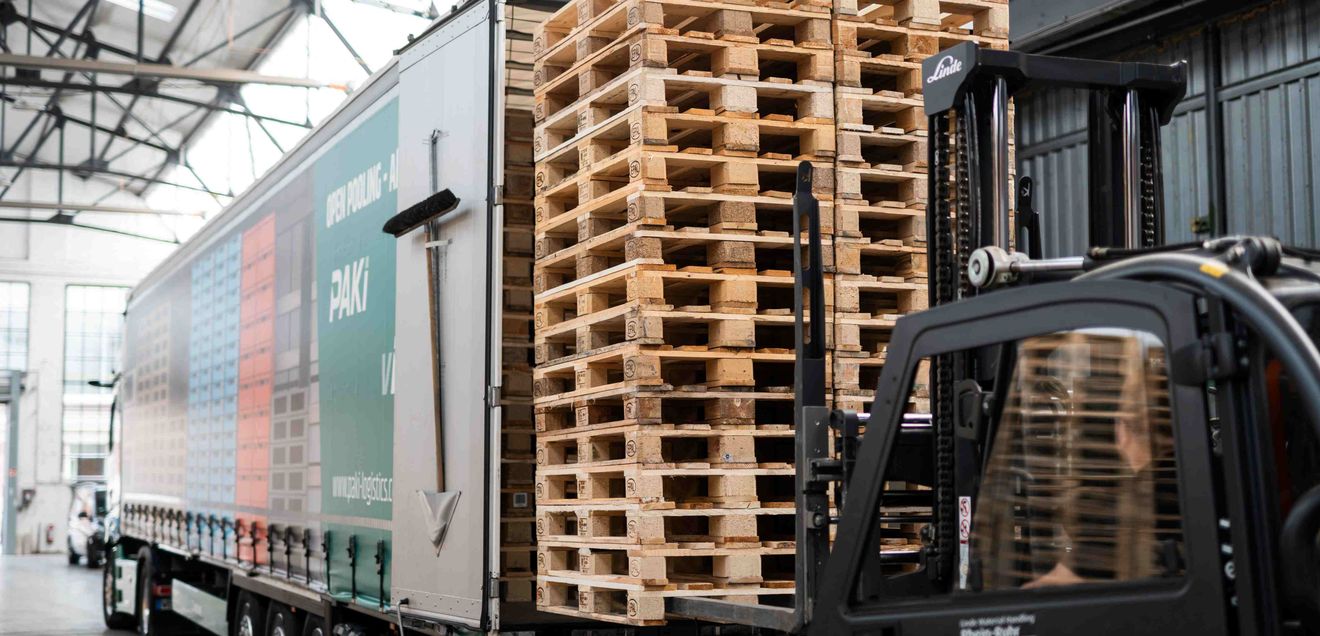
According to the study, the use of PAKi's open pooling system leads to a reduction in CO₂ emissions of 8 to 24 percent per use compared to other pooling systems and 78 percent compared to disposable pallets. The main factors behind these savings are the improved logistics processes made possible by the open pooling model, as well as the sustainable use and reuse of the pallets.
The study, which complies with international ISO 14044:2006 standards, was reviewed by an independent panel of experts and confirms the environmental benefits of PAKi's open pooling model. The analysis covers the entire life cycle of a product range - from raw material extraction, production and use through to end-of-life processing.
CO₂ Calculator identifies opportunities to reduce emissions
With the CO₂ Calculator created by PAKi, the logistics company offers customers an assessment of the potential reduction of their carbon footprint on its website. By recording CO₂ emissions from production to reuse, the tool enables companies to ecologically evaluate and optimize their logistics processes and thus take targeted measures to reduce emissions.


You might also be interested in
Smart and environmentally friendly load carriers
Epal Germany is focusing on solutions for efficient and environmentally friendly logistics at transport logistic 2025.
 read more...
Focus on sustainability and digitalization
PAKi Logistics, provider of load carrier management in the open pool, will be represented at this year's transport logistic - together with its sister companies IPP, vPOOL under the umbrella of the Faber Group and the partner company Connected Load...
read more...Chep: Helen Lane is CEO for Europe
Chep, a supply chain solutions company with an international pooling network for load carriers, has appointed Helen Lane as the new CEO for its European business, effective November 11. She succeeds David Cuenca, who recently assumed the role of CEO...
read more...Changes in corporate management at vPool Logistics
vPool Logistics, a Faber Group subsidiary specializing in load carrier pooling in the food industry, has undergone a change in management: On October 1, 2024, Andreas Lenz took over the position of CEO, while Torsten Junker completes the new top...
read more...New EU packaging regulation: pooling as an opportunity
The Packaging & Packaging Waste Regulation (PPWR), which is due to be ratified by the European Parliament this year, is one of the most significant changes in European packaging regulation. It represents a major challenge for companies'...
read more...Anne Kramer-Münch new CEO at PAKi Logistics
Anne Kramer-Münch has been CEO of PAKi Logistics, a well-known open pooling service provider for the management of standardized exchange pallets and boxes, since 1 April.
read more...Management change at Paki Logistics
Marc Groenewoud, who has developed Paki Logistics into the European market leader for load carrier management in the open pool over the past two and a half years, has left the company as of February 15 and will join a German trading company as a...
read more...EPAL digitizes the open pallet pool
At the beginning of the year, the European Pallet Association introduced the EPAL Euro pallet QR as a new product in the open EPAL pallet pool.
read more...AI-based service for the immediate purchase of Euro pallets
Pacurion, a digital trading platform for load carriers, has developed an AI-based service that enables customers to buy Euro pallets quickly and easily - in quality classes new to C.
read more...