

Warehouse-/Picking technology
Material Flow Exclusive: 10 industry experts on new construction and intralogistics
Ten exclusive short interviews with industry experts, overview and user contributions on the subject of new construction and intralogistics in newly built and existing logistics centers.
Apex Supply Chain Technologies
Automation is central to the "smart factory"
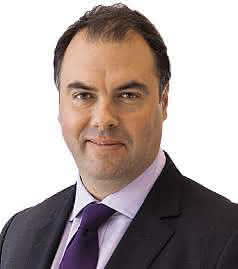
Material flow: What factors make a new building a "green" new building? Which measures would you definitely implement?
Julian Adams:A building is not only a green building because it has an environmental certificate, but a building is also "green" because of the way it is used. Apex Supply Chain Technologies' core business is automated dispensing systems and technologies. They make the material flow of companies worldwide simpler and more efficient, as they enable precise control of operating resources. The following measures protect the environment:
- Automated online reordering of consumables: There are fewer consumables such as paper or printer toner.
- Avoiding stock shortages: There is no need to record the stock of operating supplies yourself. This eliminates the need to travel. This results in lower fuel consumption and fewer pollutant emissions.
- Less consumption of operating resources: This reduces unnecessary production and waste.
- Tracking and control of stocks: Operating resources are used at the optimum time.
- Less idling of machines: The rapid availability of operating resources ensures the optimal use of machines.
- Avoid unnecessary transportation. Automated dispensing systems lead to leaner supply chain processes. This makes companies "greener".
Material flow: What are the requirements for the workplace in the new building of the future? Or will people no longer exist there at all?
Julian Adams:People in the workplace will always be indispensable when it comes to assessing and flexibly adapting things. This cannot be automated. However, automation is central to the smart factory. Machines will take over many supporting activities so that people can concentrate on activities that actually add value. With its automated dispensing systems, Apex is developing future-proof solutions that enable seamless inventory management. Our products help companies to compete successfully in the market by improving productivity and minimizing material waste.
DematicSaving starts at the planning stage
Material flow: What factors make a new building a "green" new building? Which measures would you definitely implement?Barbara Wladarz: Go Green, TCO, Blue Efficiency is very important to us. However, the degree of implementation in intralogistics in general is not yet very high. No wonder, as this is an industry that is traditionally very energy-intensive. As a general contractor, we take care of energy and environmental issues right from the start. Together with our partners, we attach great importance during planning to ensuring that not only the EneV is complied with. Our aim is to construct a facility in accordance with the European Commission's Green Building Standard. And that means energy savings of 25 percent compared to EnEV. But we also attach great importance to the inner workings of the system. Here, too, saving starts at the planning stage. Because simple is simple is simple, our system layouts are very clear at first glance. The sensible combination of Dematic Multishuttles, conveyor technology and the Dematic RapidPall saves one thing above all: space. This fact is directly reflected in the global footprint. Our sorting systems are not only technically well thought-out, but also excel with good performance figures when it comes to the environment and your wallet. For example, the Dematic FlexSort SL2 linear sorter is equipped with linear induction motors. These reduce wear and increase service life. In addition, special attention was paid to the product design to ensure that wear parts are kept to a minimum. Drive chains, shafts and bearings were deliberately omitted. Exemplary in terms of the environment.Material flow: What are the requirements for the workplace in the new building of the future? Or will people no longer exist there at all?Barbara Wladarz: People will not be displaced by Industry 4.0. From Dematic's point of view, work is shifting in a positive sense. However, it is important to push ahead with legislation, especially in the area of data protection. The networking of all things and people on the World Wide Web will make this the weak point of the future. The area of work ethics is also a priority topic, which is currently being discussed in detail at all levels of politics and business.
Jungheinrich
Increasing demand for goods-to-person systems
Material flow: What factors make a new building a "green" new building? Which measures would you definitely implement?

As a general contractor for intralogistics projects, we realize that the efficiency and sustainability of logistics systems are important factors in companies' investment decisions. Regardless of whether manual or automated solutions are involved. A system should be optimally designed to meet the customer's current and future needs. This applies to the processes and the technology used. This can be achieved through the use of flexible systems and a modular design of the machines and systems, particularly with regard to forecasts that are subject to uncertainty. In order to save energy and therefore costs, the vehicles, storage and retrieval machines, conveyor systems and handling systems used should be equipped with modern, energy-efficient drive technology that can be controlled as required. This includes automatic shutdown when no goods need to be transported, the avoidance of power peaks through even utilization, the recovery of braking energy and the route-optimized approach to the next storage or retrieval position.
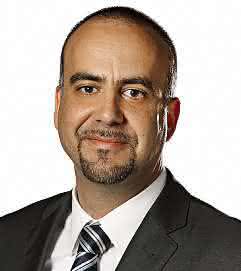
Material flow: What requirements must the workplace in the new building of the future meet?Dr. Stefan Seemüller: When it comes to workplace design, ergonomics is a top priority alongside functionality. This means that the workstation must be designed optimally and age-appropriately in terms of body height and reach lengths. It is also important to reduce walking distances and provide handling systems to relieve employees. The demand for goods-to-person systems and robotization is therefore continuing to rise. In addition, employees are increasingly being supported by visual systems - be it via put/pick-to-light systems or optimized displays on screens. In the long term, there will be more and more automation in logistics centers in order to keep the costs of goods handling low and because there is a shortage of skilled workers. In the future, standardizable tasks will therefore be largely automated, while humans will perform corrective and planning tasks.
KlinkhammerHuman ability unsurpassed
Material flow: What factors make a new building a "green" new building? What measures would you definitely implement?Hagen Schumann: As a system integrator and general contractor, new logistics buildings form a significant part of the Klinkhammer Group's activities. A "green" new building is well described by the lowest possible carbon footprint, i.e. the CO2 equivalent of energy required over the life cycle of the logistics system. Photovoltaic systems or combined heat and power generation are increasingly being discussed as renewable energies. However, the energy yield at the specific location must be economically viable in relation to the necessary investment. Energy-saving consumers and lightweight constructions for conveyors are the measures of choice. In the case of storage and retrieval machines, DC link coupling allows energy from braking and lowering movements on axes to be used for other electrical consumers instead of being converted unused into heat. The latest drive technology enables flexible configurations, which are used as standard at Klinkhammer, for example in the KlinCAT, the new multilevel shuttle from the Klinkhammer Group. Powercaps" as lightweight, fast-charging energy storage devices are also increasingly finding their way into intralogistics.Material flow: What are the requirements for the workplace in the new building of the future?Hagen Schumann: Even if automation is advancing, particularly in order picking, the ability of humans to perceive and handle complex components will remainunsurpassedin the long term. Klinkhammer believes that the focus of "broad" automation will primarily be on assisting processes such as the supply and removal of goods to workstations. Autonomous transport vehicles will have a decisive influence on the ergonomics of future workstations. Conventional workstations will no longer be needed for certain order picking tasks, as such autonomous vehicles will be able to accompany the order picker and take over the physically demanding parts. An employee can concentrate fully on the core picking process. The increased ergonomics are thus ideally accompanied by further operational advantages.
Beumer
Humans can solve universal tasks flexibly
Material flow: What factors make a new building a "green" new building? Which measures would you definitely implement?
Thomas Wiesmann: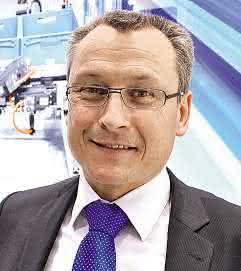
Green logistics is often equated with sustainability - and vice versa. In our view, this is not enough. On the one hand, the ecological aspects need to be considered, i.e. how can I avoid waste or conserve resources. Secondly, companies must not view their employees purely as a cost factor. A long-term and successful market presence is only possible if social factors such as health, work and product safety, employment and production conditions are right. For us, sustainability therefore means striving for a balance between ecological standards, economic success and social responsibility. The questions we ask ourselves are: What are the operating costs? How high is the energy consumption? How many and which raw materials are consumed, what are the working conditions for the plant operator? Our aim is to combine product performance with responsibility for people and the environment and thus set a new quality standard. We must reduce material consumption, waste and emissions to a minimum and optimize transport routes and packaging.
Material flow: What requirements must the workplace in the new building of the future meet?Thomas Wiesmann: The vision of an unmanned distribution center has existed for a long time. With the right IT-supported automation, a high level of process reliability and consistency can be achieved. This can significantly reduce delivery times and sources of error. This is why we have seen potential for automatic or semi-automatic solutions for decades. Tasks such as palletizing, depalletizing and picking are part of an automated process. This is often faster, cheaper and less error-prone than a manual solution. In contrast, humans can also perform universal tasks flexibly. In order picking, for example, steps such as packing and handling cannot yet be optimally automated. I see difficulties for technology, especially with an enormous variety of articles and a rapidly changing product range. This requires a highly flexible system that constantly has to adapt to new products. Here, no machine can outperform a human being.
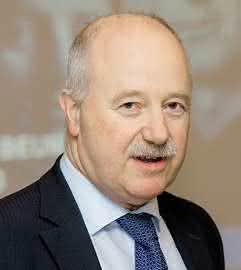
Franz X. RauscherMan, nature and economy in harmony
Material flow: What factors make a new building a "green" building? What measures would you definitely implement?Uwe Berg: Sustainability is on everyone's lips. Owner-occupiers and real estate developers are increasingly focusing on resource-efficient concepts, not only for new buildings and the revitalization of existing properties, but also for the interior of logistics centers. With the economy doing well and, above all, strong growth in e-commerce, limited space is increasingly forcing companies to make use of every centimeter. Our storage technology, which adapts completely in height, depth and width - from the profile to the smallest drawer - makes full use of space. The most recent example of this is reBuy in Berlin. We recently handed over the third construction phase of a five-storey shelving system there. Compared to the originally purchased system in rigid standard lengths of 1,000 and 1,300 millimetres, our system offers around 5 percent more space in the same area. With lengths of 1,225 and 1,075 millimetres, the shelves adapt precisely to the plastic containers and also to the geometry of the hall right down to the last corner.Material flow: What are the requirements for the workplace in the new building of the future? Or will there no longer be any people there at all?Uwe Berg: The challenge is to store and retrieve goods as quickly as possible in a minimum of space. This requires intelligently designed warehouse technology, which often also integrates automated processes. The degree of automation depends on industry-specific logistics processes and, above all, on the variety of parts. People play a major role in industries with small-scale and many different products, such as e-commerce. That's why we not only pay attention to efficient processes with our shelving systems, but also to ergonomic workstations with a pleasant climate. When advising our customers, topics ranging from air circulation and lighting conditions to specially designed shelving, for example for pick-by-light processes such as at our customer ebay enterprise in Halle, are included right from the start. In short, we are aware that logistics can only work in the long term if people, nature and the economy are in harmony. Warehouse technology designed for people is very important to us.
Scarce
Interaction between man and machine
Material flow: What factors make a new building a "green" new building? Which measures would you definitely implement?
Gerald Hofer:Our premise is that what we do should be as ecologically, economically and socially compatible as possible. This includes energy efficiency, the conscious selection of materials and resource-conserving production. Of course, a "green" new building is also about reducing the footprint of a facility, i.e. carrying out the same processes in less space. Examples of this are the goods-to-person principle and the maximum utilization of floor space, i.e. storing goods at height. When it comes to energy consumption and energy efficiency, we are a big step ahead with our shuttle systems, with energy consumption of 5 to 10 percent compared to conventional miniload systems. Of course, the quality aspect is also important: every quality outlier causes unnecessary consumption, so errors must be avoided.
Material flow: What requirements must the workplace in the new building of the future meet?Gerald Hofer: Knapp workstations are already attractively designed. This also includes user-friendly software. We need to reduce noise and avoid work processes that involve bending, lifting and pulling. The Pick-it-Easy workstation series, which does not replace people but relieves them of unergonomic work processes and supports them through automation, is a pioneering solution. In SPAR's new distribution center in Austria, the Pick-it-Easy workstations were designed according to the latest ergonomic standards and thus offer enormous physical relief for employees when picking food. User-friendly interfaces also drastically reduce the training time for new employees. In addition, the automated handling of many processes means that employees do not have to carry out as many heavy tasks. The automation of processes avoids errors and guarantees error-free interaction between man and machine.
SSI SchäferPulling and pushing instead of lifting and carrying
Material flow: What factors make a new building a "green" new building? Which measures would you definitely implement?Harrie Swinkels: In a new build, many components such as photovoltaics, lighting, insulation, heating or geothermal energy have a positive impact on our customers' energy balance. We attach great importance to this right from the planning and design stage. We have already implemented completely energy-neutral systems in practice. As sustainability is an important part of our corporate strategy, this is also reflected in our product portfolio: from whisper-quiet conveyor technology, energy-efficient storage systems and innovative control technology to the design of ergonomically optimized workstations. One focus in terms of green logistics lies in the technical design of the solutions. We have sustainably optimized our products through consistent lightweight construction, dead load compensation through counterweights, energy-efficient drive systems and concepts for energy recovery. The storage of regenerative energy is another aspect that is consistently pursued.Material flow: What requirements will the workplace in the new building of the future have to meet?Harrie Swinkels: Despite the increasing degree of automation, we see employees as an important part of the warehouse of the future. It is not a question of whether they are available, but rather of the tasks and how they are carried out. The effects of the labour shortage and demographic change show that flexible, health-preserving and customizable workplace solutions are required. The greatest ergonomic risks along the value chain in the goods distribution centers lie particularly in the areas of transporting, picking and staging. We have therefore developed special picking stations and workstations based on the ergonomics@work! principle in order to optimize the human-machine interface. All movement sequences, in particular lifting and carrying, are replaced by ergonomic pulling and pushing in our solutions. Overall, this results in more demanding tasks for warehouse employees than before.
viastore

Man and machine work hand in hand
Material flow: What factors make a new building a "green" new building? Which measures would you definitely implement?
Thomas Preller:Energy efficiency plays a key role in intralogistics - and not just in new builds. In general, automated warehouse technology has an advantage simply because it takes up less space, as this also means lower consumption of heating or cooling energy. In addition, the use of energy-saving drives and systems for energy recovery or recycling is a matter of course. We therefore deal with energy management systems and storage strategies. How can energy be stored better? How can the system be brought into a state where it can be restarted immediately in a controlled manner in the event of a power failure? How can I avoid unnecessary energy consumption? How can I control the utilization and resources of the system so that no energy-intensive peaks occur? We have already implemented these issues in many projects, both for new buildings and for modernization.
Material flow: What requirements must the workplace in the new building of the future have?Thomas Preller: Modern production and logistics facilities usually have a high degree of networking and automation. However, this cannot replace human work, but should make it easier. For example, through intuitive software that shows employees what needs to be done at a glance. Automated warehouse technology also takes over heavy, strenuous or monotonous tasks and helps to make processes more efficient. In the workplace of the future, man and machine will work hand in hand, for example in logistics centers with suitable picking methods such as pick-by-light, pick-by-voice and pick-by-vision or via intuitive dialogs on mobile terminals. In production, autonomous and networked vehicles bring the required parts directly to the machine at the right time and in the right quantity. And in dispatch centers, sorting systems and lifting aids ensure ergonomic and back-friendly working - which is also becoming increasingly important in times of demographic change.

Wagner"Building green" without fire protection does not work
Material flow: What factors make a new building a "green" new building? What measures would you definitely implement?Dipl.-Ing. Torsten Wagner: Industrial buildings and logistics companies repeatedly experience fires, which not only cause operational interruptions, but also damage to people, buildings, goods and the environment. A fire produces aerosols, smoke and soot particles as well as pollutants that contaminate the air, soil and water. As fire protection experts with many years of experience, we operate our own research and development department in order to be able to offer innovative and preventative fire protection solutions. We would therefore always plan early fire detection using aspirating smoke detectors - as room and furnishing protection. We have designed air sampling smoke detectors for the earliest possible detection, which can reliably and highly sensitively detect the smallest smoke particles in the incipient fire phase. Just two grams of material decomposition, barely perceptible to the human eye, are sufficient for our detectors. In the event of a fire, the aim is to fight and extinguish it without leaving any residue. We use the natural inert gas nitrogen, which is largely present in our ambient air, in gas extinguishing systems and in oxygen reduction systems for active fire prevention. In the new-build segment, more and more building owners and operators are opting for protection concepts that actively prevent the risk of damage instead of having to settle a claim afterwards. And "building green" does not work without responsible fire protection.Material flow: What requirements will the workplace in the new building of the future have to meet? Or will people no longer exist there at all?Dipl.-Ing. Torsten Wagner: Despite advancing digitalization and automation, there will always be areas where people work or enter for inspection and maintenance purposes. We also take into account the accessibility of personnel in our active fire prevention. Healthy people can live and work with less oxygen without restriction. The safety concepts include appropriate occupational safety measures to ensure that an oxygen reduction system does not pose any risk to people.


You might also be interested in
Winner material flow PRODUCTS OF THE YEAR 2023
Conductix-Wampfler: ChargeLine 0865
Two-pole conductor rail segments for efficient opportunity charging of shuttles, suitable for thousands of cycles per day.
 read more...
Hermann Grewer celebrates his 80th birthday
Hermann Grewer, Honorary Chairman of the North Rhine-Westphalia Transport and Logistics Association (VVWL) and Honorary President of the German Road Haulage, Logistics and Disposal Association (BGL), celebrated his 80th birthday on June 6.
read more...Well chilled for sure
V-Zug Kühltechnik AG, developer and manufacturer of refrigeration appliances and part of the successful V-Zug Group, has set up a new production facility for refrigerators of all heights and dimensions at its Swiss site in Sulgen.
read more...Advantageous automation of small parts warehouses
The RSX1 shuttle system will be at the center of Rocketsolution's presence at this year's Logimat trade fair.
read more...Reduced energy requirements in the high-bay warehouse
One of Germany's leading premium car manufacturers is already focusing on energy efficiency in the production of its new SUV model with electric drive. The storage and retrieval machines in a high-bay warehouse at the production site have been...
read more...Low lift pallet truck for light duty applications
Clark has launched a new low lift pallet truck with the model designation LWio15 for light transport tasks. The truck has a load capacity of 1500 kg and is suitable for short distances in goods distribution, production or warehousing.
read more...Internationalization as an opportunity
E-commerce is in a state of flux. Changes in purchasing behavior and procurement problems are keeping e-commerce retailers busy. Logistics plays a decisive role in the overall online shopping experience.
read more...Fulfillment Center for Frisco.pl
Polish eGrocery specialist and TGW deepen partnership
TGW is building a highly automated fulfillment center for Frisco.pl in the Polish capital Warsaw. This is the second project in a row that the two companies have implemented together.
read more...Which world will it be in 2023?
Michael Schreckenberg teaches at the University of Duisburg-Essen as Professor of Physics of Transport and Traffic. Once a year, he addresses the readers of materialfluss, formerly LT-manager, with a critical and humorous expert article on transport...
read more...