

Commercial vehicles
TST initiates depot charging network for e-trucks
The TST Group wants to usher in a new era of truck electrification with a cooperative-oriented depot charging network. TST is building an ecosystem for charging heavy commercial vehicles and delivery fleets that covers all relevant aspects: from digital networking and guaranteed charging prices to standardized billing. The energy supply is to come from 100 percent renewable sources.
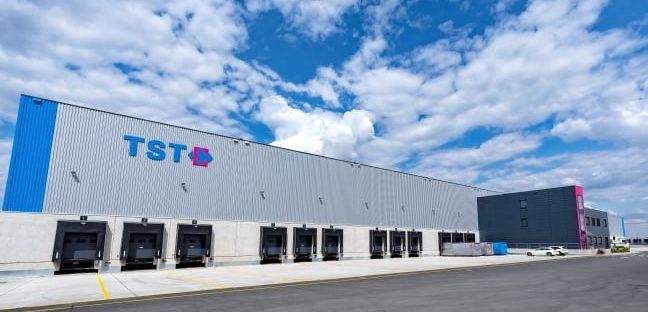
Haulage companies can join the network to use the infrastructure with their e-trucks or to provide charging points themselves and thus contribute to the expansion of the system. "This promotes efficient provision, use and significantly higher utilization of the charging stations integrated into the network," says Katrin Herda, Head of Energy Solutions and E-Mobility at TST. There are already eight partners using the TST charging infrastructure. "We like to be the beacon of the industry - our charging infrastructure is open to everyone," emphasizes TST Managing Director Frank Schmidt.
Eight partners at the start
The TST concept is driven by a variety of challenges that the transport and logistics industry is facing in the mobility transition in road freight transport. For example, the electrification of vehicle fleets has so far presented the transport industry with a whole host of difficulties. The plight of the charging infrastructure for electric trucks is particularly glaring: there is not only a lack of sufficient stations, but also a lack of stations that meet the special requirements of truck traffic. For many logistics companies, high prices at public charging points are an additional cost factor that puts further pressure on their already tight budgets.
"There is a lack of reliable location data for truck-compatible charging options. Important digital services such as reservation systems are often lacking in the truck segment," explains Herda. Billing systems are also rarely tailored to the needs of fleet operators. This quickly turns a charging process into a logistical obstacle: "The pillars are too low, the area is too narrow and turning is hardly possible. In addition, the integration of solar and wind systems is still far from standard," criticizes Herda. "We have intensively explored the market and sought discussions with many players in the industry - but so far there is no solution that is both technically and economically convincing," she adds.
Under the brand name "PamSun", the logistics group TST is already operating its first own fast-charging park for electric trucks in Worms. The facility has eight charging points (high-power chargers) with a charging capacity of 3 x 400 kilowatts (kW), 3 x 240 kW and 2 x 160 kW. The charging station is primarily powered by green energy, which is generated by TST's own photovoltaic systems (100 percent green energy) and grid power (60 percent green energy). By the middle of next year, the TST sites in Wevelinghoven (North Rhine-Westphalia) and Alzey (Rhineland-Palatinate) will be connected to the grid and further e-charging points for trucks will be built.


You might also be interested in
Automated trucks: live tests in Hamburg city traffic
As part of the EU MODI project, two successful practical tests on the automation of heavy goods traffic were carried out this spring - both in the inner city area of Hamburg and on the highway. The project partners tested two important use cases in...
 read more...
Daimler Truck celebrates the start of series production of the Mercedes-Benz eActros 600 for long-distance transport in Wörth
Karin Rådström, CEO of Daimler Truck, and Daniela Schmitt, Minister for Economic Affairs, Transport, Agriculture and Viticulture of Rhineland-Palatinate, give the go-ahead for series production of the new model.
read more...Emission-free e-truck for Siemens plant in Leipzig
Since the beginning of June, an e-truck has been transporting goods within a radius of 100 kilometers for Siemens Smart Infrastructure's Leipzig plant for low-voltage switchgear.
read more...400 autonomous heavy goods vehicles delivered to ZTO Express
Inceptio Technology, developer of autonomous driving technologies for heavy-duty trucks, has recently completed the delivery of 400 autonomous heavy-duty trucks equipped with Inceptio drives to the Chinese express service provider ZTO Express.
read more...Route planning for electric, hydrogen and...
"DRivE" project partners complete successful test phase
The "Production Engineering of E-Mobility Components" (PEM) chair at RWTH Aachen University has successfully completed the pilot phase of the "DRivE" research project together with partners. In a two-month field trial, software was tested that is...
read more...Twelve new electric trucks for the regular service business
Craiss Generation Logistik is investing in alternative drive systems: the logistics service provider is expanding its fleet with a total of twelve electric Mercedes trucks. In future, two eActros 300s will be on the road for the company in Austria...
read more...Noerpel Group tests hydrogen trucks
On July 25, Noerpel started the test phase with a hydrogen truck at the Heidenheim site. After two weeks, the Noerpel Group draws a positive interim conclusion about the 18-ton truck in terms of performance and driving characteristics, but remains...
read more...New guidelines for lashing equipment, wheel chocks and vehicles
The revised VDI 2700 is expected to come into force on September 1 of this year. The guideline deals with load securing for cars and trucks on road vehicles.
read more...Hire heavy-duty commercial vehicles from Es-GE
Es-Ge Nutzfahrzeuge offers its customers optimized fleet management and rental solutions.
read more...